Thursday, June 3, 2010

Here On The Bottom


I could try to write something coherent about John Frankenheimer’s gangster satire 99 AND 44/100% DEAD but that might possibly be beyond my abilities. Hell, I just saw the thing and I barely know what to say about it. Almost as bizarre is the fact that the New Beverly recently showed a pretty terrific looking 35mm print of this film originally released in 1974 at a midnight screening and it even got a pretty sizable crowd. But maybe that’s not such a surprise. After all, there’s probably at least a few people in L.A. who would be interested in the combination of Frankenheimer, Richard Harris, 70s, action, not to mention how the movie is totally MIA these days, never on DVD and the last VHS release was decades ago. I hadn’t seen it for years and remembered almost nothing about it except for one scene at the beginning. And now right after seeing it again I’m still not sure how much I remember. I don’t even think I could adequately describe the plot. By a certain point the New Beverly audience seemed stunned into silence with only occasional bursts of laughter and I’m still a little flummoxed even now. Now, I’m a die hard John Frankenheimer fan from years back as anyone who knows me would tell you but when it comes to this film, well, words kind of fail me.


Let’s try this—When a mob war escalates hit man Harry Crown (Richard Harris) is brought in by Uncle Frank (Edmond O’Brien), head of the syndicate, to help out. Crown also has an interest in schoolteacher girlfriend Buffy (Ann Turkel) but soon gets caught up in the war involving Big Eddie (Bradford Dillman) who is going up against Uncle Frank to take over the city, who has the vicious Marvin “The Claw” Zuckerman (Chuck Connors), a vicious killer with one arm (thanks to Harry) who will stop at nothing.


Well, it’s probably the best film to ever feature a car chase that includes a school bus driven by Ann Turkel, I’ll give it that much. After all these years the one thing I remembered from the very bizarre 99 AND 44/100% DEAD was a scene near the beginning (which I mistakenly recalled as being the credit sequence) featuring a tableau at the bottom of a harbor showing all the people who had been dropped down there by the mob, feet encased in cement, and left to drown. The idea apparently originated in very early script versions of ONCE UPON A TIME IN AMERICA in the early 70s when this film’s screenwriter Robert Dillon (Frankenheimer’s later FRENCH CONNECTION II, among other credits) was involved with that project and he wound up using it here, which certainly didn’t please Sergio Leone. A striking dark comic image it always stayed with me, backed up by sardonically lighthearted narration from star Richard Harris (“Losers. All of them, losers.”) and jaunty honkytonk music by Henry Mancini but in context the scene actually sort of drifts away, the joke just left to hang there and so does much of what follows. The film could be considered a forerunner of Tarantino’s stuff, not to mention the knockoffs that followed in the 90s—there’s old school gangsters in suits and hats, a city that goes unnamed (mostly shot in Seattle with a little of L.A.), arch humor throughout. The only time any police are ever seen is during a big parade held in the city that the characters seem to pay no attention to, simply walking across it to get to the next big shootout. It’s all presented in that sparse 70s style but it’s done in a weird slow-motion feel that all becomes a little deadening, particularly when seen at that late hour. It also contains what feels like very little ambient sound ever heard which, even if it’s unintentional, only adds to the strangeness of the tone and there’s the impression that numerous scenes could have been cut way down but then maybe the film, running 98 minutes, wouldn’t have been feature length.


There is a cool 70s vibe to it all as well as a genuinely oddball feel, which certainly helps, but Frankenheimer was never a director who displayed much of a sense of humor in his films—unless the joke was meant to be deadly serious like in THE MANCHURIAN CANDIDATE—so there’s no real consistent tone with the jokes here (When Harris punches a goon repeatedly in the stomach somebody shouts, “Harry! He just ate.”) The way it plays is that the weird touches throughout, like Ann Turkel having the feathers she’s wearing gradually removed by Harris in a seduction scene while she talks about teaching third grade, just play weird. She is nice to look at, though. I could believe this all plays better in the script but as it is the movie makes it tough to tell how much of this is supposed to be a joke—the answer, of course, is all of it but it still just kind of sits there. The film’s title and pop-art opening credits indicate a heightened style and there are certainly hints of that, with shots of alligators once flushed down toilets roaming around sewers and gangsters smoking huge cigars, but just not enough. One lengthy sequence late in the film involving diffusing a bomb doesn’t generate much of any suspense since we’re barely invested in what’s going on anyway. Coming six years after Frankenheimer stood close by while his friend Robert Kennedy was shot dead at the Ambassador Hotel, the most personal touch in the film feels like the American flag seen in the opening shot, slightly ripped on the edges and floating over all this madness completely unobserved. As it is, the film feels like the work of a man searching for humor in how absurd the world has become but the type of filmmaker he is means that he’s unable to locate it. (Frankenheimer himself in the 1998 book “The Films of Frankenheimer” by Gerald Pratley: “…it didn’t succeed. I just don’t think I did the right job on it because, looking back, it was not the right material for me…There were many good moments but to me as a whole the movie does not work.”). Some of the action and stuntwork is staged in the most expert way possible—this stuff is definitely in the director’s wheelhouse—and it was great to see how all this was framed in Scope but much of it is ultimately just a puzzler. And to think that I still haven’t gotten around to writing about Frankenheimer’s BLACK SUNDAY.


Certainly one of the best things in the film is the main title theme by Henry Mancini which is ultra-cool, so catchy I wish it would play whenever I walk down the street and any film that has a good amount of Mancini source music sprinkled throughout is going to have some enjoyment for me including one track (taken from the song “Easy, Baby,” that gets featured here) which turned up later on in SILVER STREAK, another film with a Mancini score released by Twentieth Century Fox. There’s a vague similarity to other action titles from the period that offer a what-the-hell-am-I-watching vibe, particularly something like PRIME CUT so I shouldn’t have been surprised when looking up his credits that Robert Dillon wrote that as well. Of course, in that film’s case director Michael Ritchie was able to find a definite tone, as twisted and perverse as it was. With 99 AND 44/100%, it all just kind of drifts away even while watching it. If all these elements I’ve described sound interesting I can’t blame you and maybe I’d want to see it again someday to try to figure it all out but I have a feeling that there’s nothing much to uncover about it. It feels like a movie where they never figured out what the movie was.


Richard Harris displays a nice coolness with his hitman character but he’s badly in need of a movie around him that would go with that vibe. Interestingly with the way his hair looks and the glasses he occasionally wears I kept thinking of Michael Caine in the role (shades of the slightly similar PULP, which isn’t fully successful either) and wondered if he was offered the film first. The truly striking Ann Turkel brings a likable quality to Buffy, schoolteacher and bar floozy, partly spacey, partly earthbound. The chemistry she has with Harris is obvious and brings some kind of reality to their scenes, even if it’s the reality of a goofy movie, so it makes connecting with these sections somewhat easier. The two of them met on this production and married soon after so at least some good came out of it all—they later appeared together a few other times including in THE CASSANDRA CROSSING. Edmond O’Brien in his last film plays things straight and nasty as Uncle Frank with the right amount of humor, but Bradford Dillman seems off in his own world as Eddie and it doesn’t feel like Frankenheimer gave the actor much direction to work out a consistent tone when he plays against other actors. As the young turk in a snazzy white suit who Uncle Frank teams Harry with on his assignment, David Hall makes little impression. As the two other girls used ornamentally, Kathrine Baumann and Janice Heiden make little impression as well. Chuck Connors certainly does make an impression as Claw Zuckerman, getting some laughs as he brings out various devices to attach to his arm (and it certainly isn’t the only time we’ve seen this joke), but it’s too bad that he doesn’t have more screen time.


The overriding quirkiness isn’t enough to carry the film but the chance to see it is so rare that I was still glad that I’d gone out for it. And it was kind of cool to see the surprising number of people who had also shown up, no doubt curious to see this little-known oddball film from the wilds of the seventies made by a hugely respected director, to figure out what the hell this thing was. They were mostly quiet throughout the running time and when the lights came up at the end the vibe in the room was such that I’m not sure they had any more of an idea of what it was than I did. But I suppose that’s always part of the risk with these things. As I drove home in the middle of the night I thought about how the New Beverly has become a certain refuge in this town for film lovers with open minds, willing to seek out what isn’t getting shown otherwise in this day and age, wondering if the next film will be that hidden gem you’ve long been looking for. On some occasions you wind up with 99 AND 44/100% DEAD. Other times you get luckier. But it's all part of the thrill of the hunt.

Wednesday, June 2, 2010

Certain Kinds Of Reality


We all knew that we were going to lose Dennis Hopper soon. We knew that. But it still came as, if not a surprise, a crushing event, a sad reminder that even those who seem immortal are eventually going to leave us. You don’t need me to go over his long career but with everything that he did in his life you certainly know that the guy was lucky to make it as far as APOCALYPSE NOW and even that was over twenty years into his career. We were very fortunate to get so many other performances from him after he cleaned up, especially starting in that 1986-87 period where we got work that forever marked his legacy—RIVER’S EDGE, HOOSIERS and BLUE VELVET, oh yes, BLUE VELVET. Once Frank Booth invades your consciousness you can never fully shake him. That period kicked off a minor comeback in his directing career with the hit cop drama COLORS which was followed several years later in 1990 by the sex-drenched film noir THE HOT SPOT. I actually saw it in the theater and remember liking it, but even then I thought it’s intentionally languid pace was maybe a touch too languid but it was hard not to appreciate the film for the reasons that anyone has seen it would know. The Ain’t It Cool News obit on Hopper refers to the film having a ‘hormonally-charged following on cable’, which definitely got a smile out of me. Yeah, I’ll bet it does. I still can’t quite get the vision of the fresh Jennifer Connelly in this movie out of my head. As the sun set on the day we all learned of Hopper’s passing I sat down (with a cold Pabst Blue Ribbon, of course, definitely not a Heineken) to watch this movie again and now that glimpse of the young Connelly has been planted in my head again. Virginia Madsen’s not so bad either and has quite a few nasty charms of her own. It certainly isn’t a great film and goes on way too long but for a while its lazy sexual oomph goes a long way.


Drifter Harry Maddox (Don Johnson), coming from nowhere and going nowhere in particular in his Studebaker, wanders into a small Texas town and talks his way into a salesman job at the local used car lot. With nothing to do in this place during the hot, lazy days he begins to develop an interest in pretty lot employee Gloria Harper (Jennifer Connelly) who seems an untouched innocent but nevertheless harbors a secret but soon enough the bored but aggressively beautiful Dolly Harshaw (Virginia Madsen), much younger wife of the lot owner, takes an immediate interest in Harry when she pulls up in her ’58 Cadillac and makes sure that he knows. When he stumbles onto knowledge of how lax the security is at the local bank Harry comes up with a plan to rob the place which involves setting a fire nearby. He does so with seeming ease, even gaining an alibi when he impulsively decides to rescue someone from the building he set ablaze, only certain people are on to him almost immediately and as his interest in Gloria grows, he becomes aware that it’s going to be very difficult to escape the hold Dolly has on him.


Any film noir that has Miles Davis and John Lee Hooker playing on the soundtrack through nearly every scene is going to be of added interest, that’s for sure. With that music drifting in throughout THE HOT SPOT definitely is a lot of nasty fun for much of the running time, with the sweltering heat the characters feel in this tiny town practically oozing out of the frame during every moment as the story drifts along, never in any real hurry. The screenplay was originally written by Charles Williams and Nona Tyson from Williams’ book “Hell Hath No Fury” back in the sixties and any alterations Hopper made to the script may very well have been minimal—I would imagine there were some small changes in the language and the strip club scenes are certainly shot differently than they would have back then but Madsen still says that the town picks up on Saturday nights because, “they show two vampire operas at the movies instead of one.” The leads drive vintage cars but based on all other indications the film is set in (then) present day, which means that maybe it doesn’t exactly all make sense in this context, but so what. It’s almost defiant in how this story exists somewhere out of time, like the modern world never seems to have reached this lazy town in the middle of nowhere. (“I didn't really change anything, because I didn't want to,” Hopper told Roger Ebert at the time) In its heart, it’s clearly still set in the late 50s but if we get sucked into it, just as Harry Maddox gets sucked into the lives of these two women against his better judgment, that’s all that matters.


THE HOT SPOT gets the sex-soaked noir feel just right with a cast who seems game and a setting so well-established that this tiny town becomes a whole other character. It feels so small that we could probably see nearly all of if the camera ever did a 360 degree turn. There’s a sleazy feel all throughout of compositions that could have been used as the cover of some pulp novel back in the day but Hopper’s direction sometimes becomes listless and isn’t always quite as adventurous as it should be. By a certain point especially in the second half things just drag, as if he’s getting lost in the mood and heat of the scenes he’s shooting, entranced by every single step the characters take as they move through their scenes. This slow, languid feel is right for a movie set in such a lazy town but it just feels like too much by a certain point with not quite enough story to warrant a 129 minute running time—I’ve never read the book but I almost wonder if it takes less time to read it than it does to watch the film. When there’s an issue near the end of who was the unseen person in a certain place at a certain time it just feels like a step too far in trying to keep the twists going. Everything connects together in the end in a way that plays but it just feels like the pacing needed tightening. By a certain point this lack of real momentum causes any sort of tension that’s been building to pretty much dissipate and hurts the effectiveness of the ending which, on its own, works pretty well. With that music by Jack Nitzsche which makes such use of those legends, THE HOT SPOT is an enticing piece of old school pulp to soak in for a while as it drifts along but it takes that mood maybe a little too far for its own good.


All of that said, there’s no avoiding the reasons anyone who’s seen it cares about this movie: the ultra-brassy, super-hot Virginia Madsen who takes hold of each scene she’s in and yes, yes, yes, Jennifer Connelly. She looks fresh, lovely, beyond fetching whether spotted in big glasses and perusing the cheesy romance novels at the local drugstore, wearing a black bikini when going swimming with Johnson at the local watering hole (“You want to see my birthday cake?”) or in the flashback scene where she, well…I swear, I’m trying to be mature in writing this but the way Hopper presents these two actresses—the evil blonde, the virtuous brunette—sends this movie into the stratosphere, making every moment either one is onscreen truly unpredictable and quite stunning to watch in its own way. It makes me wish that I had somehow gotten the opportunity in life to shake his hand not only in admiration for his career but to thank him for making this movie. The pacing is ultimately a definite drawback in how well the film ultimately works but there are times, certain scenes involving either one of these actresses, when it’s pretty easy to forget all that. One element I always admired about the film was the nonsensical slogan on the poster—“SAFE IS NEVER SEX. IT’S DANGEROUS”—which seems to be an odd placement of some of the words. This may have been Hopper’s doing as well, as he once told Entertainment Weekly: “It’s totally stupid, but I liked it.” THE HOT SPOT is more ridiculous than stupid but it’s crazy ridiculous, taking its sex-drenched feel as far as possible and seemingly loving how it’s able to take it all so far. It goes beyond its coolness presenting a group of characters who can only keep up their façade for so long and if it doesn’t destroy them in the end it ultimately reveals just who they are. The final shot says it all—forced to go down a long, straight, hot road in life, no chance to turn off, nowhere else to go, making us believe in the idea of a hell of one’s own making, even if it is with such a beautiful woman.


As a movie star, Don Johnson never quite set the world on fire, to quote something said to him here, but I always liked him in a few films and he works well here as this amoral guy used to looking out only for himself as he caught between these two women against his better judgment. He’s not quite Ralph Meeker in KISS ME DEADLY, who kept coming to mind while I was watching this (actually, the project was in development to star Robert Mitchum in the early 60s), but he’s pretty ideal here, playing very well off both actresses and making us believe that he could get a sudden crisis of conscience while pulling off a bank robbery. Virginia Madsen, evocatively shot shaving her legs while placing phone calls on multiple occasions, in particular eats her role up, coming off as fearless, willing to try anything with those eyes of hers to sell this character who, as somebody tells how her husband met her, “…just sorta happened.” It plays as so fearless that it’s surprising to read Hopper quoted as saying the actress was “very embarrassed” by her nude scenes—that said, she did pay tribute to him the day he died on her Twitter page. Cool, Virginia Madsen’s on Twitter! But it’s Jennifer Connelly, fresh and virtuous, intelligent yet still a touch naïve, who nails every moment and makes you want to rescue her from all this sleaze, something a guy like Harry Maddox may want to do, but he never can. It’s her face which ultimately reveals all the betrayals she’s experienced in her young life all in this small town, which stays with you after the credits roll. The best possible compliment I can give is that each of these actresses would have been right at home in this kind of noir made back during the 50s. The reliable character actors who turn up include Jerry Hardin as George Harshaw, Charles Martin Smith as fellow salesman Lon, William Sadler as a suspicious character Gloria is somehow mixed up with, Barry Corbin as the town sheriff and the always welcome Jack Nance as the bank manager (he and Hopper must have met on BLUE VELVET), all fitting perfectly into this milieu. Looking up the film I get the feeling that Hopper and Johnson didn’t exactly become close pals during shooting and each of these guys playing in scenes with him could almost be surrogates for the director who doesn’t appear in the film. In each actor’s own way they smile at Harry Maddox, put up with him, regard him with suspicion and he just wants to be left alone—I can’t help but picture each of these guys palling around with the director while the film’s star goes off to his trailer to brood like his character.


The film didn’t do much at the 1990 box office and Hopper’s next film as director was also his last—1994’s CHASERS, a forgettable comic spin on THE LAST DETAIL which played like a goof more than anything. As an actor, he still had TRUE ROMANCE, RED ROCK WEST, SPEED and WATERWORLD (among others) to look forward to as well as 2005’s LAND OF THE DEAD, a performance I have a soft spot for partly because I spotted him in the audience at the Arclight on opening night. Whatever else you want to say about THE HOT SPOT, we all know that it doesn’t represent the pinnacle of Hopper’s cinematic legacy in front of or behind the camera. It is a nice bit of nasty fun however and even if it goes on too long, it has certain moments that I’ll always remember with fondness. Hey, I’m only human. THE HOT SPOT was made by someone who lived one hell of a life and while it’s just one small piece of that legacy, it’s true to its own intentions right up to the very end and he deserved to be proud of it. And while I doubt there are any grand conclusions to reach about Dennis Hopper from this movie, it is interesting to wonder just how much its nastiness and portrayal of dark secrets in a sex-soaked environment says about how he felt about the life he led and the world that was around him. Of course, maybe it was just a movie he felt like making and thought it would be a kick which thinking of his persona certainly seems possible as well. In a People Magazine interview given when this film was released he mused about getting older while raising his newborn son Henry with then-wife Katherine LaNasa and said, “If I take care of myself, I'll be 74 when Henry is 20. That's pretty heavy.” As it turns out, we just lost him at 74 but the age probably seemed much older to him when he said that. The death of Dennis Hopper is a tragedy. The life of Dennis Hopper is legend. This particular film that Dennis Hopper directed…it may not be his masterwork or what people remember him for but I sure wouldn’t want to go through this life without it.

Wednesday, May 26, 2010

Like Something Out Of A Dream


“I’ve got a bad feeling about this.” Familiar words to any STAR WARS fan out there and, as some may have noticed, also spoken by Jorge Garcia’s Hurley at the end of the teaser of the final episode of LOST. The show has made numerous references (some subtle, some pretty blatant) to various elements of STAR WARS during its six seasons but this hugely obvious example so close to the end came off as one final way for the show’s creative personnel to pay tribute to something that was very much a key inspiration point--hey, it's the last episode, why the hell not? It was also fitting that it came at a time of year when these films once opened and I doubt that I’m the only person who will forever associate the period around Memorial Day weekend with the excitement they used to generate.


I think it was around the time several years ago when I started to write this blog that I started to mentally remove myself from the whole STAR WARS thing. The thirtieth anniversary of the original film hit, REVENGE OF THE SITH was long since done with and something deep down inside of me just thought, “I think I’m done.” I felt I had squeezed everything I could from the many times I’d seen these films, I’d had every exasperated argument about the prequels I could ever have and I’d made just about every dialogue reference I could ever make in my daily life, though I probably still make some occasionally anyway. It wasn’t that I suddenly didn’t like the films and it certainly wasn’t that I felt like I’d outgrown them—anybody who knows me would tell you that I’m not mature enough to have outgrown anything. I just needed to move on. I needed to do other things, see other films, to expand my horizons a little. Life is finite. There are too many films I still have yet to see but I’m doing my best.

And then suddenly we hit the thirtieth anniversary of THE EMPIRE STRIKES BACK, released May 21, 1980. Not just the date, but a special benefit screening for St. Jude Children’s Research Hospital at Arclight Cinemas in Hollywood that would feature special appearances by certain famous people. A very close friend procured some difficult-to-acquire tickets, said to me, “Happy Birthday,” even though my birthday was still over a month away, and I changed the date on the plane ticket I’d bought for a trip to New Mexico. Not because I felt like I had any obligation, but because I wanted to revisit this film once again and pay tribute to how it’s stayed with me all this time.


Looking at THE EMPIRE STRIKES BACK now the film seems almost miraculous in its daring approach, not in any kind of bash-George-Lucas way, but because of all the chances it takes throughout beginning with a structure that almost seems as if it shouldn’t work at all. The lead characters don’t even do anything particularly much in the film’s first fifteen minutes which is an odd way to start things off but it definitely prepares us for how much more serious things are going to be. We never could have expected how it would send the STAR WARS universe beyond what any of us kids expected during those years before 1980 playing with all those action figures in our rooms. Instead of simply sending our heroes on another adventure (Luke, Han & Leia have to go on another mission to try to defeat the Empire, yadda yadda) it found ways to deepen the characters, truly turning them from fun archetypes that we were happy to see again into a part of genuine myth. The screenplay is credited to Leigh Brackett and Lawrence Kasdan with story by Lucas but much of the credit for its success should probably go to director Irvin Kershner who takes an approach to infuse things with a true feeling of depth and humanity not seen in the saga before or since, giving a reality and strength to the continuation of this saga. It almost seems defiantly dreamlike in how it refuses to make any real sense if you think about it—what exactly is the timeframe of this movie? How long is Luke on Dagobah? A day? A month? Do you care? Do I?


On the DVD audio commentary Kershner offers his view that, “There’s nothing more interesting than the landscape of the human face,” a viewpoint that Executive Producer George Lucas doesn’t seem to have expressed at any point in his career and certainly not in the creation of the prequels. Taking some time away from this film allowed me to look at it with fresher eyes, probably an advisable approach for any film a person loves, and the one thing that stuck out to me more than anything is how Kershner’s statement is proven time and again—all throughout I found myself paying attention to the looks characters give, bits of business that say much more than any dialogue ever could and this as well all know is a film with very memorable dialogue. George Lucas has often spoken in interviews of how his stories are told through images but it’s Kershner as director here who seems to understand how much the human element really matters in putting those images together to tell this part of the story. That look Luke and Han give each other before the Hoth battle doesn’t need them to say anything, as if the movie knows that all the time we’ve played with their action figures has allowed us to fill the dialogue in on our own. Carrie Fisher’s constant looks of dread throughout, Billy Dee Williams’ deadly serious turn to the silent Lobot when the deal has been changed once again pays off each time we’ve seen the guy standing there behind him. The coolness of Boba Fett (of course, we kids had already been introduced to that character in the infamous Holiday Special) transcends the mere handful of lines he has, even that side glance Yoda gives after raising the X-Wing fighter, a moment with such strength that I can never think of the character as a mere puppet. I’ve also always had a particular fondness for the subplot involving Captain-then-Admiral Piett (nice unheralded work by Kenneth Colley) which seems to take place almost entirely with nervous expressions given all through the film.


But really, everyone involved seems to be working at peak form here from Kershner to Director of Photography Peter Suschitsky to the quantum leap from the first film in the special effects from ILM as well as of course John Williams who provides possibly the best single score of his entire career—there are too many moments to single out but I always get a kick out of the hyper-intense rendition of the Imperial March when they move the ship out of the asteroid field to send a clear transmission. For the first time ever I found myself thinking about the character of Lando Calrissian being a renegade forced by success into becoming successful and how that related to Francis Ford Coppola in the APOCALYPSE NOW days trying to make a full studio out of Zoetrope Pictures. For that matter, Lando’s comments about how his facility isn’t part of the Mining Guild made me think of Lucas’s own problems with the DGA, leading to his resignation, back during this time. So are Han Solo and Lando meant to represent the warring sides of Lucas and Coppola in their struggles to remain independent of Hollywood? These definitely weren’t issues that I was thinking about when I first saw it (a few times in 1980 and I remember also going during the summer ’81 re-release), thinking more about the anguish that Mark Hamill was projecting as his character learned things about himself he never wanted to know. The tone is perfect for the age I was at the time—the first film is giddy youth, this one moves to the time of adolescence and acknowledges just how confusing and baffling everything is—were we really just supposed to go back to all our STAR WARS toys after experiencing this? How to reconcile what this film achieves with the adulthood that the saga arrives at in RETURN OF THE JEDI is something I’m just going to avoid thinking about for the time being.


For the record, the version shown at this event was the most recent version of the Special Edition which includes the Ian McDiarmid version of the Emperor added in for his one scene. Of the three films, THE EMPIRE STRIKES BACK probably had the least alterations made to it for the ’97 re-release (“…and a few new surprises,” as the trailers went) but it does feature what I think is the absolute worst—following Darth Vader as he travels via shuttle back to his Star Destroyer at the end of the film which wreaks havoc on the masterful editing of the climax and seems totally unnecessary. Was anyone really confused by how he got back there? Why didn’t they show us how he got on Hoth at the beginning of the film while they were at it? Even as a kid the simplicity of Vader stating “Bring my shuttle,” after what had just happened with Luke stuck out to me and spoke volumes. Now that’s been wrecked. The whole Greedo shooting first thing in A NEW HOPE certainly makes for a better punch line in a Kevin Smith movie but I’ve always looked at this change as far more damaging.


To help celebrate this anniversary, guests attending the event included Billy Dee Williams, Peter “Chewbacca” Mayhew, Ewan McGregor, directors Christopher Nolan and Jon Favreau, Ashlee Simpson (Seriously. I was wondering what she was doing in the row in front of me) and, most importantly, Harrison Ford, making a rare STAR WARS-related appearance which included a Q&A after the film. You get pretty used to seeing celebrities in this town but spotting the one and only Harrison Ford from just a few feet away was still pretty damn cool. I was also impressed to see that he actually watched the entire film, right down the row from me no less, and claimed during the discussion that it was the first time he’d seen it in thirty years. When asked what he thought of it he replied, “I think I’ve been a really lucky guy.” Among the topics Ford discussed was his original casting in the role while working as a carpenter for Francis Ford Coppola, the travails of location shooting in Norway on EMPIRE as well as amusingly recounting getting acquainted with the cockpit of the Millennium Falcon on the first film. He didn’t get to see the set until the first day they shot there (“I was anxious to get into it and see what 'my office' looked like”) and no one had an answer when he asked how he was supposed to be appearing to ‘drive’ the thing. It also wasn’t discovered until then that Peter Mayhew was too big to simply slip into the seat and it had to be done through the magic of editing. When asked what advice Alec Guinness had given him at the time, Ford said that it mostly had to do with finding acceptable housing for the duration of the shoot and he said that when taking a look at STAR WARS just a few days before this screening (for ‘reference’ he said and it’s amusing to picture him sitting at home watching it) he realized that he was now six years older than Guinness was when they were shooting that film. He mused about being fortunate to work for Coppola, Spielberg and Lucas at the height of their powers and when asked about the infamous “I know” line to Carrie Fisher’s Princess Leia he seemed to confirm that he was the one who came up with the line to give the moment more character than simply “I love you too”—which he says was also shot—but gave full credit to Irvin Kershner for being the one who fought to keep it in against George Lucas who thought it would get a bad laugh. He also briefly discussed the upcoming COWBOYS AND ALIENS which is to be directed by Jon Favreau and in which Ford will be playing, no real surprise, one of the cowboys. It was briefly mentioned by the moderator that the 87 year-old Kershner is apparently not doing well but no details were given. At one point during the discussion I noticed that while motioning to make a point Ford briefly pointed with his finger as he has done so many times in his films and I just burst out into a smile. I don’t know how many other people there noticed this brief moment but it certainly made me very happy and made the night that much more special.


THE EMPIRE STRIKES BACK remains so good, has dated so well that just looking at a few minutes of it is a reminder of how many would-be blockbusters over the past thirty years have lacked the depth and passion it achieved, not to mention the skill in how it was all put together. EMPIRE is one of the most successful examples of that dream of movies that those of a particular generation saw when we were growing up that mattered to us more than we could explain and they rarely ever rose to this level again, but in some ways we still haven’t woken up from that dream. The legacy of STAR WARS will always be a part of my love for films for better or worse and even if I don’t need to spend much time in that world right now it’s still going to mean a great deal to the kid in me who still has yet to actually grow up. I can't say enough times how glad I am that I got to be at the Arclight that night. As for how I’ll feel when we get to the thirtieth anniversary of RETURN OF THE JEDI, well, I guess we’ll just have to wait and see.

Wednesday, May 19, 2010

Out Of The Ruins


When TCM ran Billy Wilder’s A FOREIGN AFFAIR on their weekly series “The Essentials” recently I was impressed that co-host Alec Baldwin seemed to be slightly perplexed that they were showing the film. As the actor put it to Robert Osborne, aside from the presence of Marlene Dietrich and how the film provides a look at Wilder’s recognizable style at a point where it was still in development, he found it to be a film with numerous problems including the casting of one of the leads and for him these flaws meant it didn’t quite qualify as an “Essential”. I was impressed by this partly because these days you don’t often see somebody on TV say ‘Here’s what I don’t like about what we’re going to show you!’ and also because while I don’t know much about what Alec Baldwin likes—does he only go for the confirmed classics?—I found myself kind of agreeing with him. His viewpoint was considerably unlike Cameron Crowe who in his book “Conversations With Wilder”, which I try to always keep within arms reach, completely praises the film and proclaims it, “The undiscovered classic”. Wilder acts proud of it to Crowe, but also points out that, “Nobody ever talked to me about this picture.” Make no mistake that as far as I’m concerned A FOREIGN AFFAIR, released in 1948, is a very good movie and does certainly present an invaluable look at Wilder’s style during a key stage in his career (among other points in its favor) but having said that it still doesn’t feel like the masterpiece that several other of his films from this period are. And I say that as somebody who regularly worships at the altar of Billy Wilder, who never wants to be too far away from my DVDs of several of his best films. In recent years the reputation of ACE IN THE HOLE seems to have gone from unsung flop to confirmed classic but I’m not sure how many people other than Cameron Crowe are making such a case for A FOREIGN AFFAIR. I’d love to be as enthusiastic but there are some issues including in the casting and the writing that for me mean that it just misses being in the top tier of his work, as valuable to history as the entire film is.


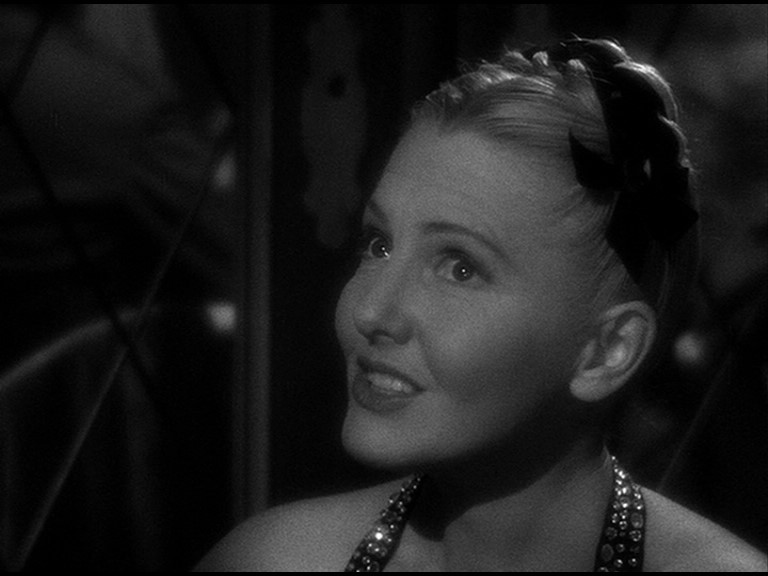
In post-war Berlin, Congresswoman Phoebe Frost (Jean Arthur) arrives from her home state of Iowa (“62% Republican, thank you,” she proudly states) with several Congressmen for an inspection of the troops. Horrified by the wild behavior of what looks to her like America soldiers wildly cavorting with comely fräuleins, she becomes particularly curious about the possible Nazi past of cabaret singer Erika von Schlütow (Marlene Dietrich) and who might be protecting her. She enlists Captain John Pringle (John Lund) to aid in her investigation, not knowing that Pringle is in fact the officer she’s looking for. He tries to woo Frost to throw her off the scent but he soon has to deal with the possible jealousy of Erika while elements of her own past have yet to fully come to light.


Shot partly on location among the ruins of post-war Berlin, it’s very much a work by Billy Wilder which is made obvious as soon as we see lead actor John Lund driving a mattress he’s just procured for his German lover through the bombed out streets as a jaunty version of “Isn’t It Romantic” plays on the soundtrack. Containing what at one point is essentially a documentary tour of Berlin giving a brief Hollywoodized feel of Italian neorealism with acidic asides-–“Over there, there’s the balcony where he bet his Reich would last a thousand years. That’s the one that broke the bookie’s hearts,” it’s hard to imagine what director out there today would even think about making a contemporary version of this type of material—some of the dialogue about how things are going in Berlin does sound somewhat familiar in this day and age. On a historic level alone, A FOREIGN AFFAIR probably was never appreciated very highly by the military of the U.S. State Department but it deserves to be better known if only for what it documents (the setup has a passing resemblance to Steven Soderbergh’s unsuccessful pastiche THE GOOD GERMAN). But while its unapologetic feeling in its portrayal of post-war Berlin is genuinely cutting aided by strikingly beautiful black and white cinematography by Charles Lang, the romantic comedy aspect in this screenplay Wilder, Charles Brackett and Richard L. Breen has always felt somewhat weaker, making the film seem more mild in the end than it needs to be even with the surroundings and all that amazing dialogue (“Don’t tell me it’s subversive to kiss a Republican!” as well as maybe my favorite, “And it wasn’t, if you’ll pardon the non-Aryan expression, Kosher.” ).


Maybe Wilder’s thoughts were (understandably) elsewhere considering everything that was surrounding him in Berlin but the telling of the story feels like it can’t reconcile the American-to-the-bone feelings of its two leads in the end with the life force of Nazi bitch Erika as played by the legendary Dietrich (who, it should be said, was a devout anti-Nazi who was awarded the Presidential Medal of Freedom for extensive work for the USO during the war and who needed convincing before she agreed to accept this role) who is nevertheless its most layered character as well as mind-bogglingly sexy even when seen in close-up with a mouth full of toothpaste and spitting water at her leading man in her very first scene. I mean, really, has there ever been anyone else like Marlene Dietrich on this planet? Jean Arthur’s comic skill allows for the demonstration of her character’s preciseness when we first meet her which is about as good a character introduction as you can imagine but in the early going she seems to be too much of a comical figure, with her hair always up in a bun making her seem a little too matronly (“a face scrubbed like a kitchen floor,” as von Schlütow laughingly describes her) and trying too hard to seem prissy. When the character loosens up, with the actress embracing playing a prissy person learning to loosen up for the first time by buying into the illusions of forbidden Berlin she works much better (although, interestingly, even then she never literally lets her hair down). As she belts out “Ioway (That’s Where The Tall Corn Grows)” in a nightclub winning over everyone around her it’s hard not to be charmed and I still can’t get that song out of my head. John Lund, an actor who was being pushed for a stardom at this point which never really took and who Crowe makes a big case for, isn’t bad and comes off as a somewhat earth-bound Clark Gable but he seems a little weak in comparison to his leading ladies, not making as much of an impression as he should and it’s hard not to imagine other stars of the time who could have worked better—Grant? Holden? Mitchum? Hell, Gable?


One thing that is made interesting is that it’s a film where the male lead is in his mid-thirties and playing opposite two women well into their forties—they don’t necessarily look much older than him but they certainly seem much more worldly and mature. In a sense, A FOREIGN AFFAIR is about a boy caught between two women, the spunky youth of the WWII era with no interest in going back home to boring old Iowa and ultimately has to decide between the bosom of matronly middle America and the undeniably more enticing Germany, albeit one of secrets that can never be forgiven. He’s a fairly likable scoundrel but as played by Lund never seems like he’s charasmatic enough to fully deserve either woman. It’s not a choice that you can get a really satisfying answer to in such a biting satire dealing with such serious matters and it’s almost hard for me to believe the light-hearted nature of the end. I’m not sure I believe that Billy Wilder believed it. What Wilder presents throughout very much feels like the ambivalence of someone who fled Berlin in 1933 and lost his family in the camps, displaying a combination of pure love and unforgiving hatred that he had for that city and the people who survived to live there. He doesn’t paint the Germans still around as evil—as she presents it, Erika had her reasons in doing what she did to survive but they’re nnot anything that could ever be at all dismissed. She’s certainly not an innocent who was forced to do the things she did and is even spotted in a newsreel coyly whispering into the ear of Hitler himself. Wilder’s lack of total judgment towards Erika could very well come from memories of certain women he knew in Berlin back before he fled—Ed Sikov’s essential Wilder biography “On Sunset Boulevard” (that’s right, I’ve got several books on Wilder) also contains information on a bizarre treatment written by Wilder, Ernst Lubitsch and Jacques Thery in 1939 titled HEIL, DARLING! about an American correspondent who falls in love with a beautiful Nazi doctor (presumably similar to Garbo in NINOTCHKA), an idea which now sounds like a bad joke and was, obviously, never filmed. The director’s feelings of ambivalence only went so far, of course, and according to one account while looking at aerial footage of bombed-out Berlin an assistant editor remarked that he couldn’t help but feel sorry for the Germans, at which point Wilder jumped to his feet and yelled, “To hell with those bastards! They burned most of my family in their damned ovens! I hope they burn in hell!” Decades later after seeing SCHINDLER’S LIST he spoke of looking for his mother while viewing the scenes of Jews being put onto the trains and out from these very raw feelings came this romantic comedy so the bitterness from both sides is there but a few of the other elements aren’t quite as strong. I’m not sure how they possibly could have been.


When Dietrich is on screen the film has soul and it becomes something else entirely, more resonant, more alive, more than it ever does when we’re focusing on our American protagonists which is interesting in a dramatic sense but still makes it play a little lopsided. When the story pauses to let Dietrich sing in the nightclub where some of it is set on several occasions (unforgettable songs by Frederick Hollander), it’s haunting. It stings. It has a pulse that is undeniable. When Frost and von Schlütow, the two rivals who by all accounts should hate each other finally begin talking with all pretenses put aside that blood continues to flow. The rest of the film has sharp wit in the dialogue, memorable imagery in what we see all around where things take place but it feels like it just falls short because we can almost sense the unsatisfying payoff things are building to. There’s also some plot near the end involving luring someone out of hiding that feels a little brushed off, as if Wilder just wasn’t very interested, not with everything else around him. Its best moments are so strong, so significant in the context of post-war filmmaking that it almost seems a shame that it has to revert to the standard expectations from neatly wrapping things up.


Wilder, for his part, seems to have been pleased by Lund, saying, “He was good, but he was not great,”—maybe he regarded the actor as easy to deal with when compared to Dietrich and Arthur who were each handfuls in their own way. Dietrich was enamored completely with her own self but the director got along with her unlike the much more insecure Arthur who called him on the phone forty years later to tell him she had finally seen the film, it was wonderful and she was sorry for how she behaved. It’s too her credit how much she holds her own with she and Dietrich really get to play off each other. And while it’s a fair argument that when you have Marlene Dietrich in your movie playing a role like this you almost don’t need anyone else but it still feels a little like there’s an unfortunate lack of supporting characters, someone for either the Lund or Arthur characters to interact with. The character of Pringle could probably use a best friend to bounce off of and the congressmen who accompany Frost almost come off as something like the elderly professors in BALL OF FIRE but aren’t vivid enough to serve this function and don’t have much screen time anyway. Millard Mitchell, the studio head in SINGIN’ IN THE RAIN, does have some nice moments throughout as the Colonel in charge of everyone, continually scratching the side of his nose with his middle finger and smart enough to know that he only has so much power over his men in the streets of Berlin where anything goes.


Even if it was Billy Wilder’s most personal film, which he seemed to confirm to Cameron Crowe, that alone doesn’t make it his best and the concept of The Essential, however TCM categorizes it, is probably up to the individual seeing any one particular film. Maybe some that remain problematic decades after they were made are just as essential for their own reasons as the classics the entire world seems to agree on. It contains certain flaws, but A FOREIGN AFFAIR is alive, vibrant, has reams of quotable dialogue and is of some historic note. It just lacks in perfection. And maybe you could say that a Billy Wilder film lacking in perfection, especially one that contains Marlene Dietrich, is pretty close to perfect anyway when compared with everything else. And, essentially, perhaps that’s all that really matters.

Friday, May 14, 2010

No Room For Ordinary Men


It’s an ongoing thing how I seem to be indulging my desire to finally catch up with films that I have vague memories of opening when I was a kid but didn’t get to see. My parents never took me to FLASH GORDON or THE BLACK HOLE, to name two that come to mind, but they get points for knowing enough to bring me to see RAIDERS OF THE LOST ARK on its opening weekend, a memory that will always stay with me. I even remember going with them to see ARTHUR of all things so I guess a film where the title character picked up a hooker in the first scene was acceptable. One early eighties movie they also didn’t take me to was THE LEGEND OF THE LONE RANGER though I actually do remember it not being well received at all at the time. So in finally getting to take a look at it and scratching this long standing itch I can confirm that, yeah, the film isn’t very good. It’s a handsomely mounted production but comes off as totally lopsided both storywise and visually, as well as featuring a number of actors who cause it all to play much flatter than it really should. Thinking of the film in the context of when it was released on May 22, 1981 (just a few weeks before RAIDERS, to be precise) and what the story’s approach is makes me wonder just who it was even supposed to be for. Incidentally, the film came in third on its opening weekend, well behind BUSTIN’ LOOSE and THE FOUR SEASONS despite playing in more theaters than either film. I’m going to guess that nothing was going to keep the western from being dead and buried in the early 80s but this film, which became a somewhat notorious flop during that period, probably didn’t help things any.


When his mother and father are killed by bandits, young John Reid is rescued and brought to live among the Indians who raise him as one of their own until John’s brother Dan shows up to send him back east but not before John makes a bond with his young friend Tonto who tells him that he will always be Kemosabe, trusted friend. Years later, the adult John Reid (Klinton Spilsbury) returns out west to practice law and be with his brother, now a Texas Ranger. Before he can act on a possible romance with Amy Striker (Juanin Clay) the niece of the local newspaper editor who he shared a stagecoach with, John joins his brother on a posse which tragically ends with the Rangers ambushed by a gang led by the vicious Butch Cavendish (Christopher Lloyd), a disgraced former Major with dreams of a “New Texas” that he will presumably control. When John is left for dead he is discovered by the now-adult Tonto (Michael Horse) who nurses him back to health among his people, giving John the chance to create his own secret identity of a man in a mask, a force who will fight evil along with a white horse who he names Silver after the type of bullet Tonto provides him with (“Silver is pure. A symbol of justice and purity...”). Meanwhile, Cavendish is formulating a plan to kidnap the visiting President Ulyssses S. Grant (Jason Robards) and possibly kill him, meaning that only the Lone Ranger with his trusty sidekick Tonto can possibly stop him.


Looking up this film for research reminded me just how huge a symbol The Lone Ranger was for the Baby Boomer generation. It’s not something I have any real connection to beyond knowledge of the character and William Tell overture being used as his them still somehow being a part of pop culture when I was a kid, but I guess even that’s long since passed. Providing such a huge backstory for this character who until then had always been a figure of mystery was probably tantamount to heresy at the time but that aspect now actually makes the film seem about twenty-five years ahead of the curve considering how every single character revived in this era has to fill in all those blanks. Even its deliberate holding back of the William Tell fanfare until an hour in with the exception of a few brief musical quotes isn’t all that different from how CASINO ROYALE refrained from using the full Bond theme until the very end in 2006. I didn’t sit down wanting to dislike this film but every time I began to take pleasure in a moment, an action beat or just the old-fashioned pleasure of watching an actual western, the movie would pretty much kill off that enjoyment with its own heavy-handedness. Directed by legendary cinematographer William A. Fraker, the film bears all the marks of someone who knew more to pay attention to visuals than to the specifics of the action in front of the camera or how to assemble these visuals into a compelling story. Much of the film seems to be shot using the same filter Fraker used when he was D.P. on Spielberg’s similarly-gauzy 1941 (for the record, Lazlo Kovacs served that function on this film) and its haziness just winds up making me sleepy, continually losing interest in the already lackluster story. Maybe the production got a deal on any film stock left over from HEAVEN’S GATE. During one evening festival scene early in the film there’s so much ‘atmosphere’ in the frame that it becomes difficult to tell exactly what’s going on and all the hard work that various craftsmen must have put into designing this western town seems for naught.


It feels like a train wreck of tone or maybe one was never even decided on, like there was a deliberate attempt to not do an update of old-fashioned serials in the style of STAR WARS and SUPERMAN but in trying to be as earnest as possible it just winds up coming off as a drag. Several of the main actors are too wooden, much of the dialogue is flat and clichéd, at times it feels too violent for kids (was it meant for kids? You’d think so, but I’m still not sure) and maybe worst of all it’s just not much fun. It barely even seems like it was ever meant to be fun. We get people being violently blown away by bad guys and then the Lone Ranger confidently shooting guns out of people’s hands instead of wounding them which is probably meant to show how much more noble he is but the various elements never fit together in a cohesive fashion. Even a lot of the admittedly impressive stunt work just winds up looking a lot like, well, impressive stunt work. There’s also some spectacularly awful rhyming narration by Merle Haggard, credited as “The Balladeer”, which must have made the film seem like an episode of THE DUKES OF HAZZARD to people when it was released. You get to hear Haggard sing “The Man in the Mask” as well, which gets worked into the score by John Barry whose work here goes for the sort of lush mystery and romance that his music was beginning to focus on at the time. In THE BLACK HOLE that sort of approach certainly helped the mood but here it winds up not only making things way too ponderous and when the familiar theme finally does come into play it just feels out of place with the slow, steady fanfares we’ve been hearing. The story of a white man living among Indians does provide for an unexpected comparison point with Barry’s score for DANCES WITH WOLVES, however. This world is so gritty and nasty with no sense of adventure or real excitement that the Lone Ranger winds up seeming like he’s in the wrong movie. Maybe if he’d been allowed to be a stronger presence that would have helped…but he isn’t.


The Ranger’s origin story takes about as long as the buildup in SUPERMAN and when the character finally makes his spectacular first appearance it feels like a beat designed to exactly emulate Christopher Reeve’s introduction but in that film we still had practically an entire movie of fun to go. Here we just get some dull mini-adventure that involves saving President Grant and getting revenge on Cavendish that isn’t very exciting or satisfying at all (Cumbersome screenplay credits—Screenplay by Ivan Goff & Ben Roberts and Michael Kane and William Roberts, adaptation by Jerry Derloshon). The film only runs 98 minutes with at least one major character disappearing from the film at a certain point but some sections are paced in so lethargic a fashion that I could imagine somebody easily removing twenty minutes from what’s here. Losing most of the endless slow motion footage would be a good start. One point of interest to people may be the scenes involving stuntman Terry Leonard’s attempt to traverse under a runaway stagecoach during an early scene. The trick apparently went wrong, injuring him in the process, but Leonard wound up trying it again during the production of RAIDERS OF THE LOST ARK some time later for when Indiana Jones makes the similar move underneath the Nazi truck. That time, as we all know, he was successful.


I don’t even know how much I want to criticize some of the actors since there doesn’t seem to be much point. Klinton Spilsbury, definitely no Christopher Reeve, never appeared in another movie and became kind of a punchline for film geeks from all this. Suffice it to say that he never projects much personality as either the Lone Ranger or John Reid (presumably no relation to the only American ever buried in the Kremlin that was played by Warren Beatty), with his voice even being dubbed over as flatly as possible by James Keach. There’s nothing to be gained in denigrating him further. Female lead Juanin Clay, probably best remembered now for playing Dabney Coleman’s assistant in WARGAMES, gets an ‘introducing’ credit here at the age of thirty-one and she looks considerably older. She’s kind of a nonentity but she died in 1995, so there’s nothing to be gained in dwelling how she doesn’t make much of an impression. Michael Horse, best known as Deputy Hawk on TWIN PEAKS, does manage to bring a considerable amount of dignity to the role of Tonto and Jason Robards is such appropriate casting as Ulysses S. Grant that he deserved to play him in a better film. He also says a certain famous line near the end that we’ve been waiting the whole movie to hear and he even pulls it off. Richard Farnsworth appears briefly as Wild Bill Hickok, making me wish we could also see him play that role in another film, but the best performance is easily given by Christopher Lloyd who uses his off-kilter nature to enhance Cavendish’s nastiness and keeps it consistent all the way through, with none of the eccentricities that might be associated with the actor. There’s one icy close-up of Lloyd early on which is so effective that it almost makes me want to defend the rest of the film on general principle, but it rarely rises up to that level. Lloyd’s future BUCKAROO BANZAI co-star Matt Clark (that film’s Secretary of Defense, along with a million other credits) appears here as the town Sheriff as well.


The bad publicity that came out of the lawsuit around the time of its release by the character’s owners to get Clayton Moore, the star of the legendary television series, to stop wearing the mask in personal appearances didn’t help the film’s chances but it probably didn’t matter much in the end. To add to the odd history surrounding the film the most recent DVD was released full frame for some reason but recent airings on cable are in the full 2.35:1 Scope ratio so you can at least kind of see something through all that misty photography. It’s caught between eras, between approaches and there apparently wasn’t anyone involved who had the vision of somebody like Richard Donner to figure out exactly what this film was going to be. As a result, it winds up being not much of anything. Some plot beats and iconography feel right out of certain classic westerns but none of it has any real feeling or love for the genre so much of it winds up feeling pretty perfunctory. For several years now a new version of The Lone Ranger to be produced by Jerry Bruckheimer and possibly featuring Johnny Depp as Tonto has been in some form of development. It doesn’t appear to be happening just yet but if Bruckheimer can get people to see a pirate movie again I suppose it’s possible he can figure out some kind of magic formula for this character as well, whatever the specific approach might be. THE LEGEND OF THE LONE RANGER, meanwhile, remains stranded in that wide open valley between paying too much attention to nostalgia and not having enough interest in why people responded to such a character in the first place. And in the end that uncertainty is the sort of approach which takes a legend and turns it into something purely mediocre.

Wednesday, May 12, 2010

Pride Makes For Perversity


The early seventies were something of a low point in the career of Blake Edwards, a time where the director had several projects which were not only poorly received but their failures came after having already gone through numerous problems during shooting and editing. Among these films was the now forgotten mystery-thriller THE CAREY TREATMENT, first released in 1972. Never available on video in any format the film is probably remembered most today as one of a number of productions which by various accounts suffered from strong interference by MGM head James Aubrey (a list that also includes Edwards’ previous film WILD ROVERS and Sam Peckinpah’s PAT GARRETT AND BILLY THE KID) and Edwards even apparently tried unsuccessfully to have his name removed from the credits. In spite of all these issues, Vincent Canby in The New York Times described THE CAREY TREATMENT as “absurdly entertaining” in a very positive review when it opened and Andrew Sarris declared it the no. 10 film of 1972 on his year-end list right behind DUCK, YOU SUCKER, another James Coburn vehicle that went through troubles in the cutting room. And while the film may have turned out better if Edwards had been allowed more control THE CAREY TREATMENT is still pretty entertaining, far from the nadir of the director’s long career. At the least, it doesn’t seem to bare the marks of a film that was wrecked in the cutting or shooting—that observation doesn’t necessarily mean anything but although there is some abruptness felt near the end it certainly doesn’t play as an incomprehensible mess that’s been cut down to eighty minutes (it runs 101 minutes, actually). For the most part it also doesn’t necessarily play as a recognizable Blake Edwards film, coming off more as a neatly plotted mystery than anything, the film version of a good airline novel as well as something with a little bit more depth to it than I was expecting.


Dr. Peter Carey (James Coburn, who previously starred for Edwards in WHAT DID YOU DO IN THE WAR, DADDY?), a swinging bachelor pathologist from Northern California, has just moved to Massachusetts to join the staff of a prestigious Boston Hospital. No sooner has this doctor who smokes settled in and begun to make his maverick persona known, as well as taking up with the beautiful hospital dietician Georgia Hightower (Jennifer O’Neill), when Karen Randall, the fifteen year-old daughter of the hospital administrator J.D. Randall (Dan O’Herlihy) dies after heavy bleeding and Peter’s old friend Dr. David Tao (James Hong of CHINATOWN, BIG TROUBLE IN LITTLE CHINA and a million other things) is arrested for performing an illegal abortion on the girl which is believed to have resulted in her death. He admits to performing such illegal abortions on girls (I guess this film was never going to have a long shelf life) but claims he never touched Karen. Believing what his friend says, Carey begins to investigate what happened and soon begins to realize that certain people aren't at all pleased about the questions that he's asking.


For the most part THE CAREY TREATMENT could be described as a fairly straight-ahead hospital thriller with a plot that doesn’t contain many elements that haven’t turned up elsewhere years after it was made, with the exception of the abortion angle that obviously now dates it. I even found myself wondering why the story felt like early Michael Crichton, sort of a warm up for COMA, until I looked up the film credits and realized that Jeffrey Hudson, author of the 1968 source novel “A Case of Need”, was in fact a Crichton pseudonym. I should have known. Credited screenwriter James P. Bonner is also a pseudonym as it turns out, in place of the three screenwriters Irving Ravetch, Harriet Frank, Jr. and John D.F. Black who all chose to take their names off after the interference by Aubrey. When he tried to do the same, Blake Edwards was unsuccessful and after this unfortunate experience took off for Europe for several years. The December 27, 1971 issue of Time Magazine reported in a piece on the studio head that Edwards had instructed his lawyers to file a breach of contract suit against Aubrey alleging that he “reneged on promised script changes to enhance the love interest between Stars James Coburn and Jennifer O'Neill, cut Edwards' location shooting unreasonably short, and set an April release date for the film that made it impossible for Edwards to edit it properly.” Keeping all this in mind it was hard not to think that one scene featuring Coburn and O’Herlihy sniping at each other during an operation (“Do you want it right?” “I want it now.”) feels a little like it’s meant to represent whatever was going on between Edwards and Aubrey. The critical biography “Blake Edwards” by Peter Lehman and William Luhr, their first of two volumes on the director, reiterates some of these matters at one point offering, “All of this interference makes the film difficult to discuss as an Edwards work. Many of the contemporary reviewers were surprised, considering its turbulent production history, at how entertaining and crisp a film it was.” I quote this because it’s precisely what I was thinking on this viewing. There’s no way to say how different Edwards would have made the film if he was allowed but except for some abruptness as well as the obvious elements that date it the film holds up nicely as an well-executed crackerjack thriller with interesting doses of wit and seriousness.


Crafted with skill but still done in a somewhat anonymous style, very little about THE CAREY TREATMENT feels much like a film directed by Blake Edwards. While earlier titles like EXPERIMENT IN TERROR and THE DAYS OF WINE AND ROSES are even darker than this one they certainly contain enough consistent thematic elements that they feel recognizably like his work. In THE CAREY TREATMENT even the one party scene, prime Edwards territory in either comedy or drama, feels kind of sedate in its swinging seventies vibe, just a device to move the plot along. The general feeling of craft evident in the direction is no surprise with a director like Edwards but also of interest coming from him may be the general feeling of midlife crisis malaise that seems to be felt by the characters throughout. The film is loaded with characters who seem increasingly lonely and dissatisfied as they approach middle age, trying to occupy themselves with hobbies like gourmet cooking or growing apples, something which can certainly be said for the film’s lead character as well. He’s James Coburn, yes, and he’s very cool, but also somewhat beaten down by things. At one point Carey muses how when he was young he wanted to be “the greatest surgeon in the world” but when asked what happened to stop it he’s hesitant to answer that question. It feels a little like the cool sixties James Coburn from something like DEAD HEAD ON A MERRY GO ROUND is several years past the good times and now he can’t figure out what the point of it all was. Though he claims that he made the move all the way from northern California to this hospital in Boston for “more bread” it feels entirely possible that there was more to it than that. He’s a person without a wall, “that thing you carry around to keep everyone out,” as his girl tells him and he can’t just stand by when no one else will do anything, though this renegade out to destroy the establishment occasionally pauses from his investigation to dally with Jennifer O’Neill as he recalls his lost life. At one point when he’s angrily called a son of a bitch when he goes a little too far in questioning somebody he doesn’t have an answer for that either.


The film seems filled with characters beaten down by their associations with this hospital and even the dead girl’s teenage roommate, very well played by Blake Edwards’ daughter Jennifer (later in S.O.B.), comes off as someone who has reached bitter middle age way too soon. As Carey digs deeper into what’s really going on all these people around him come off as more pathetic than threatening, like when a minor bad guy who he chases down pleads not to be hit squealing, “I just had a hernia operation,” and I suddenly found myself feeling sorry for the weasel. Of course, that may just be personal experience talking. But I know that I’ve never been as cool as James Coburn. In watching this film again I found myself struck by how well it succeeds as a character study of someone who since we never learn enough about him we have to sort out why he’s behaving this way on our own, an iconoclast played by an actor who excelled at them and this part fits him perfectly. As a mystery THE CAREY TREATMENT plays good but not great—the requisite elements out of THE BIG SLEEP work well thought there are a few holes and it also contains a crucial element that doesn’t get introduced until later than it should—but as a look at someone caught up in nastiness while trying to figure out where to go in his life the film holds together very well. In the aforementioned New York Times review Vincent Canby seems to take the whole film as a giant lark, so maybe he’s right and I’m being way too serious about it. But the dry nastiness of scenes like the autopsy of the fifteen year-old dead girl and when Carey goes to unexpected extremes to get information out of someone wound up getting under my skin, making me feel more than a little like all of these depressed people by a certain point. I don’t know if that feeling fully dissipates when the credits roll but it makes it impossible for the to totally dismiss the film even if its own director walked away dissatisfied.


Elements may be missing but James Coburn holds things together with his strong persona as Carey, working well with his co-stars in each scene and always compelling as this intelligent character who doesn’t know how to just sit by and not do anything. Jennifer O’Neill looks great and has a playful presence but she’s always on the outskirts of the plot with the drama of her failed marriage going on entirely offscreen—her character even has a son who we never get to meet. Pat Hingle dependably plays the police captain investigating the girl’s death, sparring nicely with Coburn in several scenes. Playing the accused, the very familiar James Hong plays a regular guy, something he never gotten much of a chance to do otherwise and it’s an interesting bit of casting. Elizabeth Allen, star of John Ford’s DONOVAN’S REEF, has a nice scene with Coburn as the girl’s boozy stepmother who insists that she’s not old enough to be her real mother. Dan O’Herlihy is enjoyable in what plays a little like the Dan O’Herlihy role, Michael Blodgett, the legendary Lance Rock of BEYOND THE VALLEY OF THE DOLLS, plays a crucial role in the third act and Skye Aubrey, daughter of the man Edwards was battling with, plays a nurse who figures into the investigation, slyly rebuffing Coburn during the one party scene. John Hillerman turns up as a doctor at the hospital as does Robert Mandan who, in one of the driest moments in the whole film, blandly tells Carey that he’s ‘not a believer of any kind’ when the subject of religion comes up, as if working at this hospital has beaten any kind of spirituality out of his very soul. It should also be mentioned that this is the rare Blake Edwards film not to contain a Henry Mancini score (maybe by their choice), instead it featuring music by none other than Roy Budd of GET CARTER immortality and it’s very smooth, very early seventies, very James Coburn. The line that could be drawn from Budd to Mancini in their melodic stylings doesn’t seem that long anyway and the main theme is so hummable in its own cool way that it still seems appropriately part of a Blake Edwards film.


It’s not without problems—the romance is never integrated into the main plot particularly well for one thing and it feels like the film is missing the occasional grace note to give things more resonance. Even some of what’s there, such as a reverie involving the dead girl, doesn’t have much impact as if the movie is going for a loss of innocence feel that it’s unable to reach. And the last scene feels a little like they had to come up with something fast in order to have some semblance of an ending, though that ultra-cool Roy Budd music helps as the credits roll. But even though I’m a hardcore Edwards defender who would have loved to see the film that he by all accounts never even got to get on film let alone cut together I still find myself continually engaged by this film and the treatment of its characters. It’s pretty much forgotten now except for the occasional TCM airing which for all I know he’s happy about but it has enough sharpness to its characters and mystery that I’ll still count myself as one of its defenders. Even if no one cares enough anymore to hear that defense.