Wednesday, April 6, 2022

No Deceit In The Cauliflower

Let’s try this again. Not like anything is ever going to make sense. The truth is that most of my life I’ve known either New York or Los Angeles, not that I have any idea where else I’m supposed to go. My one and only trip to Minnesota was for a wedding where during the reception I found myself gravitating towards one particular side of the family, specifically the other New York Jews who had also traveled to be there. No matter how nice everyone else was, that was where I felt comfortable, that was where I felt I belonged. Of course, we spend so much of life trying to figure out where we belong and if certain people were ever really meant to be part of our lives at all. Sometimes the answers to those questions are more obvious than we want to admit. Maybe this is something we eventually learn, maybe we never learn a damn thing. We’re still going to fuck things up, of course. We are who we are.
Which brings us to THE HEARTBREAK KID, original version. Not “Elaine May’s THE HEARTBREAK KID” according to the credits, but we’ll get to that. The cult around the great Elaine May remains strong these days, at least in the world of Film Twitter, and interest surrounding the four films she directed seems to have grown with the reputations of A NEW LEAF, MIKEY AND NICKY and ISHTAR growing stronger, all of them remarkable in their own ways in spite of the now legendary postproduction issues each went through. So in one sense, her second film THE HEARTBREAK KID feels like an outlier. Whether it’s her best is a pointless debate—ask me on different days, I’ll give you different answers—but the argument could be made that its narrative spine does hold together better than any of them so it all flows together without some of the jagged rhythms contained in those others. The death last year of star Charles Grodin also served as a reminder of the fearlessness in his work here, not only cementing what would become his screen persona for all time but helping to make this a seamless fusion of performance and film.
THE HEARTBREAK KID received two Oscar nominations, always a little surprising for a comedy, but has sadly become difficult to see in recent years due to rights issues too dull to go into here. For now it can be found online in so-so quality at a certain site that starts with a Y and the audience response at a screening a few years ago proved that its edge hadn’t dulled. This is a film that can justifiably be called a comic masterwork but one that is also a profoundly uncomfortable experience, which wouldn’t be the case if there wasn’t any truth in there. People can be horrible, after all. Maybe if they weren’t, they wouldn’t be people. This is a film about the choices we make in what we pursue which can lead to us losing who we are, no matter how much we wanted it. It never feels daunted for a second in how far into the depths it’s willing to go for those laughs and in that sense remains a source of inspiration even if it’s a reminder about the choices that wind up leading us the wrong way.
Newlywed Lenny Cantrow (Charles Grodin) takes off for Miami Beach with his bride Lila (Jeannie Berlin) on their honeymoon where almost as soon as they arrive he meets blonde beauty Kelly Corcoran (Cybill Shepherd) on the beach, becomes instantly smitten and uses the ideal excuse of Lila’s horrible sunburn to keep her in the hotel room as he gets to know Kelly better. He meets her parents Mr. and Mrs. Corcoran (Eddie Albert and Audra Lindley) and is then determined to end his marriage as soon as possible, even if it means pursuing Kelly all the way back to her home in Minnesota leaving behind everything he knew in life before. '
Closing in on fifty years after it was released at the end of 1972, THE HEARTBREAK KID remains awe-inspiring like few other comedies I can think of, a high-wire act of cruelty and deadpan awkwardness done as light romantic comedy, with humor so deadly that the laughs hurt as they stick in your throat. The tone is unrelenting, going further beyond where you think it will go as it takes this premise and stretches it to see how far this feeling can go, beyond the point where you think it will break off and give you some relief, a moment that will make it all feel better and everyone can laugh. The lead character fearlessly lies and talks his way out of the situations he gets himself into until there’s no one around to call him on it but no matter how cruel the film becomes he always feels completely human in his determination, just horribly so, no matter how much emotional wreckage he causes thanks to his own selfishness. It’s hard not to shake the wish that the film is somehow going to give you a speck of relief but it remains committed to that goal as much as he is, completely unrelenting in that pursuit. Which makes it difficult to watch this film without wanting to flee the room at certain points but this is, of course, meant in the best possible way and its anti-comedy approach tricks you into thinking you know what it is, only to reveal that it’s about more than just the cruelty that it leads to.
The title card at the start specifically reads “Neil Simon’s THE HEARTBREAK KID” and that writer is the one credited with the screenplay based on the Bruce Jay Friedman short story “A Change of Plan”, but the possessory credit stating ‘An Elaine May Film’ follows immediately as if to underline who is really responsible for the approach it takes, not to mention its view of humanity. It certainly doesn’t feel like any other Neil Simon movie from the period, films that vary in quality but all seem like part of the same assembly line with directors who are mostly tasked to keep everything in order as opposed to bringing a real point of view to the material. In his autobiography “It Would Be So Nice If You Weren’t Here” Grodin writes how it was decided during production that the Simon version of a scene would always be shot but May would also film more takes to add whatever embellishments or improvisations she wanted and the film would be put together around that. Simon agreed to this approach, then proceeded to vanish after several days of watching all this begin to take shape. The bones of a Simon narrative can be found in the structure if you squint hard enough but instead of focusing on the expertly timed wisecracks the approach it takes is in looking for the silences found within the reality of how these people might actually react to each other, as if it’s a main character who is looking for that snappy patter only to find everyone reacting to him as if they live in a normal world, in understandable disbelief to what they’re hearing. While some of Simon’s work is about the dichotomy between New York and what’s out there in the rest of the country, specifically California, this film takes aim at the differences between east coast and the white bread middle in the most cutting way possible. The wedding at the start feels strictly working class in how tiny and imperfect it is but this is also the single most joyous part of the film, the cries of ‘Mazeltov!’ coming from those New York Jews which gives the feeling that this is real life, these are their people, this is where the joy is found. When Lenny finds out that Kelly is from Minnesota his disbelieving “It’s so far from New York!” response is one that sounds like he never considered people might live anywhere else, that he comes from a place where ‘the element’ he was a part of is exactly what her father doesn’t like at their hotel which he remains undeterred by. “He hasn’t met you yet, but just from appearances he doesn’t like you,” Kelly tells him later on which almost seems to make him more determined to prove just how far he might be willing to go.
Looking at her other films it becomes clear how much Elaine May loves the men in them through all their horribleness and desperation, but in the case of THE HEARTBREAK KID it feels more like her camera staring unblinking at what Lenny is doing, possibly in awe at what he’s trying to get away with. In fairness, it doesn’t really seem to like anyone else in the film either, except for maybe the extras at the opening wedding; the audience might develop sympathy for Lila, but clearly that’s not the film’s job. What exactly drives Lenny to do this is never explained as if it’s all some indefinable other thing that he’s going for, which never occurred to him until he finds himself out on the road actually interacting and sleeping with his new bride with that brief shot of him sitting across from her as she sleeps, staring, wondering who the hell this is and what he’s done. Through everything she does, her overly aggressive nature on the road, cutesy bed talk and even what she orders in a restaurant, by the time the road trip is done it’s like we’ve gotten a full short film detailing every aspect of their relationship. In fairness, maybe a double order of egg salad isn’t necessary and, sure, she could have listened to Lenny when he suggested she put suntan lotion on but it’s all still kind of endearing even when she’s a little much. Lila only wants him and what they have together, for the next 40 or 50 years as she puts it, already looking forward to when their coffins can sit side by side. Lenny only sees the things he’s suddenly learning about her, as if she’s messing with the perfection he wants to project and sell to people when he looks at himself in the mirror. His pursuit of Kelly the shiksa goddess to end all shiksa goddesses quickly begins to feel like he’s decided to have a staring contest with the entire world, even if it’s just out of spite to prove he can do this as if he’s starring in his very own romantic comedy about what a catch he is, maybe even one written by Neil Simon with a fun title like THE HEARTBREAK KID. All this is like a rationalization as if to search for motivation in the horrible lies he’s telling Lila but marriages in Elaine May films, not that there are many of them, always feel tenuous with the communication wires are always getting crossed as the husband shouts down the wife’s well-meaning intentions, keeping as much from them as possible, trying to avoid the trouble they’re getting into.
Lenny is literally blinded by Kelly on first sight. It’s really the sun behind her that does this, of course, indicative of how he seems to misjudge everything right off the bat even though he remains blinded by her through every enigmatic answer she gives him to his questions, whether actually clever or not. But Lenny dives right in and when he tells Kelly that he’s all in it almost happens before we expect him to, coming up with lies so unbelievable to Lila that she has to accept them as truth in that agonizing silence when he finally gets into bed with her, knowing it will probably be for the last time. “Were you really in an accident, Lenny?” she asks after listening to the story about what happened to him that night, then after all his flailing the horrible silence just hangs there as she looks at him. Instead of keeping this going for an entire movie it simply rips the band aid off through a dinner sequence where he finally breaks the bad news that pushes everything past the boundaries of that agony, Grodin’s pauses become longer and longer, like an improv sketch that he’s been told to stretch out as far as conceivable as if desperately waiting for someone else to talk for him, that certain piece of pecan pie he’s been talking about for so long giving him an excuse to put it off a little longer, groping towards finally giving her the news and when he does still won’t let her get away, telling her all the good that’s going to come out of this and still trying to sell it to her. It’s all made even more brutal by how when it finally gets to the moment of truth the scene is only half over, on one hand unbelievably cruel towards Lila but also forcing us to pay attention to her response while Lenny keeps talking. Any other film with a shred of mercy would likely cut away but any other film wouldn’t pay such close attention to what’s really going on.
This long, horrific, mesmerizing, painfully funny scene is one of the key moments in the film’s structure which can be broken down into several points of negotiation that Lenny must traverse, deadly and heartless but always human, viciously so. Earthy, sexy, funny and agonizing all at once, of course Lila isn’t a bad person. There would hardly be any point in watching the film if she was and the whole point is that she’s not portrayed as a shrew or some sort of nonentity. Her immaturity makes her feel like she’s a little girl in an adult body, needing both her parents help to walk down the aisle at her own wedding, probably never having been away from them for too long. Which makes her helpless up against what Lenny assumes is the cool sophisticated quality that Cybill Shepherd’s Kelly projects, even if she’s just as much of a pampered little girl in her own way. Lila is discarded and has to be, by both the film and Lenny, but it demands we pay attention to her in those giant close-ups when she’s still around, in some ways getting just as annoyed as he is and it is painful but so much of the humor comes out of how much that pain is felt. How much he remains blinded.
Elaine May’s direction is all about focusing on these elements so we feel every excruciating moment, those giant close-ups that make Lenny speechless or when it’s him and another person facing off in the frame, on what Lenny is confronted with and how he’s choosing to handle each moment. It’s not so much about the specifics of composition but director of photography Owen Roizman, at this point somewhere in between shooting THE FRENCH CONNECTION and THE EXORCIST for William Friedkin, adds to the intensity by often cramming Charles Grodin into as tight a frame as possible, to force him in there and make us keep watching so we can’t escape from the shot any more than he can. After all, this film is probably about as upsetting as THE EXORCIST in the end. The stylistic extremes displayed by May’s former partner Mike Nichols in directing THE GRADUATE don’t seem to interest her as much but the people do, so in this context it becomes very clear that Jeannie Berlin eating that double egg salad sandwich is Cinema. Even the main theme sung by Bill Dean is more a piece of early 70s easy listening that sticks in your brain whether you like it or not than something by Simon & Garfunkel that seems intrinsically a part of the film, the peppy tone going ideally against the darkness along with those recurring lyrics of “Close to You” running through Lenny’s head. The directorial approach is blunt instead of elegant, a point of view of the world—of both worlds in this film—which forces us to look at it through that prism. It’s an unrelenting sort of pain felt particularly in that one long unbroken shot of Grodin ‘laying out his cards’ has he faces Eddie Albert, with Cybill Shepherd and Audra Lindley in the middle reacting, is as good as anything and so brave in that display of how long it’s willing to wait for the explosion.
The two films can be compared to each other for a variety of reasons and maybe even the weakest stretch of THE GRADUATE when Benjamin follows Elaine up to Berkeley matches up with the weakest stretch here, when Lenny turns up in Minnesota and is forced to suddenly find ways to impress Kelly who at first tells him little more than, “Gee, I’m really flattered,” while on the way to English Lit to win her over (his impersonation of a Justice Department narcotics officer feels half developed and is likely the weakest moment in the film but I’m hardly the first to point out how it looks forward to the Litmus Configuration scene in MIDNIGHT RUN), turning a wisp of an image into someone forced to display some kind of motivation to her behavior, even if this film isn’t about giving us the satisfaction of actual reason which most of the time people in real life don’t do either. The scene where Lenny confronts Kelly in his car feels like they’ve never spoken before and in some ways they haven’t so it makes sense that there’s almost nothing to say about their relationship because there really isn’t one. All he has is the pursuit and when finally alone with Kelly she has him play a game where they stand naked close to each other without touching it’s as if she’s instigating him into a life of no meaningful contact with another human ever again. Even when she talks about how positive Lenny is just like her father, who never seems all that warm and encouraging a person, we never know if she means a word of it and even that ultimately means nothing.
Interestingly, in his book Charles Grodin mentions that he got along great with Jeannie Berlin during filming but didn’t get to know Shepherd at all and, whether intentionally or not, this worked out perfectly for their utter lack of chemistry, two people with absolutely nothing of substance to say to each other. Kelly is every bit the vision that early ‘70s Cybill Shepherd would be but also a blank magazine cover of beauty with little beyond her own private jokes, daring Lenny to keep talking until she loses interest, always looking like she’s about to crack up for her own reasons. The character isn’t even seen during the final seconds of the film, in one sense surprising since it has always seemed like everything was about her, but in truth it never really was and by this point she doesn’t even matter. Eddie Albert as her father barely seems to look at her through the entire movie, certainly not during the great laying out of the cards scene. The showdown over her as a commodity between the two men is the real confrontation things have been building to, this film’s own version of Benjamin Braddock endlessly driving up and down the state of California, and feels like those other Elaine May films about two men sitting across from each other when the real truth comes out. “There’s no deceit in the cauliflower” is an all-timer, spoken during Lenny’s soliloquy about the honesty found in their simple Midwestern dinner, but gets made even funnier by Kelly’s outraged father repeating it back to him in disbelief, outraged he’s being forced to actually sit down and talk to this guy with the ‘New York head’ who he hates so much.
Grodin also wrote about men coming up to him to say how much they identified with his character, looking up to him for snagging the beautiful blonde, which he found unnerving. He’s right, of course, but there are plenty of things to identify with here, just not the sort of things you go up to the star to eagerly share with them. Which is the point, since if there wasn’t anything in there to identify with then it wouldn’t get under our skin the way it does. The final moment sidesteps going for an expected punchline in favor of a quiet realization by the main character, a salesman with nothing left to sell, a life that he’s left behind and can’t return to. The simplicity of the line “I was ten” which isn’t really spoken to anyone as he sits there on that couch at the end faced with what he’s done and what he can’t return to lands in the most brutal way possible which is what the ending has to be. The plasticity of love has been around him though the whole movie, from the songs sung by him and Lila on their road trip to what seems like the welcoming sights on Miami Beach and those are the things that surround us all, until it envelopes you while trying to resist it and suddenly there’s no way to tell the difference. The real thing, to use a line from a certain song, is what you sing with someone you want to be with, until suddenly it becomes something you hum to yourself when you’re alone. It’s an ending that gives this film life, all-encompassing self-loathing life.
A crucial part of all that is how astoundingly good and unrelentingly fearless Charles Grodin is this role, seemingly not caring at all about what an audience was going to think about him. He never winks, he never makes you think that he’s judging this guy, he understands that if he doesn’t keep talking all this might collapse. Coming after smaller parts in ROSEMARY’S BABY and CATCH-22, here he both establishes what the Grodin screen persona will be for all time while also totally obliterating it. Maybe he was better in certain roles later on—as always, we come back to MIDNIGHT RUN—but there’s something pure in this. As Kelly, Cybill Shepherd takes a part which almost seems deliberately underwritten but while we may be paying attention to her beauty, makes it all about both what she’s saying or not saying at the same time, how serious is she ever about anything, really, but as if she’s ready to burst out laughing at any moment, as if daring the people around her to call her bluff on how far she thinks her adorableness will take her. The Oscar-nominated Eddie Albert is astounding, spending part of his screentime doing little more than seething as Grodin attempts to get in his good graces, waiting for that moment where he can lower the boom to this man that he clearly despises, with the always delightful Audra Lindley by his side trying to make things more pleasant. Jeannie Berlin, also Oscar-nominated as well as May’s daughter, is unforgettable as Lila, never looking for our sympathy as if both examining her from the outside and fully inhabiting her from the inside, bringing a cheerful, annoying innocence as she tells Lenny “I put cream on,” with that cream slathered all over her face. She says it with such unthinking hope that you want to take care of her and yet as part of how human, how horribly human, the movie is you can totally understand what Lenny is really thinking at that precise moment.
Movies can remind us of ourselves, our own past and our own fuckups. Sometimes a little too much. They’re a part of our lives, after all, a reminder of all the Kellys and Lilas we’ve known. That doesn’t change. Nothing makes sense anymore, not what we want, not what we’re going to get and, these days, we’re still not sure where we belong. Once when briefly introduced to Jeannie Berlin her at a party, she gave me a look of total disinterest. Maybe I didn’t belong there either. After the wedding that begins THE HEARTBREAK KID, Lila keeps telling Lenny how they’re going to be together for the next 40 to 50 years, almost as long as Grodin himself was around after this movie. Makes you wonder how Lenny spent that time. I mean, what are the things we’re looking for in our lives when we decide we want to be with somebody. What do we really want, deep down? I if we know the answer, can we say it out loud or do we keep going over it in our minds, along with all those reminders of the way we fucked things up. Sometimes that doesn’t change and it likely won’t in the future, no matter how much we learn. Maybe you have to be from New York to understand. Maybe you just have to be able to remember certain things and know when you were wrong. Maybe we never know.

Sunday, October 3, 2021

Ever Since You Left

For months it’s been hard to avoid trying to think about new beginnings. Or maybe what I’m dwelling on are just the endings. Right now it’s tough to tell which is which. I’m trying to believe that somewhere in all this will be a new start for everything but, well, things happen. Of course, nothing has happened this past year, nothing except for a lot of stuff we’d rather forget. And the more time goes by, the greater is the awareness of how hard it can be to really know a person through all that, even when you think you do, even when you think you’ve been allowed to. Even when you want to hold onto that connection you thought was there only to realize it was just a mirage. Where do those people go? Somewhere in all this is an answer, we just have to figure out what it is for ourselves.
But what is the past? The past is something we have to force ourselves to move on from, as much as we find ourselves stuck there. It always seemed like Paul Mazursky made films about what was going on around him but all that is the past now too. He’s been gone for over seven years by this point and there’s no one around making films like Paul Mazursky. Which is a damn shame, even if I don’t know who would go see those films if we had him. Times have changed. His BOB & CAROL & TED & ALICE was about what was going on between people when it was made in the late 60s, even if the confusion felt by the characters still feels relatable, reminding me of all the bad decisions you can’t avoid. And AN UNMARRIED WOMAN, which he wrote and directed, feels like it was about the specific point in time when it was released in 1978. Starring the unforgettable Jill Clayburgh, this particular film is maybe not as breezily entertaining as BOB & CAROL but it feels more insightful, more open to the pain caused between men and women and, yes, it even feels like it has something more to do with right now and all that pain even if there isn’t a chance in hell of something like this being made these days. The fact that he was a man making this film about such a woman might also send up a red flag, even making me seriously think about how valid it is for me to be writing about it, and while it’s definitely a good thing there are more female directors working now it’s as if the distance he felt from the subject was part of what made him want to explore it. He wanted to understand the source of all that hurt and how to move past it, to understand what all these women are going through as they try to live in the world around them. This is what gets explored in the movie just as much as the idea of starting over (not to be confused with a certain other Jill Clayburgh film, of course) which feels like it means even more now that we’re all sort of trying to start over, trying to remember where those people went and why we’re doing any of this in the first place.
Erica Benton (Jill Clayburgh) appears to live a charmed life on Manhattan’s Upper East Side with her husband Martin (Michael Murphy) and daughter Patti (Lisa Lucas) when one day on the street he announces between sobs that he is in love with another woman. Just like that Erica is unmarried, forced to accept what has happened with little idea of where her life will go next. Through dealing with friends and going into therapy her new life begins to take hold but she then meets famous painter Saul Kaplan (Alan Bates) and it takes no time for them to be drawn to each other. But this new romance means that Erica has to decide how much the new independence she has achieved really means to her and how much of her life she will decide to devote to this new man.
At their very best, the films of Paul Mazursky display a desire to understand people, to show the way they change in the worlds they find themselves in and how their surroundings affect those choices. His success as a filmmaker went beyond the ‘70s—his two biggest box office hits came at the end of the ‘60s and later on in the ‘80s, after all—but his style fits perfectly with that decade, a period of time when a film was allowed to simply explore character, to understand what they do in the frame and how their own imperfections affect the choices they make more than any sort of plot designed to drive those actions. This approach is ideal for AN UNMARRIED WOMAN, a film which plays like the most confident of Mazursky’s career in how it’s willing to take time in exploring its main character, to fully delve into each moment so it always feels totally genuine, totally real. It’s never in a rush to get to a specific place, more interested in showing us who these characters are and not only how much what happens to Erica seemed inevitable but how she really does have the strength to move beyond it. The unhurried pace of a scene whether it’s Erica out at drinks with friends having drinks or having breakfast with her family gives us time to to know each of them, helping it all seem lived in and natural. Even that incessant sobbing as her husband finally makes his confession feels totally real in its own bullshit way and her own reaction she has to all this adds to it.
Jill Clayburgh’s Erica is living a privileged life that seems full if not quite extraordinary, casually envied by her friends for having a husband who’s “the second best man in the five boroughs” before he breaks the news and later on someone even expresses surprise at her divorce by observing that she always seemed like “a normal person”. But she’s as special in her way as any of them are and in her private moments shows us this, the way she dances alone in her apartment as if to fantasize about the glorious life she only pretends to have. It’s a perfect role for this actress who had a magnetic screen presence which brought an intelligence and vibrancy as well as an earthbound realism to everything she does, one which demands that you never take what she has to offer for granted which is maybe one reason why Clayburgh is remembered for something like this and not a secondary role in SILVER STREAK since she’s clearly a woman with too much going on to simply be ‘the girl’ in an action-comedy. Just watching her face says everything as if Mazursky is continually realizing there wouldn’t be a movie if we didn’t have those moments to understand her more, the late night sequence where she cleans out evidence of her husband from the apartment they once shared particularly memorable just by the look on her face, her daughter emerging to study her and silently offer support. Each of the friends she has those periodic meetings to discuss all their problems seem just as complex as she is, particularly Kelly Bishop as one who pops her pills and talks about how set things are with her man friend but deeps down dreams of how pretty Rita Hayworth was, as if wishing it could really be as simple on the surface as she paints it. Even the people who quickly drift in and out of scenes make an impression like the brief appearance by Jill Eikenberry and Michael Tucker as a happily married couple looking at Erica offering sympathetic expressions to what goes unspoken. But Clayburgh remains at the center of every scene and it becomes clear that not only does Paul Mazursky like his main character, he’s also hoping that she makes the right decisions for herself.
Spending too much time focusing on how dated a film may be inevitable but still only interests me so much, as if an excuse to refuse to engage with what a film is trying to do. But considering this is a film where Jill Clayburgh walks into a bar where Leo Sayer is heard on the jukebox it’s going to automatically be somewhat locked into a certain era so it’s unavoidable. The moments that touch on things that were in the air in the late ‘70s like a brief discussion about teen abortion as well as topical snatches of dialogue throughout (even STAR WARS, less than a year old at this point, is name dropped) that include a brief exchange about a new Lina Wertmuller film which says as much about the characters and the dynamic between men and women in this particular world as the famous Eric Rohmer joke in NIGHT MOVES. The upbeat score by Bill Conti is one other aspect which particularly locks the film into a specific point in time but I still find it infectious, showing off the New York skyline perfectly at the start while also adding momentum as Erica claws towards improving her life. The New York of AN UNMARRIED WOMAN takes place largely within either the Upper East Side apartment where Erica lives or the downtown art world she spends so much time in so it’s one that allows for all sorts of asides, particularly the dim sum sequence with Mazursky himself briefly taking center stage to order as much food as possible (memories of my own dim sum experiences in New York as a child are too dim but I wish they were like this). The scene is followed by a cab ride where Erica basically gets assaulted by her date played by Andrew Duncan, also in other films from the period like LOVING and SLAP SHOT, here looking like every inch the visual epitome of the slightly too desperate-midlife-bad combover single guy in the late ‘70s. The film’s view of this city that existed then bounces back and forth between the dirt of the decade and the good vibes, is dirty and romantic, dangerous and hopeful, whether it’s the upscale East Side or those empty streets down in Soho late at night which feel so evocative that there are all sorts of possibilities out there.
Clayburgh still has to deal with all those men in every scene, Michael Murphy as her husband looking for approval while making his confession as if he’s a little boy desperately trying to weasel his way out of this without getting in trouble. He’s not so much a prick as just a putz who expects a pat on the back for actually speaking up, behavior that feels just as believable as Cliff Gorman’s Charlie, the artist acquaintance who drops the wisdom that “Food, work and sex” is all there is to life, coming off as kind of a jerk except for a few specific moments when only she’s around. The artist who she falls for played by Alan Bates is the one person who seems willing to look at her as an equal with a chemistry between the two that causes both of them to up their game. All this plays as more analytical in its view of the world than the broadly satirical vibe it feels like Mazursky is associated with a little too often, an approach that sometimes tilts towards comedy but is unable to stray too far from the harsh truth of it all and it’s possible this film successfully locates the balance between the two better than any other film he made. It’s easy to look for symbolism in things like that sneaker Martin tosses into the East River after stepping in dog shit as easily as he tosses away his wife but it feels like deep analysis isn’t what AN UNMARRIED WOMAN is about. Instead it’s just the writer-director telling this story, watching the characters as they vacillate between honesty and the lies, trying to somehow understand everything they do and why.
Up against all that, the therapy sessions attended by Erica feel presented mostly at face value in their progressive ‘70s way, offering an intimate casualness that plays as an advancement from the vague hostility in how the process is presented in BOB & CAROL and the less comical approach with the very same therapist played by Donald F. Muhich in BLUME IN LOVE which feels even more desperately unsure about what the point of it all is (appropriately, Muhich also later played the dog psychiatrist in Mazursky’s DOWN AND OUT IN BEVERLY HILLS). But even in those cases the view of therapy isn’t just about going for the jokes and the way Clayburgh plays these scenes with Penelope Rusianoff, an actual therapist who got some notoriety out of the role, it seems like a valuable part of the path, indulgent and wandering in the way such a session would be, not the answer to everything but serving as one step in the process pointing towards what might help this intelligent person who has become unmoored. It gets Erica out there, leading to an encounter which for once in a movie is a woman engaging in totally healthy sex, looking to fuck with no reprisals for that behavior. A simple fade to black would make it seem more like a love scene, it’s also essential for us to see enough of the moment to understand how much this is about the sheer physicality between the two people to show exactly what Erica needs, just as important as the therapy and the movie is about her finding the way to do that.
Always comfortable with its own pace, the film manages to avoid many of the expected clichés so there are no awkward moments where Erica runs into Martin and his new girlfriend, no montages of comically awkward blind dates. Even the mechanics of lawyers and divorces are ignored, as if Mazursky doesn’t have the patience for such things that for all we know are happening offscreen regardless. His direction always feels carefully considered, going for the awkward emotion of the moment, those little bits of business between the things that actually get spoken. Even individual shots never get as insistently elegant as the look at Clayburgh as Michael Murphy confesses which on the one hand feels like a relatively simple close-up but the choice to do it this way makes the moment transcendent, seeming like she goes through five or six full emotional journeys in the space of a minute. All throughout the camerawork is more about catching the right character beats than the elegance of the shot and more than ever being either an angry or hopeful film it tries to be an understanding one, simply observing them as if just doing that will help make it happen. It’s about the gradual progress, even down to how the confidence Erica begins to display while dealing with certain people late in the film which may not always be something certain people deserve but it feels healthy for her that she’s reached this point. How many moments the movie pauses for and within all that is the humanity.
It feels downright daring how Alan Bates, basically the second lead of the film, doesn’t even turn up until two-thirds in which is another sign of how willing it is to take time before that happens, the initial glimpse of him seen against a white wall in a gallery as if he’s a work of art himself that Erica has manifested now that she’s ready for him. Bates is appropriately magnetic, excellent casting as someone coming in so late and seems fully fleshed out right away leading Erica into this relationship that feels mature in all the best ways, willing to engage with her and what she wants, revealing himself as someone who has likely slept around in the past but is willing to seriously think about making a total commitment. It’s also a performance where you can tell the actor knows full well the movie isn’t about him and he displays enough confidence to not be concerned about this. Even the big meeting between him and Erica’s daughter—a dynamic between all of them which offers an intriguing mirror to the relationships in THE GOODBYE GIRL, also set in New York and released in late ’77—defaults to him being willing to fade into the background as the tensions between the other two rise and he doesn’t even stick around for the key scene that follows, mother and daughter singing “Maybe I’m Amazed” at the piano, not caring if they’re slightly off key, the camera pulling back to reveal that Saul isn’t actually sitting in the chair nearby. The story isn’t about him, a reminder that sometimes people just drift through your life. Sometimes they stick around in that chair.
Mazursky’s BOB & CAROL & TED & ALICE, from nine years earlier, still has a sense of youthful naïve hope but AN UNMARRIED WOMAN is more about adult pragmatism, accepting what you’ve become and what has to be while still leaving the door open for certain possibilities. Erica asks Martin if he fell out of love with “my body, my flesh,” as she puts it, “or me, Erica,” a sentence which has a surprisingly Cronenbergian flavor to it in this context but it also feels very much what Mazursky spends much of his time exploring thematically, the question of what makes a person a person, of trying to understand just how to live your life while barely understanding how you ever did it in the first place, how far does a relationship go beyond simple attraction and how much does any of this mean to the one who ends up hurt.
But more than finding the right man, it’s a film also about the realization that trying to understand someone else, all those people who leave, isn’t as important in the end as trying to understand ourselves. Erica spends time talking with both the men in her life about how they’re going to spend the summer but the way things go it’s as if on a very basic level the film is about how the very mature decision to stay in Manhattan by yourself during those months, not looking for excuses to flee the life you’ve made, is maybe not so bad. A jar of pickled herring as a parting gift feels just as much a symbol as that giant painting Erica is given before she even realizes it, a gesture which causes the final moments to feel unresolved but also correct in that sense since to have her simply go off with a man would go against what the film is about, to have her confidentially stroll down the street after letting him go would be too easy. Instead she’s stuck with that enormous piece of art, trying to figure out how to get down the street with it, how to get through the next day. It still feels uplifting and that rousing Bill Conti music helps but she’s still one lone person in the crowd with just as many questions as she always will. She’s spent so much of her life afraid, which she even talks about with the therapist, but the end, at least, she’s no longer afraid. She’s the person she wants to be and, for now, has to be.
Jill Clayburgh deserved more leading roles than she got but even if that had happened she still might not have gotten another one this good. Her entire performance is so raw and fearless, tracking her anger towards finding some sort of acceptance through her bravery, remarkable in each moment that gives the film its life making every second count. The big personality of Alan Bates is a match for that, displaying his magnetism even during those brief flickers where you know he had some major fights with the ex-wife he speaks of but also feeling like he’s really trying. Everyone in the cast brings layers to what at times are just a few scenes with Michael Murphy finding the hollow center in his character’s behavior to make him unable to see any other viewpoint while Cliff Gorman taps into the guy on the make that seems like most of what he is along with just enough intelligence to make the two sides to him totally believable. Lisa Lucas is quietly remarkable as Erica’s daughter along with strong work from Pat Quinn, Linda Miller and especially Kelly Bishop as her friends. Novella Nelson and Raymond J. Barry as the pair of artists who are a ‘definite item’ that Erica runs into at a bar are just two among so many vivid faces who make an impression in small roles throughout along with an uncredited David Rasche in what looks to be his first film appearance playing two short bits opposite Clayburgh at a singles bar.
AN UNMARRIED WOMAN was a sizable hit upon being released in March 1978 plus it went on to receive Oscar nominations for Best Picture, Actress and Original Screenplay. But as many pieces of that decade eventually did, the film drifted away from pop culture but at least the Blu-ray is now available from Criterion. It deserves such recognition, a reminder of this great performance by Jill Clayburgh, a reminder of what Manhattan once looked like and a reminder of Paul Mazursky at his very best. His films aren’t all great, at the very least revisiting THE PICKLE recently was a reminder of that. But the best of them, like this one, still make me wish we had a few more. All this gets me back to thinking about the past year and what it has been, filled with thoughts of being alone, of understanding what it really means to be by yourself and wondering about how many others out there might be feeling this way. There is always the hope that this won’t last forever, but these days I’m not even sure what forever means anymore. Maybe, instead of beginnings or endings, what we’re looking forward to is simply life as it goes on, with nothing to do but search for that answer. And some sort of answer is going to come eventually, whether we like it or not.

Monday, May 31, 2021

Life In The Big City

Sometimes, when writing about one thing, it can be impossible to avoid thinking about another thing, which is what happened recently when writing about JUDGE DREDD and I mentioned that comparisons to ROBOCOP were inevitable. Based on a comic book that predates ROBOCOP by a number of years, JUDGE DREDD is enough of a mess that it’s possibly the more interesting film to write about. The thing is that ROBOCOP, a comic book movie not actually based on a comic book (even if parts of it maybe have been somewhat inspired by the original Judge Dredd), is pretty damn close to perfect. Once you get past that, it can be a question of what else there is to say? Still, there’s nothing wrong with trying.
Of course, the future began at some point. We just didn’t know when it happened. Things changed as they always do, but we looked up one day and realized just how much had been altered with no chance of going back. My guess is it all started when E! put the Kardashians on. That seems likely. But while it was never made clear just how far into the future ROBOCOP was supposed to be set, that never mattered. It was all about the inevitable. The look at a future version of our world being swamped by corporate takeovers is certainly a part of that. But removed from its enormous success in the summer of ’87 and the faulty attempts by Orion Pictures to turn the concept into a franchise, this is essentially a pitch black satire about an individual trying to reassert his identity in a world being consumed by fascism. It shows people trapped within the oncoming horrors of the future in a message delivered during the inherent ugliness of the Reagan era, a time set on transforming them into just another product which, like everything, is expendable. Just another statistic.
But looking at ROBOCOP now, in the future, makes it clear how little has really changed, as certain people way up in those glass towers look down below on all those statistics to decide who is still left to hurt. ROBOCOP was Dutch director Paul Verhoeven’s big introduction to the American market and it may still be his best English language film, as much as I worship a few of the others. It’s a portrait of America, showing what it has become with a filmmaking style so assured and unrelenting through every moment that the exhilaration becomes impossible to shake. It’s a film so invigorating through all that energy, thrusting us right in there as if it’s forcing us to become part of the narrative. This is a comic strip, yes, but it’s much more than that. Maybe it’s what our reality, our future, has really become by this point in time.
In the future, crime in Detroit has spiraled out of control. No sooner has patrolman Alex Murphy (Peter Weller) begun his new assignment at the Metro West precinct, teaming with partner Anne Lewis (Nancy Allen), when he is brutally gunned down by a vicious gang led by the psychotic Clarence Boddicker (Kurtwood Smith). Meanwhile, at the all-powerful corporation OCP, which is preparing to begin construction on new futuristic Delta City, rising executive Bob Morton (Miguel Ferrer) takes advantage of a setback in development to unveil his new creation RoboCop, a new cyborg which takes part of a deceased policeman, in this case Murphy, and turns him into essentially a robotic supercop with several prime directives built into his programming. Murphy’s former partner is the only person who senses something familiar about him, while competing OCP exec Dick Jones (Ronny Cox) is ready to take advantage of Morton’s success and the new public hero for his own purposes.
In many ways, ROBOCOP has essentially been burned into my soul by this point, just as much as certain other late ‘80s summer releases like THE UNTOUCHABLES and DIE HARD, each of them part of a memory that is growing dimmer, yet in my head they remain as powerful as ever. But it’s also a perfect example of a movie that has gained in stature through the years as the world has continued to change around me, so its meaning has only deepened, making it look harder into Murphy’s eyes to see how much everything has been taken away from him, and how much has been taken away from us. That sense of danger is always at the forefront even as the laughs come, and this is a pretty goddamn funny movie, with the way each scene plays out making it all feel like it could go either way at any moment. Every television is presumably tuned into the same comedy show, the one with the certain catchphrase you’ll never forget, as if this view of America is essentially one giant vicious sitcom anyway, one where the laughs come when people get hurt and they don’t realize this until it’s too late. The scene that shows just how dangerous this future really is occurs not down on the mean streets, but up in a sleek executive boardroom, and even though he’s barely seen, it’s very clear that the head of it all, Daniel O’Herlihy’s CEO, known only as The Old Man, is more dangerous and powerful than anyone. Both worlds are equally nasty. It’s just that the suits are much nicer in one of them.
Written by Edward Neumeier and Michael Miner, ROBOCOP’s script is unapologetic in its look at what is to come with an unrelenting display of all that horror, and the way things are cleverly laid out means that there’s not a wasted beat in the movie, coming in at a lean 103 minutes with barely a chance to catch our breath. It would be easy to speculate how Paul Verhoeven took a script, which in other hands could have been just another piece of genre junk, to capitalize on THE TERMINATOR and not only made it bigger and more emotional but this would be dismissive of the phenomenal sense of craft everyone involved brings to the film, from the sharp and incisive wit of the script to the crisp excitement to the way cinematographer Jost Vacano shoots every scene to the physical creation of RoboCop himself in a suit (brilliantly designed and built by Rob Bottin) that completely sells the illusion of what Murphy has become, including the intricacies of the sound work every time he moves a muscle with the weight of the character always felt to help us believe everything he becomes.
All of this is true, but much of how well it works also comes from the sense of sheer physicality brought to the film by the director in the way every moment is approached down to what would normally be simple dialogue scenes, the way Dick Jones and Bob Morton get in near each other during that men’s room encounter which gives it an unforgettable energy but there’s also the closeness of RoboCop and Lewis to readjust his targeting as those baby jars are blown away, as physically close as their relationship will ever get. There’s nothing subtle about this version of Detroit, one where everything is loud and garish, no one is really in charge, and even the lightning fast reporting of all the daily horrors seen in the newsbreaks scattered throughout, establishing the world and laying down some plot points, as the anchors move onto the next calamity with bright smiles (this film is what Leeza Gibbons should be forever known for) complete with breaking for a commercial before the movie is two minutes old and everything in the world outside of the technology is clearly breaking down. The science fiction elements are always compelling but it’s the deadliness of that arch feeling all around it in this ugly futuristic America that causes it to be more tangible, fulfilling all the requirements of the genre, but presented in a way that is so horrific the nominal lead has his hand blown off in the first twenty minutes. Naturally, everyone laughs. This is the future. This is what people are.
Before he dies, we barely learn anything at all about Murphy beyond that he seems like a decent and normal guy and that he has a wife and kid, as seen in those flashes of his past life that are as epic and banal as any of ours. And then he’s gone. Paul Verhoeven has directed star vehicles during his American career. In TOTAL RECALL, he used Arnold Schwarzenegger better than few other directors ever have and he made BASIC INSTINCT all about the glory of what Sharon Stone does in front of the camera in every possible way. But in ROBOCOP, the character called RoboCop becomes part of the very essence of the filmmaking. The way he/it carefully walks down a hallway almost becomes the visual style of the film’s fluidity, so every moving shot seems to go with the next, giving it an energy that comes from the way each of the characters walk and how it defines them, so every gesture is equally important. The way the film teases out our first real glimpses of the character as he arrives at the police station comprises one of those touches throughout that have something beyond what we were expecting, and that sheer sense of physicality gives every moment an extra jolt. On the surface, subtlety has nothing to do with what Verhoeven is doing and yet the director always knows to add in certain small moments that add to things, so even what he does with silent glances between people is something, reminding us that there’s always more going on, which keeps each of those characters alive and in our heads even when they’re not around.
Things are pretty recognizable in this future, maybe most notably the city councilman who won’t accept that he lost his re-election which feels funnier and more terrifying now than ever before. The legendary “I’d buy that for a dollar” catchphrase is maybe dumber than just about anything on TV now, so it makes perfect sense that it’s a catchphrase in the world of the movie, too, because of course it is. The police are going on strike which is probably exactly what OCP would want anyway. In fairness, the ideas filtered through Verhoeven are sometimes more compelling than the action which is solid (with some second unit work apparently directed by Monte Hellman, RIP) but not as inspired as the parts that haven’t been seen before in other movies; the shootout in the drug factory is one of the least compelling sections since it’s ‘just’ pretty good action, for a few moments a scene about nothing but guys shooting at each other. What stands out in this film shows either the twisted humor in all the action beats, whether the vignettes of the title character’s first night out or the unexpected sense of emotion occurring in the gas station when he’s unexpectedly recognized scene that makes this special, something new. All of this coming together builds the story piece by piece, the onslaught of Robo being gunned down mirroring the killing of Murphy at the start, a character forever dying for our sins and feeling the pain of our ignorance. There are still reasons for him to fight back and the heart of the film is that power.
The climax is set in an abandoned steel mill, just about the dullest possible setting for any movie but this one gets away with it, feeling appropriately medieval visually to go with the clanging sounds of the Basil Pouledoris score, as well as a counterpoint to the gleaming OCP skyscraper where things will really end a few minutes later. But that setting is also is beside the point. It’s really about everything that Robo has discovered about himself and the world around him, the feeling we get when he says to Clarence Boddicker, “I’m not arresting you anymore,” what this has all been emotionally building to. And the final minute or so of screentime, since this film doesn’t stick around any longer than it needs to beyond the last word we get to hear, is a work of beauty as well as the most gratifying payoff imaginable after everything that we, and the character, have been through. It really is one of the great endings. With Tim Burton’s BATMAN still two years in the future, superhero movies were barely a thing in ’87 (one week after this film was released, SUPERMAN IV: THE QUEST FOR PEACE opened and instantly died), but even at this early stage ROBOCOP uses itself to glorify the concept while also making clear the storytelling limitations inherent in the very concept of the superhero film; after all, it’s about a person who no longer exists, the emotions fighting to come through and he isn’t able to have sex which most likely in the Verhoeven world means you’ll never be a complete person. His programming, after all, gives him no real awareness of the trauma brought on by the sexual assault he prevents in one scene, the male organ he shoots off just one more obstacle to help him take down the bad guy.
Except for a few (presumed) hookers hanging out at Bob Morton’s place doing coke with him, there’s not much of a sense of overt sex in the film anyway, but it’s always there if you want to find it, often in the nastiest ways whether the undercurrents of that men’s room scene between Jones and Morton or Boddicker leering at the OCP secretary, leaving his gum behind as a reminder. Only the quick flashes of Murphy’s wife saying she loves him feels like anything resembling normal behavior between two people who love each other. In a way, the film is about finding meaning in this future even without that. The power of the extra violence only seen in the unrated version (no real surprise that this film went through extensive haggling with the ratings board at the time) found on the various disc releases isn’t essential storywise, but the overall effect helps to provide a clearer look at this futuristic Detroit which makes the overall message that much stronger. This is what people are in this world. This is what humanity means to those in charge.
The giant, lumbering robot ED-209 that Dick Jones presents to the board is clearly a product of this corporate world, a killing machine that blows away an innocent person turned into a joke by the end - a big, dumb, clumsy joke with the crying baby sounds perfectly encapsulates everything about the mindset behind it. Bob Morton’s idea that became RoboCop is the opposite in its effectiveness and of course that guy was no saint since he is the one who set Murphy up to be killed in the first place by placing him in that precinct. It’s the individual inside that has to fight its way out, even if maybe the one thing that hasn’t aged so well for this point in time is the film’s portrayal of ordinary cops as average, likable Joes that doesn’t quite match up with the way we’re thinking about them these days. But no film is perfect even if ROBOCOP comes close. All that fury brought to almost operatic heights by Basil Poledouris and his phenomenal score makes me want to stand up at the end even when I’m by myself. There’s not a boring shot in the entire film, not a single dull moment. The message it contains is as clear as it ever was and instead of fading the film is more powerful and, yes, emotional, than ever.
On the surface, maybe it seems like a thankless role considering how he’s covered up for much of the film but the energy Peter Weller brings to that focus as the character is essential, as if he was cast for not only the shape of his chin but that haunted look in his eyes as much as every specific movement he makes to make the cyborg the believable creation that he is. This also matches up with the heroism and humor that Nancy Allen brings to Officer Anne Lewis, a reminder of a humanity that most of the rest of the world has left behind. It’s an unforgettable line-up of actors doing some of the best work of their careers as these scumbags in suits, Ronny Cox displaying the extreme arrogance of Dick Jones, Miguel Ferrer and the cockiness of Bob Morton as his new creation achieves success. Kurtwood Smith achieves instant immortality with his reading of the legendary line “Bitches leave” but the cackling viciousness found in his entire portrayal of Clarence Boddicker is unforgettable, matched with everything that Ray Wise, Jesse Goins and Paul McCrane bring to it as his crew. Robert DoQui finds the right amount of honorable fury as Sgt. Reed, the way Felton Perry as OCP exec Johnson walks says so much about the sort of corporate guy he’s playing and Daniel O’Herlihy as The Old Man in a grand total of two scenes remains a pitch perfect satirical vision of true corporate evil, one who you just know will never have to concern himself with anything going on where people are really going to get hurt.
And one thing that’s for sure after everything we’ve been through in the past year, is that it’s tough to know if you’re still a person. Even after all that staring in the mirror, you’re still not sure. Isolation does that to you. Having no idea what the future holds does that to you. And all that’s left to do is to keep waiting for the answer. Funny thing is, the way ROBOCOP concludes, there’s no real character here to build a franchise around unless they were going to put the helmet back on him and return to the status quo. Of course, it didn’t stop them from trying and that’s exactly what they did. Coming three years later, Irvin Kershner’s ROBOCOP 2 is a big, messy, miscalculation, but seems to have a fanbase maybe because of how much of an extreme mess it is. No one seems to defend, or even much remember, Fred Dekker’s ROBOCOP 3, which was made without Peter Weller (who turned it down in favor of David Cronenberg’s NAKED LUNCH and you can hardly blame him), had a delayed release hobbled by the bankruptcy of Orion Pictures and was even saddled with a PG-13 rating. There was also a one-season TV show I never saw and a remake just a few years ago, or so I’m told. But I never think of any of these things as being ROBOCOP, a film that by itself remains a masterpiece of pop cinema. We don’t see anything like it anymore. The pain has been bled out of what these movies are just as much as the cinematic intelligence found in the stylization. Still, I suppose things could be worse. Watching the Republican debates back in 2016, I made a comment on social media that it wasn’t so much like ROBOCOP but ROBOCOP 2. Maybe the past few years really have been that badly put together. Real life, after all, doesn’t resemble finely honed satire. It resembles messy, unsubtle satire and more people actually get hurt because of it than you ever imagine. But ROBOCOP remains the great film that ROBOCOP is even if we’ve passed it by now. We just need to remember who we are and how we fit into this world. If all this still counts as a world.

Saturday, May 29, 2021

The Intangibles Are Everything

Not sure how long ago it was but some years back, I spotted James L. Brooks in my neighborhood. At least, I thought I did. The guy looked like him. It’s impossible to be certain, but there’s no reason why he wouldn’t take a weekend drive over to Los Feliz with some people for lunch or whatever. While I know next to nothing about the man’s personal life or where he lives or any of that stuff, I just imagine it to be way over on the west side in somewhere like Santa Monica, Pacific Palisades, or up in Malibu, one of those places I only rarely venture to these days - the sort of place the characters in his film SPANGLISH lived is what I’m saying - maybe just going to and from the Fox lot to work on THE SIMPSONS. Of course, I have no idea if any of this is the case, but my point is that I sometimes wonder how much time he spends out in the real world to see how people actually behave these days. Los Feliz counts as the real world, right? I’m never sure anymore.
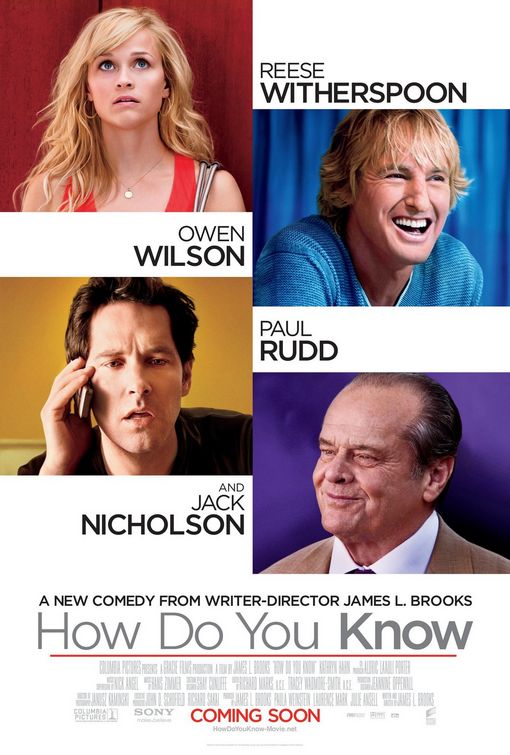
Now having passed its tenth anniversary, HOW DO YOU KNOW is the last film to be written and directed by James L. Brooks. To date, at the very least, and technically there’s still the chance for another but a decade is a long time. Opening the week before Christmas 2010 the film died immediately, even with a reported $120 million spent on it and a cast that included Jack Nicholson in what is also his final film to date. It has its admirers out in the wilds of Film Twitter and, hey, I get why. It’s recognizable as a film by James L. Brooks and I’m willing to defend it to a certain extent on that basis in the way it explores the neuroses of its characters to their utmost depths as if this is the final statement on everything people in his films and TV shows have ever gone through. It’s a film that asks the question of how two people can be compatible and what to really do when faced with the impossible possibility of being together. But it’s also a film that seems to continually ask itself what sort of movie it is for much of the running time and what the story actually is, until it ends so it seems like the film has barely even started and all you’re left with is wondering what it was. How do you know when you’ve even seen a film, anyway? What are you really able to take from it?
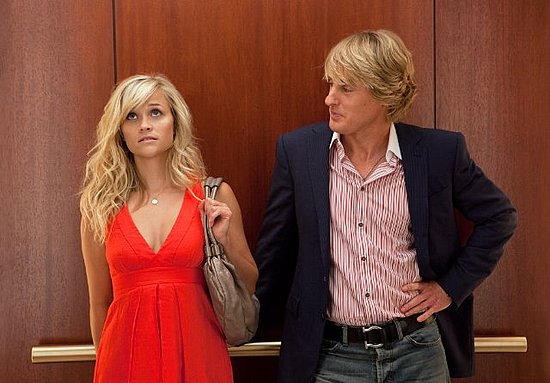
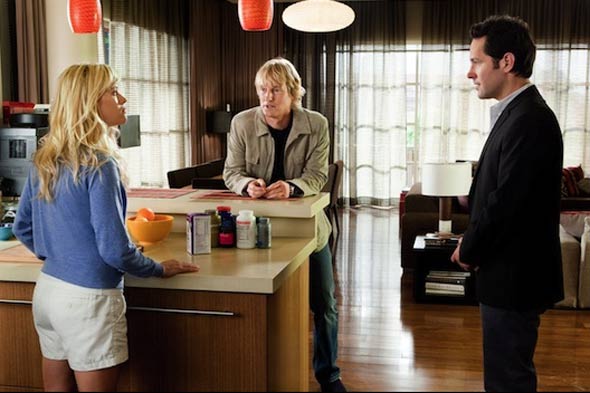
Professional softball player Lisa Jorgensen (Reese Witherspoon) is unknowingly on the verge of being left off the team’s roster for the coming year when she begins dating hotshot pitcher Matty Reynolds (Owen Wilson). After getting an awkward call from George Madison (Paul Rudd) to let her know that he won’t be calling to ask for a date after being set up by a friend of hers, George is served with a subpoena for corporate maleficence at the company he works at, run by his father Charles Madison (Jack Nicholson). With his life suddenly in shambles, he calls Lisa again to ask for that date but by the time they meet, Lisa has gotten news of being cut from the team. The dinner goes awkwardly but they soon run into each other again and Lisa is faced with the decision of which of these two men is the right person for her at this point in time, while George has to decide how much the possibility of this woman matters and what that means for his relationship with his father.
The basic notion of two people on a blind date the day both of their lives have fallen apart is a promising kernel of an idea, meeting as they try to figure out where their lives are supposed to go now - asking should they fight what has happened or should they accept that ending and find a new way towards an actual, fulfilling life? How do you know, right? The thing is that I’m not entirely certain this is the idea the film wants to explore and it gets so fixated on the simple, Brooksian aspect of behavior with the separate inciting incidents done in such a way that it’s hard to really get invested in what has happened. The softball team setting feels promising, but it’s discarded almost instantly so we can barely understand what Lisa has lost. The corporate plotline is never clear enough to be all that interesting even when what’s behind it gets revealed. It’s hard to be sure what to focus on here, and while HOW DO YOU KNOW does have a story, it’s often tough to figure out just what that is as if the purpose of many scenes in the film is to figure out why they need to be in the film in the first place. Two of the leads who never actually meet live in the same building, which you’d think could have been established in a clever way but, just like all sorts of other possible connective tissue to get us acclimated to things, this never happens, so we’re left to find our own way from scene to scene. In a way, this is a narrative that wants to strip everything about the plot down, discarding several interesting characters in the early scenes who feel like they’re going to be prominent but then aren’t in order to focus on the main characters away from the worlds that they’ve gotten to know best. There’s an idea to that, but it still insists on dealing with various other elements without any clear idea of why it needs to focus on them.
Having recently written about Brooks’s first theatrical screenplay STARTING OVER, this made me even more aware of the echoes found in HOW DO YOU KNOW as if he was mining the past for inspiration—the back and forth of a woman moving in with a guy she’s seeing, the rare (for films) occurrence of people using buses and even the proposal of two people having their first dinner together in silence. This film actually lets the idea play out during the date in question but even so, STARTING OVER always felt like part of a recognizable world within its own tone while this film never sheds a certain antiseptic feeling that makes it play like the whole thing was shot on a backlot even when it’s clearly filmed on location (the film is set in D.C.; parts were also shot in Philadelphia). The street scenes always look so clean, sparkly and oddly lifeless, everything constantly wet down to make them glisten without a drop of rain ever spotted. It turned up on Netflix for a period in 2020, and that continual, incessant brightness of every scene went perfectly with what has become the Netflix romantic comedy aesthetic in recent years, everything looking perfect and seemingly never part of any recognizable reality. Some of those films never seem to have any apparent goals beyond simply getting you to zone out, which at least can’t be said for HOW DO YOU KNOW, which has characters who spend much of the running time overthinking things to the breaking point. It beats the alternative these days, but it still never quite achieves a flow to allow each scene to go naturally from one moment to the next.
Of course, this reality of behavior is all part of the Brooks approach going back to his sitcom days. Still, especially during the likes of TERMS OF ENDEARMENT, he seemed to revel in the messiness of day to day life and how people interact, driving each other crazier with each new decision of how they’re going to screw things up. The scripts of both that film and especially BROADCAST NEWS feel so finely honed, every moment matters so much, but here it becomes a continuous question of why people are behaving in a certain way and what all sorts of moments are even doing there. Even the opening scene, showing Lisa as a young girl discovering softball and how that gets boys to behave towards her, feels off and not establishing any particular themes that would justify it being there. A lot of time is spent with the characters played by Owen Wilson and Jack Nicholson as if to justify why they’re being played by such big stars when it’s not really needed, and the film never figures out the right way to resolve either one of them. Wilson as the womanizing hotshot millionaire ballplayer, with a closet filled with souvenir sweat suits for every woman who spends the night in his place, gets scenes on his own where he explores his feelings for Lisa but it never makes sense why he’s technically one of the leads. Jack Nicholson automatically becomes one of the leads due to his very presence but the scenes between him and Rudd, simmering with a presumed hostility coming from whatever the backstory is between them that we don’t hear about, don’t click enough to warrant so much time spent on that either and the bones of the conflict never feel genuine.
There’s a certain push-pull to the plotting that feels familiar with Brooks—the going somewhere that gets interrupted like the Correspondents’ Dinner we never actually enter in BROADCAST NEWS, the trip to visit parents that never happens in AS GOOD AS IT GETS—but here the path it takes constantly seems to lead to dead ends that circle around and start over again, never really leading anywhere. If we needed to siphon the film down to the stuff that feels like it’s essential, I’m not even sure that the results would be what the film itself thinks is right. Maybe the scenes that were taken out needed to be left in. I’m reminded of Pauline Kael’s review of HEAVEN’S GATE, where she said finding stuff to cut from that 219 minute running time was easy. It was figuring out what to keep that was the problem. A movie withholding what it’s really about is one thing. This film feels like it spends much of the running time groping for an answer.
In every way, Reese Witherspoon seems like ideal casting for a James L. Brooks heroine, the sight of the inspirational quotes that surround Lisa in her bathroom mirror that have resulted in nothing feeling like it crystalizes what is going on inside her, not a single one of them containing what she needs. But, too often, the film doesn’t know what to do with that inner conflict unless it wants to say that the opening flashback showing her as a girl means that she’s destined for a life of always getting knocked down by men and the softball thing never mattered anyway? One turning point for the character, silently realizing that she has no place anymore with the team she’s been cut from, is brushed over so quickly as if it was salvaged from footage meant to be used for something else. The things in the film that register happening within scenes often feel too isolated as if it barely matters that they’re in the film at all. A scene where she visits a psychiatrist played by Tony Shalhoub feels promising, but anything learned from it is dropped just as one bit where Owen Wilson loses his temper while trying to make a point. For a moment, the character actually seems human, but all we’re left with is that one brief glimpse of relatability.
You can feel the film searching for those themes to focus on through all of that, and occasionally it comes within reach. Paul Rudd has a few moments, especially silent ones like the calm displayed by George after his first dinner (the pasta also looks appealing) with Lisa and even Reese Witherspoon’s abrasiveness, annoyed that the guy she’s with might actually be looking at her, sometimes makes total sense. The film at least knows to look for these quiet passages, like the way the camera follows behind her as she heads for their first dinner, but just as many such moments feel like the movie is just killing time. And when Brooks isn’t willing to let things stay quiet, the question of tone also becomes an issue, revealing how much he needs to get the actors to take it down a few notches. But at times, it comes close to feeling right, especially during the long hospital scene late in the film after George’s secretary, played by Kathryn Hahn, who’s getting all sorts of attention these days, who has given birth. The single funniest reaction of the entire film happens here, thanks to her, and it’s the one scene where everything makes sense. Even a joke involving Nicholson that feels shoehorned in works because it feels like it came organically out of the character’s feelings towards each other. Much of it involves Hahn’s boyfriend played by Lenny Venito (who’s just great here) coming in to propose to her and the mess that develops involving getting the moment on video almost seems to make sense of the entire film, turning it into a display of life improvising what once happened to try to make it even better. You could say that none of this feels like a part of the real world. Still, it is a part of the director’s world, as much as anything made by Howard Hawks after 1960 was, resulting in films that stripped the interests of the director to its essentials while also displaying an older filmmaker presenting what he still thinks of as the world out there. It almost doesn’t matter that it’s something else entirely. In this case, it’s the minutiae, the nervousness, the reasons for why they feel like they need to be together in the end. If anything, this is what HOW DO YOU KNOW has and what the story feels like it needs to be.
At one point, Paul Rudd’s George states, “Optimism is sanity,” as a way of approaching what he hopes will be his relationship with Lisa, a curious restatement of the way Jack Nicholson’s character declares, “Cynicism is sanity,” early on as a way of protecting yourself in the world. The repetition in the phrasing is barely noticeable. At least, it took me several viewings, but maybe one of the things that the film is saying is that making the second choice can be the only way to connect with people, even if it means going against what you’ve known your entire life. And, if I’m going to be honest here, the things that connect are the things in the movie that I identify with almost against my will and don’t even feel entirely comfortable pointing out. Certain moments of the developing relationship between the two leads are scattered in there, when Reese Witherspoon gets a little too testy with Paul Rudd in ways that still seem genuine followed by the actual connection. The overall message seems to be that even when something perfect that you’ve already achieved in life gets fucked up, you can still find your way with help from the people around you who matter and care and want to understand who you really are, that one small adjustment George gets to tell her about when he finally has the courage. I have some affection towards HOW DO YOU KNOW and even find some of the messiness endearing since the idea of searching through all that clutter in life is something I can relate to, but whether that’s my own screwiness in trying to find value in a lesser James L. Brooks film or actual things found inside of the film, I’m still not sure.
You can feel Reese Witherspoon and Paul Rudd trying to make this work, and occasionally between the two of them it does when they’re able to connect in the moment. Witherspoon balances out the uncertainty of the character in the broad sense with what the character is always ready to insist on without even being asked while Rudd is best when he’s just in the moment looking at someone, able to relax in just playing off someone. Even Owen Wilson clearly wants this to work even though his character, always willing to talk around the idea of how monogamous he is, never connects in a broad sense so he just falls back on the Owen Wilson vibe which never feels entirely correct. It’s the sort of curious energy that makes what Kathryn Hahn is doing all the better. She feels like the most human presence here no matter how big she plays it, a very emotional person getting more emotional without even trying. Deceptively simple reaction shots of her are astonishing. She’s the only person who seems to have a life that continues when she’s offscreen, a feeling that only grows when Lenny Venito makes his appearance as her boyfriend. We can only imagine the rest of this romantic comedy starring them that we’re only getting to see the climax of. A few other people like Mark-Linn Baker, Shelley Conn and Molly Price have roles that seem promising like they will be important but turn out to be briefer than expected. Maybe they were always small roles. Maybe the film got reworked so many times that that’s what they became. And then there’s a performance by Jack Nicholson which feels like he’s doing a favor for his old friend Jim Brooks with every scene playing a little as if he’s letting his glasses do most of his acting for him, with a standoffish vibe to the father-son storyline, but also maybe like he wanted to use it as an excuse that he just wasn’t feeling it anymore so why not simply bow out. It’s hard not to think about how this is his last movie after forty-plus years of stardom, but there’s nothing in the material to warrant reading too much into that.
But it takes time for dreams to fade, like it or not. If we admit the truth to ourselves about what the reality is, that can help, but sometimes all we can do is fight through those feelings until there’s nothing left to fight anymore. Even if we believe that truth, even if we can look at ourselves in the mirror and admit it, it still isn’t an easy thing to face. Of course, it’s entirely possible that I didn’t really see James L. Brooks in my neighborhood that time, but that’s not the issue. This film, which opened the same day as TRON LEGACY, is mostly forgotten now except for likely being Jack Nicholson’s last, along with that reported $120 million budget, presumably made up from star salaries, reshoots and Brooks’s own indecisions. It’s very likely that we’re not going to get something else like it anytime soon. Maybe the thing about HOW DO YOU KNOW is that the film asks too many questions it doesn’t know the answer to instead of being willing to come out and say something, anything at all, which, come to think of it, is kind of like life, especially this past year. But at least it’s a film trying to improve itself in the search for whatever it’s supposed to be. In that sense, it’s honest. To find the answers in a movie like this, you sometimes have to dig for it. That’s kind of like life, too.