Tuesday, November 23, 2010

You End Up Here


It was the Saturday after Thanksgiving, 2002. I was flying back to L.A. from D.C. where I had spent the holiday with family. On this particular trip I was flying first class, the only time I’ve ever done that, but as I was waiting at Reagan National for my connection to Chicago word came down that the flight had suddenly been cancelled. Fast as I could, I scrambled to get another way back home as soon as possible which resulted in my being put on a tiny American Eagle up to New York, from where I would get a flight that night back home. And it worked out just fine, though it was a little frustrating to land in New York but not get to spend any time there. Anyway, I was sitting in first class of the American Airlines flight out of JFK acting like Frankie Valli or some kind of big shot as all the other passengers walked through the cabin back towards coach, just as I’ve also done every other time that I’ve flown. I was on the aisle with an empty seat next to me and I wondered who might sit there, hoping it wouldn’t be an old guy with a cough to kill the cool vibe but down to ten minutes before takeoff it was still empty and I wondered if anyone would be sitting there are all. And that’s when Diana Ross walked onto the plane. Instantly recognizable, she definitely made her presence known as an assistant fussed around having her stuff put away, talking up a storm about how she was going to get some sleep on the flight. She then headed over in my direction to sit in the seat next to mine, looked at me and said, “You, you’re sleeping with me tonight.” “Um, ok,” I think I sort of muttered, not a little stunned at what was suddenly going on. I glanced around and it felt like everyone was staring in my direction. Her assistant soon disappeared, never to be seen again and the music legend with all that hair sat down next to me, shutting her eyes immediately so I figured she was serious, that she really would be sleeping through the whole trip. Then, as the plane began to taxi out for takeoff and we picked up speed, without saying a word or opening her eyes, Diana Ross suddenly grabbed my hand as if for support at this moment. Of course, there’s a rule in life—when Diana Ross grabs your hand, you let her grab your hand.


Soon when we were in the air, she opened her eyes and as drinks were served she began to ask me about myself, probably because since I was in first class she figured I couldn’t be just some schmuck. Little did she know. Now, let me cut in here—of course, I know who Diana Ross is but I’m hardly an expert when it comes to the subject. When she first sat down I began going through the filing cabinet in my head of what I knew about her—the music everyone loves, the Supremes all hate her, that infamous Central Park concert in the early 80s, some movies I’ve never seen…and not much beyond that. So as she began to talk to me I made the decision that except for any follow-up questions that arose naturally from our conversation I wasn’t going to ask her anything that might possibly upset her or make things awkward. No ‘What is the deal with Michael Jackson?’ no ‘So how did you really get along with the other Supremes?’ no nothing, because I was enjoying this and I didn’t want to say something stupid that would cause this experience to end sooner than it had to. So our conversations continued on and off throughout the flight, along with the drinking and the dinner while the flight attendants (who I could very easily tell were treated as ‘the help’ by Ms. Ross) were always quizzing me about what she was like whenever I got up to use the facilities. She got up herself at one point to walk around and returned to first class carrying another passenger’s baby. I guess the rule is if Diana Ross suddenly appears to you on an airplane, you give her your baby. She talked to me about herself and how she wasn’t sure what she wanted to do at that point, she showed off a photo of her daughter, actress Tracee Ellis Ross—for about five minutes I thought she was going to try to set us up—and she asked me various things about myself and my life. And I can say that sitting as close to her as I am to my computer screen right now that she was absolutely beautiful. I jotted down a lot of the specifics of what we talked about soon after which I naturally can’t find right now but packed into the glamour and flirting of those six hours in first class with this music legend was probably one of the best relationships I’ve ever had with a woman. Relatively speaking it was just a brief amount of time spent in the fantasy world of first class but that’s part of the strangeness of flying, finding yourself in a sort of limbo where you can feel free to talk about anything with a total stranger, even one that just happens to be a legendary icon. The following month she was arrested for a DUI in Tucson which made headlines worldwide. I really don’t think I can be blamed.


None of this story about a cross-country flight really builds to anything—I think the last thing she said to me was, “We’ll meet each other again,” but I didn’t see that happening any time soon and I haven’t been proven wrong. I have actually seen her daughter Tracee a few times over the years, but never went up to say something. Still, I’ve maintained a fondness for Diana Ross through the years anyway although it wasn’t until recently that I decided to finally watch one of those films I had never seen, namely her 1975 star vehicle MAHOGANY. If you’ve seen the film, you probably remember it as the one where they play that “Do You Know Where You’re Going To?” song over and over until you can never manage to forget the damn thing. But really, at this point in my life, do I have any idea where I’m going to? I think it’s pretty clear that I don’t. And in all seriousness, speaking as a straight white male, having seen it now I’m not sure exactly what I’m supposed to say about this film. Do I approach it as a camp artifact of the 70s, an early attempt by African-American filmmakers to move stars of color into the mainstream, as an unabashed vehicle for the famous diva, an update of a Joan Crawford-Douglas Sirk kind of formula? All of the above? Since I wasn’t watching it in a theater with a bunch of people cackling over how it’s-so-bad-it’s-good it is, which is something I hate to do anyway, all I could do was just take it sort of at face value while still being vaguely aware of the sort of response it would probably get. For all I know people think of it as a crazy VALLEY OF THE DOLLS-level campfest but it never quite goes all that nuts, staying firmly in the PG realm and it’s hardly as hysterical as something like THE OSCAR is either. In spite of what I suspect is its reputation out there (One and a half stars in Maltin, which calls it a “silly, contrived affair”) I didn’t think it was even a particularly badly made film, even if all it seems to be about is how wonderful the great Diana Ross is (even I don’t have much of an argument for that) and how much the whole world has learned to love her but she should never turn her back on the most important man in her life, no matter what she’s tried to accomplish. How much all this is actually about Diana Ross’s own travails while pursuing success is a subject I know nothing about but I don’t really feel like seeing DREAMGIRLS again to learn more. Now would somebody please get that damn song out of my head?


Tracy Chambers (Diana Ross) is an aspiring designer living in the Chicago projects and working a secretary job at a ritzy department store as she takes classes at night. While trying to get ahead she begins a relationship with an activist Brian Walker (Billy Dee Williams, “looking uncannily like Jesse Jackson” per Roger Ebert at the time) trying to keep the slums from being torn down and running for alderman but things change when she catches the eye of a famous photographer Sean McAvoy (Anthony Perkins) who soon whisks her off to Rome, he renaming her Mahogany and before she knows it she becomes a famous model, living the high-life among the rich and powerful though she still has thoughts of using her fame to be a designer. But when Brian turns up in her life again she must make a choice in where she wants to go in life. Does Mahogany know where she’s going to? Does she know the things that life is showing her?


MAHOGANY was directed by Motown founder Berry Gordy after kicking the esteemed Tony Richardson off the project (Gordy said in a statement at the time that Richardson “didn’t understand the Black experience”) and, look, this is one of those times where I have to admit that a certain film just wasn’t really made for me or my sensibilities. I have very little awareness of inner city politics in the mid-70s and I certainly don’t have much of an interest on any level in the world of fashion so there’s not going to be much of a response coming from me at the sight of all those wacko fashions designed by Tracy which even I think are pretty garish, even for the 70s. While watching a few of the endless montages set over and over to that one piece of music (interestingly, the title song reached number one on both the Hot 100 and easy listening charts) that chronicle her road to success I could imagine the cackles of laughter that probably erupt at screenings from those bizarre outfits, designed by Ross herself according to the credits, but that’s just not my sort of thing. I suppose that while watching it I looked at MAHOGANY as a sort of intentionally old school Hollywood melodrama updated to the blaxploitation-era 70s (Screenplay by John Byrum, based on a story by Toni Amber) but more than anything it’s a movie star vehicle meant to proclaim as loud as possible to the world the absolute greatness of DIANA ROSS.


More than once the film seems determined to just stop and let her do her thing, like laugh for thirty seconds at something going on or dance around her apartment as she makes up a little campaign song for Billy Dee as he stands there in awe of her, flashing that grand piano of his he calls a smile to quote a line of dialogue she has to describe him. And of course, it’s Diana Ross dancing in front of him—what else is he supposed to do? The film also lets her be as dramatic as possible at various points as well as being totally idealized, an inspiration to every downtrodden woman seeing this film in 1975. Tracy is someone who can succeed as a model, design new innovative outfits, who knows how to handle potential muggers in Chicago just as well as she deals with cab drivers in Rome, not to mention how she can let loose on a bunch of Italian-gibbering fashion sleazes who dare to critique her with all the sass in the world like she’s an updated Lana Turner in IMITATION OF LIFE until the one other woman in the room, the only one of power of course, is instantly impressed by her moxie and asks, “When can you start?” leading to a high class lifestyle in Rome of parties, expensive restaurants and various bottles of J&B scattered around. And, ultimately, I guess that’s what the film is really supposed to be.


As ridiculous and soapy as it all is MAHOGANY is actually weirdly entertaining, more than things like VALLEY OF THE DOLLS and THE LOVE MACHINE are for me anyway. It’s the sort of film where I’m not even sure why I’m watching it but then suddenly I’m surprised at how long I’ve been sitting there, actually involved in this nonsense in spite of itself. Maybe it’s the beauty of the star, the suaveness of Billy Dee, the over the top glamour of Rome or maybe that the story just sort of weirdly works even though it shouldn’t. There’s not much credibility to any number of things that happen as Tracy becomes the world-famous Mahogany—for one thing, it’s one of those movies with a narrative that presumably spans several years but it all seems to be set during the winter months of 1975, with some trees in Rome looking just as bare as the ones in Chicago. Considering this is Berry Gordy’s only directing effort the movie actually has quite a bit of elegance to its visual style and much of the credit for that must go to master cinematographer David Watkin (CATCH-22, THE DEVILS, OUT OF AFRICA) who makes MAHOGANY quite a rich, beautiful film to look at with a true sense of scope to the anamorphic framing and even an impeccable sense of place in a way that films don’t really posses anymore. Along with Watkin, mention should be made of editor Peter Zinner, also a cutter on THE GODFATHER and THE DEER HUNTER, and who maybe more than anyone here is responsible for making some of this flow as well as it does.


There’s a genuinely lived-in feel to the Chicago portion of the story with a great deal of texture in that urban environment compared with the Rome half which feels a little touristy but even that approach makes sense for what the film needs to do, whether it was intended or not. The Italy half certainly contains the craziest stuff, from the wacko vibe of the fashion shows as the sophisticated Europeans are first shocked, then elated by what Mahogany creates, leading to sinuous parties where she literally allows candle wax to drip down on her. And there’s the photographer that becomes obsessed with her who is presumably--well, they never actually say what he is but he’s played by Anthony Perkins, it’s made clear that he can’t get it up for Diana Ross and it doesn’t seem to be because of simple impotence so I can guess what we’re supposed to think. The character is written to behave more and more as a genuine sociopath as the movie goes on, first in a passive-aggressive way than culminating in two separate showdowns with the noble leads, one a bizarre scene involving fighting over a gun with Billy Dee with all the symbolism you can imagine and finally a scene involving an out-of-control car where he crazily insists on taking Mahogany’s picture, a point of hysteria that is probably as much of a reason for the film’s notoriety as anything (and, yeah, I could hear those cackles from that nonexistent audience when we later actually see the photos that were taken). But even the nightmare end of anything that happens in the story never goes too far and MAHOGANY, along with being a pure star vehicle, is also obviously a piece of wish-fulfillment for any of her fans, representing the dreams they may have to go off and do whatever they may want to do but the film seems to say that the dream has to end sometime and the place you really belong in is right where you started in the first place.


The film brings a certain amount of realism to the Chicago sections which grounds it sort of in the real world but the political stuff feels a little too sketched in and keeps some of the approach to racial issues more implied than anything--even a few white faces are inserted among the crowds as if someone was hesitant to make this too much of a story specifically about African-Americans—Tracy’s success as both model and designer happens without comment on her race but maybe all those wackos over in Europe, where Billy Dee can’t tell some of the men from the women, are just more enlightened. At times, the film feels a little like some of the down and dirty success of the blaxploitation genre being co-opted for a big, slick studio production (and it makes me wonder about how that cycle began to rapidly fizzle out around this time though that’s getting a little off topic) and MAHOGANY is almost progressive but is kept from being too much so by making it about how if the romance is a failure than Mahogany is a failure as Billy Dee screams as loud as possible, “Success means nothing unless you have someone to share it with!” leading to her finally, irrevocably realizing the apparent truth of this statement. But is this what it should really build to? Is the conflict really as clear-cut as the jet-set glamour of Rome versus the downtrodden projects of Chicago, a city where we’re told that, “You don’t make it here, you end up here,” as if to say that if Tracy stays in that town she’ll be giving up on her dreams. This is all pre-Oprah, of course. But really, if she could possibly make so much money in the world couldn’t she use some of that to help out back home or would that be seen as wrong? Isn’t there a viable middle ground? Maybe not, since the movie wants to keep things cut and dried. At the very least the final shot, with credits shoved onscreen as fast as possible before anyone can really think about the ramifications of what just happened, displays a political rally that isn’t even all that well attended but the ultimate goal seems to be noble and one worth fighting for (Brian Walker pledges to “stop the power merchants from trotting over the little people.” Yeah, that worked out real well). It almost makes me imagine how maybe in a few years after these two people get together they’ll encounter a young man who’s just hit town then, having been inspired by this great-looking couple gets directly involved in the Chicago community for himself, meets the woman which will become his own wife, and sets down a road that will lead to becoming President, making good on what was begun in the story told here. All right, that’s probably looking a little too hard for optimism in this ending but I’m really trying and as the downbeat on the theme song (like the part where she sings “Now, looking back at all we planned…”) is played at the end the whole thing just stays with me, a big piece of cheese that is weirdly affecting in its earnestness or at least what I perceive to be its earnestness. So if anything it has that.


Diana Ross and Billy Dee Williams both play this as charismatic as the stars they were at the time. They’re not great and they certainly don’t always make the problematic dialogue work. But whatever else you want to say about them, she’s energetic, he’s cool, they’ve got chemistry, they’ve got presence and they both look great, each given numerous terrific close-ups by Watkin. Anthony Perkins, who must have been cast with his most famous role in mind, becomes less of an actual person and more of a prissy monster as the film goes on until he zooms right towards becoming the queeniest version of Norman Bates to the nth degree, almost made to look purely eeeevil in some shots. For all I know this sort of behavior still runs rampant in the fashion world but it still comes off as pretty homophobic (and, for all I know, not taken seriously in the least by some of the film’s fans) as these things go. DANGER: DIABOLIK’s Marisa Mell is Italian fashion big wig Carlotta Gavina—is this film her only U.S. production? Mell doesn’t get to do very much beyond say supportive things to the film’s lead but it’s still nice to have her around. DAY FOR NIGHT’s Jean-Pierre Aumont is Mahogany’s European benefactor with an obvious eye towards getting more out of the relationship, Beah Richards and Nina Foch have supporting roles and Bruce Villanch, of all people, plays a dress manufacturer in Chicago. When he turned up I honestly thought it was Severn Darden.


I guess you could say that it’s glossy star vehicle of the sort that really only got made in the 70s and I can appreciate that. Or at the very least, that song has gotten locked into my brain and there’s really nothing I can do about that anymore. And it’s a pure old-fashioned vehicle for the great Diana Ross, in ways that are both good and bad. Maybe if I’d seen this at the time I would have summoned up the courage to ask her a few questions about it. I’d probably at least have brought up David Watkin and Marisa Mell. Maybe. As it is, I kind of doubt that Diana Ross has any recollection of sitting next to me that night but I know that I’ll never forget it. A ridiculous movie like this is a reminder of what an icon she has always been and how lucky I was for a few hours on an airplane back in ’02 to get to know her just a little bit. Now, as I look back at all I planned and wonder how I let so many dreams just slip through my hands I know that I’ll certainly have that to remember.

Thursday, November 18, 2010

Nobody Loses All The Time


It’s a very common thing to understand what a movie is while you see it, whether it’s a tearjerker or an action movie, whether it’s something you love completely or hate absolutely. When you’re watching it you can say to yourself “This movie is X,” knowing what the film is and what it’s meant to do to you, whether the end result is successful at that or not. I say this because after multiple viewings of Sam Peckinpah’s BRING ME THE HEAD OF ALFREDO GARCIA part of me is still trying to figure out just what exactly the damn thing is. And I don’t mean this in a bad way—the film, as grimy as it could possibly be, is such a piece of art unto itself that it ultimately feels more than a little like opening up the director’s brain and looking inside at to actually see whatever insanity is going on in there. I hesitate to say that the film presents some kind of ultimate world view of Peckinpah’s if only because there are several films of his you could say that about, whether we’re talking about the elegiac reverie of RIDE THE HIGH COUNTRY, the phenomenal ferocity of THE WILD BUNCH, the truly life-affirming nature of JUNIOR BONNER or even the whimsy of THE BALLAD OF CABLE HOGUE, with each of those films expressing a certain take on the way life could be and how this particular brain perceives those things.


But BRING ME THE HEAD OF ALFREDO GARCIA feels considerably more personal than any of those, of any of his films, as if it really is Peckinpah Unplugged. Notably it’s also very much a drunk movie through and through but it’s not even the only one of his films you could say that about—I love PAT GARRETT AND BILLY THE KID, which came immediately before this, and it could also be considered a drunk movie (not to mention being a film that was never cut to the director’s satisfaction) but that one has a more resigned feeling to it, as if made by a heavy drinker at a stage where he feels there’s no point to go on, just sitting down in the nearest chair and giving up. This one is considerably angrier, more feverish, as if the drunk in question is getting right in your face and screaming “What the fuck are you looking at?” for two hours at varying degrees. The extent that PAT GARRETT was famously taken away from Peckinpah in the editing may very well have informed the extremeness of his approach on this one to some extent but instead of retreating back to something safer—along the lines of his commercial success THE GETAWAY from two years earlier, I suppose—BRING ME THE HEAD dives further into murky waters as if Peckinpah is daring someone, anyone, to even try to put a stop to this wretched madness he’s putting onscreen. Even the rhythm of the piece feels odd, as if it was not just shot but also edited while heavily intoxicated, and maybe some of it doesn’t quite cohere as a result. But as the insanity of the story goes on, the end result achieves the feel of a person doing the drinking who gradually somehow pulls themselves together to accomplish something truly remarkable even while still under the influence. What this results in is one of the most undeniably ferocious as well as personal films ever made. Even if I still barely know quite what it is.


When a powerful Mexican crime lord only referred to as El Jefe (Emilio Fernandez) learns the identity of the father of his pregnant daughter’s child, he issues a command to have the man’s head brought to him at a hefty price. Those involved in the search for Alfredo Garcia include a pair of conservatively dressed hitmen (Robert Webber and Gig Young) who begin to comb Mexico City, showing the man’s photo wherever they can and eventually wander into a bar where they encounter a piano player named Bennie (Warren Oates) who thinks he might be able to help them. Bennie knows more than he’s saying of course and has to go no further than prostitute girlfriend Elita (Isela Vega) who had an affair with Alfredo Garcia and knows full well that he’s already dead, killed just days before in a drunken car crash. Intending to find the body, Bennie makes a deal with the hitmen that he will deliver the head without revealing what he knows and sets off on a road trip with Elita through Mexico in search of where Alfredo Garcia is buried that definitely doesn’t go as planned.


The gentle sounds of the voice of the forever amazing Isela Vega as she quietly plays her guitar waft out of the screen on occasion, giving the momentary impression of a gentle romance between these two damaged lovers, sometimes interrupted by the slow-mo nastiness of the bad guys following them trying to keep from colliding with a bus and eventually any form of gentleness that comes from the scenic Mexican countryside just washes away, impossible to find even when it’s right in the center of frame. Along with the deceptively calm and serene feel in the opening frames are points when Oates and Vega are just ambling down the road in his beat up red Chevy Impala there is a carefree feel in the air, two people both considerably damaged yet content for a little while to do nothing but just toss back a few more hits of booze but that feel never lasts for very long and the slightly dirty sheen to the film stock it seems to be shot on permeates everything. Even the day for night process used for several scenes is strangely effective in this context, lending a feel that isn’t quite dreamlike but not any sort of reality either, maybe just a haze of booze that the characters are trying to see through. Much of BRING ME THE HEAD OF ALFREDO GARCIA, screenplay by Gordon Dawson and Peckinpah from a story by Frank Kowalski and Peckinpah, is a road movie just like THE GETAWAY was, but when this one begins we’re already over the border and the two stars feel considerably more lived in than McQueen and MacGraw ever do in their film, much more actually a part of this landscape. They feel already worn, used up, almost ready to resign themselves to their booze-filled future. Even the handful of familiar faces that turn up throughout feel more an organic part of this bizarre world than the well-known supporting players in the earlier film. The film is nasty. It’s dirty. It’s unpleasant and it’s not even always good.


From the very beginning BRING ME THE HEAD OF ALFREDO GARCIA is undeniably compelling, but at times somewhat ramshackle in its pacing and staging as it becomes hard to figure out just why this guy playing piano in a bar is suddenly the film’s lead character or just what the deal is with these Nixon-era gangsters in tailored suits looking down their nose at Bennie—the pairing of “Special Guest Stars” Robert Webber and Gig Young come off as the more vicious, businessman-like and oddly more human Peckinpah version of Mr. Kidd & Mr. Wint in DIAMONDS ARE FOREVER. The film picks up considerably as the narrative zeros in on the damaged pairing of Bennie and Elita drifting down the road as Peckinapah’s camera continually pauses to take in the surroundings, two people who don’t know how to make this relationship come together in a rational way even if they knew how to try but there’s a connection between the two of them regardless—there’s a scene with them relaxing off the road by a tree where she asks him why he hasn’t asked her to get married that is pretty goddamn amazing—with this section of the film finally culminating in a sequence involving a pair of bikers, one memorably played by Kris Kristofferson, that is difficult to pin down in what it seems to be saying about possible male-female relationships on any level and would probably cause a disconnect with almost anyone watching it. At the least, I’m never pulling this film out on a first date. I can’t defend this scene. I don’t even understand it and I’m not sure I want to understand it though I have a feeling Peckinpah, for right or wrong, did. You can complain about his gender politics but based on this film you can never say that his women are passive in the way that any number of female characters in any number of other action films are, something which probably hasn’t been noted enough. It’s clear that in his own way he loved the women in his films. He was fascinated by them. And he probably wished that he could somehow figure them out.


The Kristofferson scene in question is problematic, and also strangely apart from everything else, but instead of destroying the film it acts as a splash of cold water on its own face. The pacing gets sharper after this point, the intent gets deadlier, almost as if it mirrors Bennie’s growing determination at digging up that head, damn it, and the relationship between the two becomes that much more affecting—there’s one scene following where Bennie tells Elita, “I love you” that frankly is fucking beautiful and I feel like I have to phrase it that way to get the point across. The imagery becomes deadlier (passing a funeral with a small child’s coffin has to be a symbol for all sorts of things, none of them good) through the existential vibe of how as far as Bennie is concerned this excursion in search of Alfredo Garcia’s head and desecration of his grave is really his last chance, there’s not going to be any more slick money guys wandering into the bar where he’s playing piano anymore and maybe Peckinpah didn’t see many more chances to make the films he wanted to make either which may be what this quest for a dead man’s head may be about as much as anything. At times like a drunken fever dream filtered through the haunting beauty of Jerry Fielding’s score, BRING ME THE HEAD OF ALFREDO GARCIA seems to put itself together as it goes on, becoming increasingly more coherent in every bit of its primal nature that by a certain point cannot be stopped. There is no relief and almost no redemption with the possible exception of an appearance by a boy played by Ahui Camacho who Oates deals with in one scene late in the film—the boy displays such sad innocence in the middle of all this nastiness that I find myself feeling enormously sorry for him, wishing he didn’t have to wander into this film however briefly, and feel a little relieved that even Bennie seems to know to keep him away from what’s really going on.


There’s humor sprinkled throughout like the bit with the passing tour bus but the whole film is in many ways the darkest of dark comedies, a defiant spit in the eye of convention, a point of absurdity every time I think about how Warren Oates, resembling Peckinpah considerably, barely ever seems to remove his giant sunglasses, a touch that I seriously wonder if it might be something the characterization of The Blues Brothers was inspired by (Incidentally—if I’m ever involved in a shootout indoors I’m taking my sunglasses off. It just seems like common sense). The main goal of the film’s protagonist is totally ludicrous when you come right down to it, with Bennie’s obsession eventually going far beyond the money he’s owed, but the film seems to accept it as no more so than anything else in life. And besides, by a certain point in life when you’ve had enough letdowns, what sort of goal isn’t ludicrous? “I’ve never been to any place I’d want to go back to, that’s for sure,” he says at one point and the film seems to be about pressing on in this world regardless of all the madness that’s going on and all the flies that are circling ominously around Alfredo Garcia’s head to the point that it feels like the stench of death, of doom, that will never fully leave. As if to go against what the lead character has to say, the final sequence of the film takes us back to where we began. Bennie hasn’t been there yet but we have and this return brings us back to the roots of the madness of it all, a place that there is no exit from and all that remains to be done is to keep crashing your way through for as long as possible, even if you know all along how it has to end. The last five minutes are about as true to itself as any movie ever made. It’s alive like few other films ever are in a genuinely defiant way.


I know that I’ll never be as cool as some people. I’ll never be Cary Grant, Robert Mitchum, Harrison Ford, you name it. If I’m lucky, I’ll be Eddie Bracken. And I also know that I’ll never be Warren Oates who, even as a total loser in playing Bennie is cool in a way that I’ll never reach, playing what has to have been the greatest role the actor ever had in a life that was cut way too short and it truly seems like a performance by a man who is never acting. It’s like he’s truly become this guy down to his very core and at the same time would do anything possible to not be him. It’s truly unforgettable to watch Warren Oates here and it proves that there was never anyone else like him. Not to mention that he looks damn great in those sunglasses, too. Playing against him, Isela Vega is rather extraordinary in a way that I almost can’t put into words, bringing a level of dignity and true lifeforce to a sort of role that in any other hands might just be a cardboard stereotype. She never feels like she’s acting--at any given moment it feels as if there are a hundred thoughts going through her mind that she’ll never put into words for anyone else so instead she just presents herself as she is, with every bit of serenity and humiliation that she displays. There are memorable moments by other actors throughout—Gig Young removes the shell off a hard-boiled egg like no other man—but it’s the two of them that matter here more than anything, a romantic coupling that is unlike any other.


The film has become a slight pop culture punchline (a reference in FLETCH, the TV movie BRING ME THE HEAD OF DOBIE GILLIS) and by this point the title is probably known by people who have no idea what the reference point actually is. As trashed as it was by various critics when it was released the film did have its defenders—Roger Ebert gave it four stars and called it, “some kind of bizarre masterpiece.” Adding to this bizarreness is how, as far as I can tell, the credit font used is the exact same kind as on LITTLE HOUSE ON THE PRAIRIE (why do I notice these things?)—what the line between Alfredo Garcia and Laura Ingalls could possibly be I have no idea. And as the cult of Peckinpah lives on in whatever form it does these days the reputation of the film has grown as it becomes clear of the unremittingly ugly portrayal of the world that’s presented here along with the beauty that can be found in that ugliness, not to mention just how flat out cool Warren Oates is, even if it sometimes seems like he won’t be able to cross to the other side of the room. The Hail Mary feel of what Bennie finally does feels like a culmination of everything the director would want to express in his entire directing career and indeed he apparently stated that this film was as close to “pure Peckinpah” as he ever got to make, proving true Bennie’s offhand comment, “Nobody loses all the time.” At this point in my life, where I almost couldn’t feel more lost, I’m starting to hope that statement is true and I could honestly use that sort of optimism. Now that I think about it, what does it matter whether I fully understand the film or not? Where is it written that we have to understand everything we see? One of the problems with offering opinions on movies is that people have perceptions of them, what they should be, what they are, how similar they are to other films we might prefer, other movies that are more normal. BRING ME THE HEAD OF ALFREDO GARCIA isn’t really like anything. And there never will be anything like it again.

Monday, November 15, 2010

Men Love Scrambled


It’s probably a little surprising now to think that Ron Howard, long considered one of the safest and most vanilla of all mainstream directors, once directed a wacky R-rated comedy about guys who run a prostitution ring out of a New York City morgue. The fondly remembered NIGHT SHIFT certainly isn’t the sort of movie that he would make these days but hey, it was the early 80s, a crazier time for all of us but it becomes a sort of double surprise to revisit that movie and discover that, as enjoyable as it still is, as far as R-rated comedies about pimps and hookers go it has to be one of the mildest ever made, pretty much ready to be shown on the CBS Saturday Night at the Movies with no problems after maybe some of the language is looped over. Released in July 1982 and coming just a few years before you wouldn’t be able to make a movie like this without certain real-life issues coming to mind, NIGHT SHIFT may not be quite as uproarious or as expertly plotted as I remembered but it remains an extremely funny and high-spirited comedy as well as being, so help me, a genuinely likable movie in the best ways. Nothing wrong with that, I suppose, even if it was directed by Ron Howard. And don’t forget that it’s a wacky, R-rated comedy about hookers in a sleazy New York setting all done to a smooth, easy-listening score by Burt Bacharach involving several songs which, years after first hearing them, I still can’t get out of my head. What the hell kind of movie is this, anyway? It’s still a fun one to revisit.


Chuck Lumley (Henry Winkler) is a former stockbroker who got out of the rat race to work a calm job at the New York City morgue. Things are going along as quietly as he’d like, even with his fiancée Charlotte (Gina Hecht) being obsessed with losing weight before their wedding, when he is suddenly transferred to the night shift at his job, forced to work with a new hire, the outgoing and self-proclaimed idea man Bill “Blaze” Blazejowski (Michael Keaton). The mild-mannered Chuck doesn’t immediately take to Billy’s crazed attitude but after a few hurdles the two are soon getting along while at the same time Chuck is becoming friends with his next-door neighbor Belinda Keaton (Shelley Long), a call-girl who suggests they have breakfast together when she realizes they both get off work at the same time. Belinda and her co-workers, so to speak, are currently without representation and when Bill hears about this he comes up with the brainstorm for the two men to become their representatives, or “love brokers” as he insists on calling it in lieu of the term pimp. He hesitates at first but the pressure surrounding him in his home life inspires Chuck, badly needing to take some control of his life, to agree and sure enough business is booming immediately but everyone soon realizes that the situation isn’t as easy as they think.


The legendary Lowell Ganz and Babaloo Mandel wrote the script, as filled to the brim with snappy one-liners as you’d expect from the pair but wisely they’re jokes that never seem to come at the expense of the lead characters or the story and no matter how broad things get the movie is always consistent in its approach. The characterizations are strong and even a little endearing as well, with little bits always being sprinkled into scenes that keep them active all through a continually energetic storyline that is just as eager to please as Keaton’s character always is, forever bouncing up and down every moment he can. There’s an apparently staunch insistence by the makers on ending each scene with some sort of laugh and the film’s tone is about as cheerful as possible with reams of quotable dialogue throughout that get me to laugh even while sitting alone watching a scene for the hundredth time (“Trim that!”). It’s still a weird array of tones at first, making me wonder if Ganz & Mandel ever actually saw a hooker in the flesh on an New York street in their entire lives but on the other hand director Howard counteracts this cheerful formula by shooting New York in the skuzziest way possible, set in a winter that looks like an utterly freezing, dirty place to be (there’s some neat location work, but also what looks like at least a little bit of shooting in downtown L.A.).

It’s a movie that feels like the A.D.s were always intent on placing the creepiest looking extras imaginable to be as close as possible to the actors so while the bouncy mood is always there at least there’s a certain amount of verisimilitude to it all. Structurally, some of what the writers are doing here feels like a dry run for the slightly-similar SPLASH (meek guy at sea in life is goaded on by a more energetic best friend/brother) which they were also primarily responsible for two years later but the basic beats of that sort of plot construction don’t feel quite perfected yet here. It’s one of those films where the first act is expertly paced, each scene flowing into the other with the character and plot development gradually building (and taking its time--Chuck doesn’t agree to the business until just past the 45 minute mark) but once things start up there’s not much that needs to happen for a long stretch and maybe things lag a little. Chuck, Bill and the girls all seem to get along so it’s got one of those second acts where a lot of the success is crammed into one long montage (just like TOOTSIE, also from the same year—it feels like a very early 80s thing) with wacky comic scenes seemingly inserted at random, like the frat party in the morgue, that don’t result in much of anything so for a time it feels a little listless even if I am still enjoying it for the most part.


And not only is pointing out that the movie is running in place for much of the middle more of an observation than a criticism it uses some of this section to stick in some character development as everything pauses to allow the friendship between the trio and the romance between Winkler and Long to take hold. One scene in a cemetery in particular is very sweet and wisely never overdoes the sentimental aspect. Of course, nothing is really at stake until the movie suddenly decides that there needs to be conflict of some kind so it can all build to something. The evil pimps, one played by Richard Belzer, feel a little too much like a plot device inserted into the script after a few drafts were already written—well, the film does need a plot after tall—and even if their pre-credit sequence does lead into the story it still feels slightly apart from everything else. Tonally, NIGHT SHIFT is one of any number of early 80s comedies that act as if the zaniness of the 70s is continuing on unabated, with nothing like AIDS or the height of the Reagan revolution to kill the buzz and like other examples from around this time such as DOCTOR DETROIT there’s no real attempt to address the morality of the situation, just showing us things like the various call girls dressing up as cheerleaders in that montage.

It’s interesting to compare the film to Robert Zemeckis’s USED CARS, another well-structured R-rated comedy from the era as well as one that embraces the sleaze and craziness of its subject full on. In contrast, NIGHT SHIFT kind of takes that stuff as a given because of what the plot is and doesn’t really go anywhere with it. This doesn’t make the film any better or worse than USED CARS, it’s just a more polite overall experience and, it has to be said, NIGHT SHIFT is a warmer film with more likable characters—even Chuck’s annoying fiancée is never allowed to be too much of a shrew (Gina Hecht, seen recently on the male prostitute comedy HUNG, manages to make a character who might have been played as just a bitch slightly sympathetic). As crazy as Michael Keaton’s Bill Blazejowski is, he’s really written as a guy looking for friendship and his habit of coming up with wild schemes to get rich is more innocent than anything—yes, he’s a wacko who doesn’t do everything on the up and up but he’s not out to blatantly scam anyone like Kurt Russell’s Rudy Russo, not knowingly anyway. Keaton is so enjoyable to watch in how he acts like a puppy dog towards Winkler most of the time that I don’t really buy it when the character suddenly acts the opposite late in the film just to keep some conflict going—I’m not sure I buy that he’d be that thoughtless. But that’s a minor issue, really, and NIGHT SHIFT ultimately isn’t about morgue attendants who become pimps at all but about two totally opposite guys who form some sort of bizarre friendship in the middle of a nasty world, making each one a better person as a result, and the woman they get to come along with them. It would be nice to think that life worked that way. Maybe when Burt Bacharach music can be heard in the background it actually does.

And I can’t forget to mention all that music, which once you’ve heard you can never fully forget—I think the bouncy, Chuck-walking-around version of the title theme by Quarterflash is always playing in my head whenever I walk around in my patented sad sack manner. That damn Al Jarreau song “Girls Know How” that plays during the mid-movie montage is embarrassingly infectious as well and there’s also the familiar “That’s What Friends Are For” which is used in the score to emphasize the bond between the main characters. The Dionne Warwick cover from a few years later is so well known now that for an instant at the end of this viewing I was surprised to realize that it’s actually Rod Stewart who sings it here as the credits roll over majestic shots of the skyline of early 80s New York, a glorious place where prostitution ran rampant in mainstream romantic comedies. But bottom line is that while NIGHT SHIFT isn’t a film without some minor issues (things that I could believe that those who made it were aware of and tried to improve on in SPLASH, which is intentionally also a much ‘nicer’ movie) even after all these years it’s still consistently enjoyable as well as being a genuinely sweet movie which may be the main reason why it’s so fondly remembered—the trio of lead characters are people we want to see end up together and when the credits roll there’s something rewarding about seeing them in a moment of small triumph.


And the film knows to balance out the characters—yes, Michael Keaton is meant to be the driving force of the movie but he never overwhelms things, working just great with his co-stars as they react to him and he’s totally hysterical in his feature debut, unstoppable as he does everything possible to sell Bill’s total craziness, even making the offhand moments funny (“Nice frame.”). He may be forever known as Batman to much of the world but when I watch the guy who still turns up on Letterman, when I imagine my own personal preferred version of Michael Keaton, deep down I still kind of think of him as Bill Blaze. Henry Winkler was of course being directed by his old friend Richie Cunningham here but there’s not a trace of Arthur Fonzarelli in his performance and actually his very sharp, always funny work here is more like what he’s done in recent years in places like ARRESTED DEVELOPMENT. Always letting us know what he’s thinking even when not moving a muscle, he never becomes just a straight, dull lead and I don’t think it can be stated enough how pitch perfect his timing is in every single scene (“You’ll probably have to call the funeral home or the department of motor vehicles.”), how sharply executed his portrayal is of this sad sack who nevertheless gets us to like him almost instantly. All this probably hasn’t been said enough because it’s his flashier costar (the one who in this film is basically playing the Fonz) that always gets the attention for this movie but Winkler is just fantastic, so when he finally takes action it’s extremely rewarding as he does exactly what we’ve been waiting for. You know what? If you’re out somewhere and you happen to see Henry Winkler on the street, tell him how great he is in this movie. I’ll bet he hasn’t heard it enough times. Shelley Long, who made this film shortly before beginning her run on CHEERS, isn’t exactly the most believable hooker in film history, playing things as kind of a seen-it-all Jean Arthur type but her characterization is consistent and knowing enough that she manages to get the part to kind of make sense. Even though it came first I think I’m still kind of impressed that there’s not a trace of Diane Chambers in anything she does here. Bobby Di Cicco (“That Barney Rubble. What an actor.”), Joe Spinell and Clint Howard turn up at various points, Vincent Schiavelli is a nasty delivery guy, Charles Fleischer is a nutso in jail, a very young Shannen Doherty is a Bluebird and none other than Kevin Costner is totally visible in the center of frame during the party scene as “Frat Boy #1”. According to imdb Ron Howard can be spotted twice, once making out on camera with his wife Cheryl. The things you learn on the internet.


And as they walk off in the final shot (also slightly similar to the final shot of TOOTSIE, for that matter) it occurs to me that NIGHT SHIFT is one of those movies from long ago where I find myself pointlessly hoping that things worked out for the characters after the movie ended but in thinking about it I kind of feel sorry for them as well. Did they really have to live through the 80s after this? Did Belinda have anything healthwise to worry about in the coming years? Did Chuck get back into the financial game and maybe help fund one of Bill’s crazy schemes? We’ll never know. And there’s no reason to wish Ron Howard had made more movies like this and SPLASH way back when since after looking at the trailer for his upcoming comedy THE DILEMMA it probably proves that this sort of thing is a young man’s game anyway. Or maybe somebody with his directorial sensibility can only make so many movies of this type. In terms of pop culture impact the basic concept of NIGHT SHIFT was probably usurped by the eventual iconic stature of RISKY BUSINESS which came the following year but as the sort of high-spirited comedy that doesn’t get made anymore, as well as being one that has characters who are genuinely endearing, I’m glad it’s there. It’s a sweet movie with pimps and hookers, in the best possible way. Now if you’ll excuse me, I have to go and test this great idea I have to try feeding mayonnaise to live tuna fish.

Wednesday, November 10, 2010

As Simple As It Gets


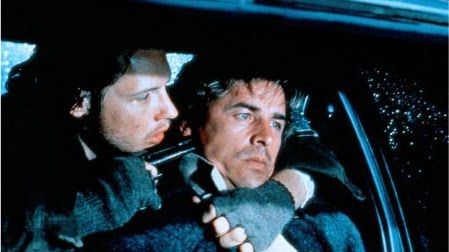
It’s not near the top of the list of anyone’s favorite John Frankenheimer films but I liked DEAD-BANG pretty well when it was released back in March 1989 and I suppose I still like it now, up to a point anyway. It’s hardly a classic and thinking about the film after revisiting it for the first time in years I probably respond more to the character study aspects than the ambitions of its plot but I still appreciate how the story takes itself seriously as much as I enjoy the twisted humor of Don Johnson getting really pissed off at people, like he often does here. The film moves along like a freight train for a such a consistent amount of screen time that it’s a little disappointing to discover that, just as it happened for me back then, there’s a point in the story where I totally, irrevocably check out of things and after that there’s just no going back. It’s always been clear where the cutoff point was but it was tough for me to figure out why at the time and maybe I can articulate some of those problems better now. Let’s just say that this is a film where for a long stretch I’m with it and then, almost as if a switch is thrown, suddenly I’m not. But for any fan of Frankenheimer’s old-school action style that hasn’t caught up with this one yet, DEAD-BANG still has its share of good points.


Jerry Beck (Don Johnson) is an L.A. cop fresh off a divorce, deep in debt and trapped in a crappy apartment just beneath the flight pattern of the Burbank Airport. A few days before Christmas, he finds himself investigating a double homicide of a liquor store owner and a cop just a few blocks away. Insisting on working right through the holiday, he first aggravates a parole officer (Bob Balaban) when he recruits him to help find a suspect and soon after finds himself on the bad side of FBI Agent Arthur Kressler (William Forsythe), also on the same case. The investigation soon begins to lead Beck on a trail that leads to an extensive group of white supremacists taking him to Arizona then to Oklahoma where what he gradually uncovers turns out to be bigger than he ever imagined. After pissing off various local law enforcement officials around the country, placing his pursuit of this killer and those behind this organization in jeopardy, he finally encounters a small town police chief (Tim Reid) who may be just the man he can trust to help him go up against these factions and bring them down.


There’s a nicely stripped-down feel to a lot of DEAD-BANG right from the start as if Frankenheimer decided to rip out about ten pages from the opening section of the script (screenplay by Robert Foster, from a story by Foster and the real-life Jerry Beck whose own investigation this is supposedly based on) so the film could get into the meat of things as fast as possible. In lieu of complex plotting is a focus on Beck’s growing aggravation as he desperately tries to continue this investigation into what leads from the search for a killer to a growing white supremacist underground out there in the heartland with no one to support him, never knowing for sure who he can trust. Like any number of other action films from around this time, this look at the dregs of humanity is set over the holiday season (a shot of the Goodyear blimp saying “Merry Christmas” seems to be placed there to taunt me for not having written a piece on BLACK SUNDAY yet), though I’m not sure any character ever even wishes someone ‘Happy Holidays’ with total sincerity and no one, least of all Johnson’s Jerry Beck, seems to care much about it anyway. The feel is refreshingly adult as the lead character spars with just about anyone unlucky to cross in front of him—whether they’re physically imposing biker types or weasly-looking office nerds—as they all act like pricks to each other, no one in any mood to be polite. Some of the dialogue during these scenes is terrific and at the film’s best it combines this acerbic feel with action pulled off using every bit of expertise that would be expected from Frankenheimer. One nighttime shootout on a street in the middle of a small town is pretty much beautiful in its clarity and a scrappy foot chase early on which features some decent L.A. location work out in the dregs of the valley is almost disarmingly good, eventually ending in the most unexpected way imaginable--I’ll bet there are people who haven’t seen this film for years but still remember this part, a nasty display of the offhanded dark humor that would occasionally turn up in Frankenheimer’s films.


The director later said that he and Johnson didn’t get along at all (“Let’s simply say that we did not agree on how the picture should be made,” was how he put it in “The Films of Frankenheimer” by Gerald Pratley) but the film nevertheless provides a nice showcase for the actor’s talents, looking tired and sweaty with unkempt hair as he goes over paperwork with bifocals, embarrassed when the well-groomed Fed he’s working with asks if that’s tape holding those glasses together. As much as I enjoy him interacting with some of his co-stars here as they spit out insults at each other, Johnson does some particularly strong work when by himself in certain scenes, especially during the unbroken shot of him in a screaming match over the phone with his (never seen) ex-wife when she won’t bring the kids to the phone so he can wish them a Merry Christmas, resulting in him destroying the phone in the process. The film continually dotes on the little things like that, such as how Johnson’s cop leaves L.A. so abruptly that he doesn’t think to bring a coat for the cold weather he encounters, a sly way of showing how this guy is always a few steps behind the better-prepared people he’s dealing with in every possible way. After a prolonged period of action and investigation with the lead character getting further away from his home base of L.A. the film builds to a boil of tension as Beck deals with a police psychiatrist who must determine if he’s fit to continue his investigation. The doctor is played by Michael Jeter in a scene that is unexpectedly funny, serious and dynamic at once in all the right ways but after this peak of Johnson’s character releasing every single one of his frustrations on everything...suddenly, it all kind of fizzles away and any real tension that has been developed goes with it.


With about a half-hour to go in the film which runs 103 minutes it always loses me as Beck travels to Colorado for the big third-act confrontation where he gets immediate help from a local police chief played by Tim Reid (and his African-American deputies by his side, the very best to go up against white supremacists). Johnson has been spending so much time in conflict with others throughout, with some very interesting characters getting introduced and disappearing soon after so seeing Johnson and Reid get along out of nowhere because, well…just because, it suddenly becomes kind of a letdown, as if the film is trying to add another story within the film like an unneeded limb and the surgery won’t take. Reid is fine in his part, but it’s just not as enjoyable to watch what he does as it is to see Johnson become antagonistic with another small-town police chief who’s more interested in ordering steak sandwiches for lunch (I like that exchange in particular), totally unconcerned about the amount of firepower they’re about to go up against. As well-done as some of the action throughout the climax is staged that’s really all it is, with the strong character work coming from Johnson during the film’s first hour feeling like it’s been left in the dust. Sure, if Don Johnson and Tim Reid are going to be going up against a gang of white supremacists naturally I’m going to be one their side, but why does it have to become so dull all of a sudden?

As strong as some individual sections of the film are, the episodic nature sometimes gives things a certain start-stop feel so the cumulative effect never reaches the needed fever pitch in its intensity and it sort of winds up as a number of effective scenes never turning into a satisfying whole. At the film’s best, it knows to be just about this guy—Jerry Beck isn’t exactly Popeye Doyle but he’s fun to watch in how even if he’s right he’s still kind of a prick, but when it abandons that in favor of run-of-the-mill gunplay and somebody he actually gets along with it all just becomes dull. Yes, the racist underground plotline presenting people out in the heartland who have no problem icily admitting what they are is somewhat surprising for what at first seems like just another cop movie with a lot of the usual elements (and, yeah, the character of Jerry Beck is really nothing new, nor are scenes where gun-toting bikers massacre a bunch of people in a bar) and that level of realism is admirable but too much of it just seems kind of rote with a last-minute switcheroo in who Johnson suddenly has the big face-off with not really making much difference. Since the drama seems to dwindle away by the end, maybe DEAD-BANG doesn’t amount to much more than the pleasures of seeing an angry Don Johnson acting up a storm surrounded by some well-executed action. The film falls short in a number of areas but there have been many, many cop movies (not to mention a few John Frankenheimer movies as well) that delivered on their promise far less than this one does so at the least the film deserves that much credit.


To be honest I was never the biggest MIAMI VICE fan but I’ve always kind of liked Don Johnson in various roles. Whether in the middle of an action scene while his character is hungover or stammering through the desperation of his dialogue he does some very strong work here as he sells the total intensity of this guy in expert style. He also has some strong co-stars to play against even if a few of them are gone too soon—Bob Balaban in particular kicks ass in his brief stretch of screen time as the pissed off parole officer in a jogging suit who has no choice but to deal with this prick cop on Christmas morning and practically walks off with the film in his pocket—if you can’t get pleasure out of the wonderful sight of him calmly telling Johnson, “Fuck you,” I really don’t know what to say. Balaban is so good and so funny in his offhand way that more than anything in this movie, I wish he didn’t disappear after the half-hour mark. As the buttoned-down FBI agent William Forsythe is a nice piece of casting against type (if you spotted his name on the poster you’d expect him to be one of the white supremacists) playing a guy who as a Christian makes it known how offended he is by Beck’s language and behavior. It’s one of the film’s interesting pieces of screenwriting how this character, kind of a prick on the surface, is allowed to never get along with Beck but mainly because he has his own way of doing things, not because he’s a cardboard bad guy—if the film were told from his point of view Beck would be just as much of a pain in the ass as he is. Michael Jeter gives one of my favorite performances of his ever as the police psychiatrist who Beck thinks has a resemblance to a certain famous somebody and Penelope Ann Miller, second-billed for a relatively small amount of screen time, has a key role as a woman who isn’t quite what she appears to be at first. Brad Sullivan of THE UNTOUCHABLES and William Traylor of FLETCH are each small-town police chiefs and Hy Anzell, Joey Nichols in ANNIE HALL, is Johnson’s chief in L.A.


The studio declined to screen the film for critics before release and when he saw it Vincent Canby in the New York Times wasn’t very impressed, particularly criticizing Foster’s script. While he acknowledged, “Mr. Frankenheimer has made the movie look better than it should,” Canby still added that “the director of one of the wittiest conspiracy movies ever made, THE MANCHURIAN CANDIDATE, is now responsible for one of the more trivial.” Writing in the Los Angeles Times, Michael Wilmington was more generous, admiring some of the tension Frankenheimer pulled off along with being somewhat kinder towards it in the context of his overall career but concluding that the director was “wasting his time with material like this.” And, yes, considering a few of the genuine classics that he did direct, I doubt that DEAD-BANG qualifies as some sort of hidden treasure, let alone one of the top titles. But as a crafty display of lean, expert action and character work, the film has any number of things to admire about it that make it worth defending. I just wish more of them came in the final half-hour.

Sunday, November 7, 2010

Experiencing A Wave Of Insecurity


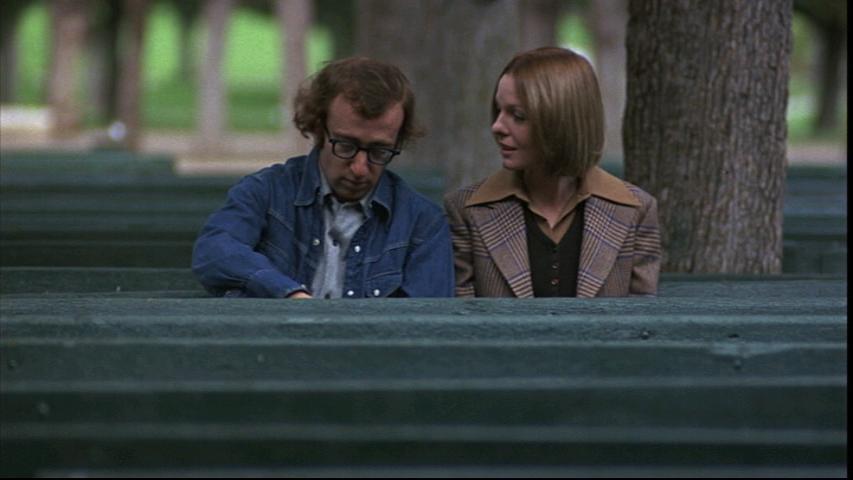
I’m not going to lie. It hasn’t been the greatest time lately. I’ve been pretty damn depressed. I really have no illusions that I’m going to find a job anytime soon, I’m frustrated over the current situation with various women in my life, all those things. Maybe this is the usual stuff, but it just all feels more amplified right now. One day a little over a week ago I got several wonderful compliments about the site within several hours of each other, including a surprising offhand mention by Drew McWeeny at HitFix, and each one of those meant more than I could possibly express here but then suddenly I felt like I was hitting a wall. Over the past week I’ve started three separate pieces and none of them have resulted in anything readable. Will I finish any of them? I don’t know. Are you being kept up nights wondering what I think about John Frankenheimer’s DEAD BANG? If so, why? And is there even anything to be gained in my trying to figure out what I think about it? I don’t know. So in an effort to write something, anything, I decided to look for a film that would be easy, that I could connect with and try to write about that. ALMOST FAMOUS occurred to me since that’s a favorite but then I’d have to deal with the longer cut which would take a lot of time and, besides, the kind of incessant Cameron Crowe optimism that film displays would probably make me even more despondent right now. I thought about IN A LONELY PLACE but maybe thinking about Bogart got me to pull out my disc of PLAY IT AGAIN, SAM which I’ve already seen about fifty times—it’s short (85 minutes), it goes down easy and while it’s very much a Woody Allen film it’s oddly not one that he directed which makes it slightly different than would be expected.


Based on Woody’s stage play of the same name a good amount of the 1972 film is dated enough now in both attitude and specific references that I’m not sure the original show could even be put on today, not without considerable revisions anyway. Still, it does provide for a nice little time capsule showing a version of the world that Woody Allen was once king of, back during the time when the cult of Bogart was in full bloom with his films probably running on the late show and in revival houses all the time. With Woody adapting what he had starred in on Broadway for over a year, along with his co-stars who returned for the film, directing duties were taken by Herbert Ross who by this point already had extensive film and stage credits. Due to strike-related issues on the east coast production was moved out to San Francisco (of course, the play was set in New York) which doesn’t quite take with the persona of the lead—there’s also still dialogue references to ‘Park Avenue headshrinkers’ and knowing a girl back at Brooklyn College not to mention how I’m not sure anyone could believe that Tony Roberts is from anywhere other than New York—but the altered feel provides for a slightly different Woody Allen movie than the world is used to, playing now as a sort of midway point between his ‘early, funny ones’ and what he would achieve later on in his most insightful examinations of relationships. Sure, it’s no ANNIE HALL or MANHATTAN and it’s no BANANAS either but it is a good one to have around for certain occasions when you want a certain kind of Woody from a certain kind of vintage. It’s also interesting as a rare look at what is basically Woody Allen starring in what is ultimately a traditional romantic comedy. The whole point of the movie seems to be aimed to get to the famous final scene but there is still enjoyment throughout.


After his wife walks out and divorces him, film magazine writer Allan Felix (Woody Allen) is desperate to meet another woman. His best friends Linda (Diane Keaton) and Dick (Tony Roberts), happily married, try to set him up with other girls but Allan, continually getting advice from his own vision of his hero Humphrey Bogart (Jerry Lacey) sabotages date after date by trying to mask his own nervousness by acting like someone he’s not. He soon realizes that the only woman he can act like himself in front of is Linda and when work-obsessed Dick goes out of town on business he begins to imagine the possibilities of what could happen with her.


Allan Felix is first seen at the movies by himself, gazing up at the final scene of CASABLANCA, wishing there was something in his DNA that could be like what he’s seeing and as his departing wife played by Susan Anspach (who comes off as sort of a Louise Lasser substitute) puts it to him he’s a watcher, not a doer (of course, he interprets her own desires as wanting to ski down a mountain laughing like an idiot, which is honestly how it sounds to me too). This question of how much good it is to see so many films has honestly occurred to me about my own life before—in an ideal world I’d gladly spend much of my time at the movies but I’d also want to spend many nights having good meals in restaurants with interesting people as well. In an ideal world, of course. PLAY IT AGAIN, SAM is directed by Ross in a decidedly non-showy style which pretty much gets out of the way of the actors and the laughs to let this story of doing more than just seeing movies unfold as cleanly as possible. Few of the visuals ever call attention to themselves with the exception of some touristy looks at San Francisco (that, along with a vague hippie-pot vibe to some of it feels more like it comes from the director than the writer/star) as well as numerous shots of Woody just walking the streets which at one point results in a simple sight gag that gets me to laugh out loud every time. But in this simplicity is a definite degree of intelligence to the direction which lets it feel more like an actual movie than, say, the average grainy looking Neil Simon comedy from the period. Clearly looking at things with a visual eye that at that stage maybe Woody Allen still needed to learn, Ross knows to keep the framing close to allow for the right kind of intimacy through the various scenes in Allen’s apartment but it never feels like just a photographed stage play. There’s barely an individual shot I can point to as being impressive all by itself but there are moments that a director of lesser sensitivity might not have pulled off—whether in Woody’s hesitant glancing around when CASABLANCA ends in the first scene or in its earnest treatment of Keaton’s own insecurity. The direction even seems to have the right awareness of how it needs to do nothing but keep the camera focused straight ahead on the desperation of Woody at certain moments and on a cast who plays the expertly worded dialogue with timing like the best Swiss watch.


The comical mishaps surrounding the weekend getaway and dating stuff during the first half is enjoyable with some great one-liners sprinkled through scenes but since the main characters are all I really care about the plot doesn’t fully kick in until past the midway point and whenever any two or three of the leads are in a scene playing off each other it works just great. It’s not a deep movie, feeling pretty loose on the morality of getting away with sleeping with a best friend’s wife but as Allan Felix lies in bed by himself thinking, “I’m so depressed,” after returning from seeing a movie that he must have already seen umpteen times by that point….well, there’s something in the material’s DNA that I obviously understand. And it’s the forever sharp Woody Allen dialogue along with the quick, always clever fantasies of the various possible scenarios of Dick finding out what’s going on that makes it continually enjoyable to revisit. Not to mention what comes from the lead character’s never-ending desperation which includes the now-classic scene of him trying to talk to a girl in an art museum (the one that includes the line “What are you doing Saturday night?”) as well as this exchange in that sequence between Allen and Keaton: “Do you realize we’re in a room that holds some of the highest achievements of western civilization?” “Yeah, but there’s no girls.” Which sometimes in life just about says it all. With the music by Billy Goldenberg, it also provides us the rarity of a Woody Allen romantic comedy with an original music score—it really is the closest possible look there ever was to a mainstream version of the Woody Allen persona and maybe at times he’s slightly broader in how he plays things than during his own films from this period. There are plenty of references that seemed ingrained in the era of the late 60s-early 70s as well as some joking discussions of rape that probably wouldn’t play so great now (“You’ll never get raped.” “No, not with my luck.”). For that matter, the most famous running gag involving Tony Roberts’ work-obsessed character always intent on letting his office know how to reach him (“Let me tell you where you can reach me, George, I’ll be at 362-9296 for a while, then I’ll be at 648-0024 for about 15 minutes, then I’ll be at 752-0420…”) that by this point in time has been rendered moot by technology by now but seriously, what are you gonna do? Does that suddenly mean that the film is invalid or something? Of course not. The basic thrust of the material is still effective, the leads are all terrific and the laughs are definitely there, all the way through to the famous final scene which manages to correctly play the spoof element while never undermining the story it’s been building to, a tricky balance to pull off. If anything is clear from the ending, PLAY IT AGAIN, SAM is about the love of movies, the desperation of loneliness and how learning from both of those traits can allow you to become a richer person in the end, even if you do wind up walking into the night by yourself. I’m not saying that I identify with any of those feelings—what, you think that’s why I’m writing about this movie?—but I’m pretty sure I understand.


It’s no surprise how well the actors play off each other both from having done this material on stage and how they were no doubt very close to each other by this point. As Allan Felix, Woody Allen keeps the balance going between the desperation of his disastrous dates and the right kind of charm when it’s needed always with the expert kind of timing, always displaying the vulnerability his character feels and spitting out every brilliant one-liner like it’s second nature which it certainly was. Diane Keaton is adorable as she bounces off him during their scenes together and makes us totally believe how much they become attracted to each other, Tony Roberts brings expert patter to every phone number he has to recite while selling the seriousness of the second half and Jerry Lacy infuses what remains a surprising amount of comic timing to what is generally perceived as the persona of Humphrey Bogart, someone who I don’t think ever said “Jewish Holiday” in any of his movies. Included among Allan’s dates are Jennifer Salt from De Palma’s SISTERS (and recently the screenwriter of EAT, PRAY, LOVE), MESSIAH OF EVIL’s Joy Bang and Andy Warhol superstar Viva—the latter two were also in CISCO PIKE. Tom Bullock, the father of an old college friend, can be spotted as a hippie who gets out of a taxi in a pot-smoking gag—he also played the Dennis Hopper role in PORKLIPS NOW, if anyone’s seen that. Just felt like mentioning it.


So that’s PLAY IT AGAIN, SAM, which remains a delightful look at early Woody Allen as well as an appreciation of an unabashed love of movies that still gives me a feeling of total pleasure years after I first saw it. As for that love of movies, I guess it’s something I’m stuck with by now. I don’t know what’s going to happen to me in the future but I know that I don’t want to stop writing this blog. Frankly, I’m not sure I’ve got much else going for me right now. It’s not much, but it’s something. And when somebody tells me how much they like reading it I’m still completely surprised and it still means more than I can say. After all, I’m not Bogart and I’m definitely not Woody Allen. But I’m trying and to go by what this movie has to say, maybe there’s always the chance that someday I’ll figure out the secret of being me.

“Well, I’m off to Alaska. If you need me, I’ll be at Frozen Tundra 69290.”