The other day I was walking down the street when I passed a guy. In one arm he was carrying several books. Around his other arm was the girl he was walking with. Naturally, I immediately felt extreme pangs of envy for whoever this bearded Silverlake doofus was, a guy presumably living a life that I can only dream of right now, filled with knowledge and conversation and all the wonderful possibilities those words imply. I probably felt even lonelier after that than I’d already been feeling that day. But I’ve been in a weird mood lately, alternating between wanting to go to a bar looking for a girl to strike up a conversation with and just wanting to stay home so I don’t have to deal with anyone. Which is pretty much what I’ve been doing. I’ve got my reasons. Maybe I’m just thinking about certain people in my life, trying to figure out the meaning of certain relationships, wondering about the dead end I’ve reached, knowing the answers but not wanting to face the reality full-on. I’m in the middle of one of those periods where I find myself awake into the late hours wondering about a lot of things. And how they could ever possibly be different than the way they are.

I’m still holding out hope that before the show ends its run the American Cinematheque or someone will do some sort of ‘Road to MAD MEN’ series spotlighting films of the 60s that either mirror parts of the series or explore similar terrain of middle-age malaise along with what was happening between men and women as it was felt over the course of that decade. Of course, it would also be an interesting look at how that portrayal changed as the 60s moved forward—Gene Kelly’s A GUIDE FOR THE MARRIED MAN, Richard Lester’s PETULIA, Irvin Kershner’s LOVING, Frank Perry’s THE SWIMMER, John Frankenheimer’s all-holy
SECONDS, but one I would be very interested in seeing screened is Richard Quine’s underappreciated STRANGERS WHEN WE MEET from 1960, the year when MAD MEN’s first season was set. Beginning his career as an actor, Quine went on to be one of those intriguing journeymen from the era who seems mostly forgotten now despite making successful star vehicles featuring the likes of Jack Lemmon, Audrey Hepburn and Kim Novak who he directed in four films. He was based at Columbia for a while and his career interests me for a variety of reasons, partly because of his association with Blake Edwards who had early screenplay credits on a few of his films and together they even created the short-lived THE MICKEY ROONEY SHOW: HEY, MULLIGAN in 1954. There seems to be an intriguing commonality in their approaches and thematic sensibilities—Quine’s pleasant Jack Lemmon service comedy OPERATION MAD BALL which Edwards was a writer on almost feels like a warmup for his considerably crazier WHAT DID YOU DO IN THE WAR DADDY? that he directed later on. In 1963 Andrew Sarris even wrote, “As Blake Edwards’s stock has risen, Richard Quine’s has fallen” and his book “The American Cinema” is rather dismissive of Quine, dumping him in the ‘miscellany’ section but in pointing out that his more successful films aim for ‘lower key seriousness’ as opposed to their comic goals much as I might enjoy something like HOW TO MURDER YOUR WIFE—and why don’t I own that one on DVD?—maybe Sarris isn’t entirely incorrect in this viewpoint.

Quine’s best-known film now might be 1958’s BELL, BOOK AND CANDLE which seems to be a confirmed classic in the mainstream and of which I’m probably risking some sort of harm by admitting that it’s really not a favorite of mine, maybe always playing a little stodgier than I’d like. Yes, the bouncy main theme is pretty much stuck in my brain, there’s a nice Christmasy feel of old New York to the thing and, well, Kim Novak after all, so I’ll watch it on TCM but still wish it were just a little bouncier, a little more madcap but maybe that wasn’t what Quine was ever going for. There’s something in his smooth directorial style that reminds me of the screen presence of Ernie Kovacs who appeared in three of his films— at home in the 50s (or maybe what we think of as ‘the 50s’), laid back, sly demeanor, well-groomed, with an air of hipness that feels as if it’s straddling the line between the coffee houses of Greenwich Village and the cocktail lounges the ad men of Madison Avenue inhabit. Quine’s comedies are likable if a touch serene never hitting the manic highs that Edwards would achieve as director which is maybe why he seems so much more at home for something like STRANGERS WHEN WE MEET, a devastatingly heartfelt look at suburban alienation and adultery in Los Angeles during a time when the town probably seemed much emptier than it does now, when what was going on inside certain homes felt much more constricted even if the doors were unlocked and when a secluded hideaway up in Malibu really was secluded. The film hasn’t been forgotten so much as overshadowed by other films the various leads starred in around this time but either way the low profile is a shame. It’s a film that presents a concept of yearning which crystalizes in the Cinemascope-Eastman color time that it was made in and yet does so in a way that I’ve rarely ever seen.
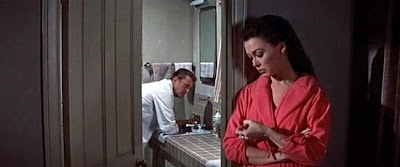
After architect Larry Coe (Kirk Douglas) meets up with rising novelist Roger Altar (Ernie Kovacs) to discuss building a house for him, one that Larry hopes will be an original, he encounters neighbor Margaret Gault (Kim Novak) who like Larry has a son about the same age as well as a homelife that is somewhat lacking. Almost immediately their mutual attraction begins to take effect and as Larry begins construction on Roger’s house in Bel Air their affair begins. As it coincides with pressures Larry encounters at home with wife Eve (Barbara Rush) the affair brings to light both a key event in Margaret’s past and the curiosity of neighbor Felix Anders (Walter Matthau), the local grocer who can tell pretty easily what’s going on between the two lovers and decides to use that knowledge to his own particular advantage.

The quiet of the film’s very first moments as the two leads first notice each other indicates a tranquil quality to STRANGERS WHEN WE MEET that permeates every scene even as the genuine intensity and despair between the characters becomes more and more clear. With a screenplay by Evan Hunter adapted from his own novel it’s one of those films I feel oddly drawn to even if I have no experience in matters like adultery. Maybe it’s because of a certain honesty that comes through in the movie’s portrayal of absolute yearning. It touches a chord somehow, over fifty years after it was made. Suburbia, friendship, longing, women, individuality, creativity, what it means to be an artist, if one even is an artist. Because of the suburban backdrop it’s tempting to tie the film into the more famous Douglas Sirk soapers from the period but unlike the openly dramatic portrayals of societal taboos in those films the conflicts of STRANGERS WHEN WE MEET feel more internal somehow, not delving into the hysteria of Sirk so much as focusing on what needs to be kept behind closed doors regardless and what rises to the surface as a result revealing what’s really going on when the cocktails aren’t being downed. It’s felt in Larry’s architect, desperate to prove his earlier promise, Margaret’s loneliness poking its way through her veneer or the deceptively friendly Felix, making sure all his customers are happy as he smokes his pipe but keeping a closer eye on what’s going on than anyone realizes.

Beautifully photographed by Charles Lang the glossy surface is almost as intriguing as what lies underneath and STRANGERS is a film from that period which makes a somewhat unique use of how it presents Los Angeles that sets it apart from a simple generic backdrop, with even certain establishing shots like Roger Altar’s apartment over on Rossmore offering the right flavor. Much of the film is set on suburban streets where the main characters live over in Brentwood, even if the area is never specified as such --
websites have even catalogued where certain scenes were filmed and I was surprised to discover how often I drove down a few of these streets when I spent time in that part of town. There’s also the site of the house construction off in Bel Air, presented as a sort of untouchable Eden that Larry is adding his genius too. The architect as played by Kirk Douglas is someone who wants to express himself through his designs, not by erecting some grand city that he never even visits but a single thing that he really cares about that he can work over while walking through it, feeling the land, feeling the layout, feeling what it could be. He wants this without being smothered by his suburban existence of friendly neighbors asking advice about crabgrass during dinner parties in a way that only Kim Novak can provide and he brings out something in her as well, a lonely housewife resigned to people being the same everywhere. And they’re more similar than they ever realize, down to each spending time getting their sons to drink up their milk.

Worrying about how it’s been eight years since he won a prestigious award, held back in his passions by his much more pragmatic, if still loving, wife and confronting the drifting nature of insecurity the film looks ahead in an intriguing way to the later
TWO WEEKS IN ANOTHER TOWN featuring Douglas, a film with different goals but also both a portrait of its time and place as well as a ‘what the hell do I do now?’ storyline that the lead finds himself in the middle of. Kim Novak’s Margaret, or Maggie as Larry begins calling her, with her deepest secrets revealing the crack beneath the perfection of her own surface, brings to mind VERTIGO but practically all of Novak’s films bring that to mind anyway. It’s the two halves that we associate with Novak—the cool detached Madeline Elster that everyone seems to think Margaret is and in the pleading way she asks her husband, “Don’t you think I’m pretty?” the more lost Judy Barton of that film’s second half. Played by John Bryant, her all-business husband barely seems to be a person in how he doesn’t seem to notice it’s Kim Novak that he’s married to, living in his very own house, treating her desire for an evening at home as if he’s been taken over by the pod people in INVASION OF THE BODY SNATCHERS and he doesn’t seem to think that she would have any kind of desires at all which has its own weight to it—every line in the screenplay by Hunter, every moment as staged by Quine seems to comprise both text and subtext at once. A key scene involving Walter Matthau late in the film plays as if his character simply decides to drop the pretense of what he’s avoiding saying midway through, turning it into gradually more imposing text making what’s still left unspoken all the more unnerving. More often than not the film is focused on the continuing battle between everyone being the same and the individual wanting to deny this. And what is more desirable deep down.

Just as Kirk Douglas uses his own determined anguish to prod Ernie Kovacs’ novelist into writing a book the way he wants to while using the argument to build the house he wants (one which will also help him see the world more clearly, thanks to Maggie’s suggestion that it needs lots of windows) it’s one of those films where it feels like the production of it seeped into the story being told... or maybe the other way around. As discussed in a 2008 LA Weekly
article by Philippe Garnier the making of STRANGERS WHEN WE MEET could have been a film itself—for one set in 1960, it probably would have been a hell of a lot better than HITCHCOCK. The Bel Air house that Larry Coe is so passionate about was actually being built during production. Very much involved at the time, Quine and Novak were engaged and the studio was going to give it as a present upon wrapping--“Home For Kim Novak Movie May Be Honeymoon House” read one headline. The marriage never happened—Novak was the one who ended the affair—but Quine apparently kept the house. The degree that the film goes beyond his earlier, pleasant comedies like OPERATION MAD BALL as if genuinely trying to make a grand statement about existence, about the need to stand out and make the art that matters to you more than anyone, makes it seem as if the film was as important to Quine as the house being built is to Larry Coe, a chance to express everything he has with this particular woman there to guide him. The director actually worked one more time with Novak after this and although some of his later films in the 60s like SEX AND THE SINGLE GIRL and HOTEL have their qualities they feel more like the work of a director-for-hire than someone looking to make a personal statement. His work in the 70s included three episodes of COLUMBO. The final film he worked on, leaving partway through production and not receiving credit, was 1980’s THE FIENDISH PLOT OF DR. FU MANCHU which also turned out to be Peter Sellers’ last. After a period of illness and depression, Quine shot himself in June 1989. Blake Edwards was quoted as speculating that he was just tired of waiting for the phone to ring.

But STRANGERS WHEN WE MEET, made almost thirty years before this event, feels like it’s about the possibility of connection, even a temporary one, how that can jumpstart our creativity, our desire to actually feel alive and just for a brief period what’s connected to that can seem absolutely the way we want things to be. That’s what happens when strangers meet and eventually, “half the time we part that way” as Ernie Kovacs’ novelist says, enriched by having known someone a little but of course never entirely. But sometimes, if we’re lucky, there’s a connection, where everything comes together out of nowhere. The moments of clarity, of discovery, are handled differently in a way that feels more internal than Sirk in moments like the Cinemascope framing of Douglas’ face as he takes in what Novak tells him about her greatest secret or the low angle of Walter Matthau’s Felix near the end as he realizes the depths to which he’s sank and in the very same moment how it becomes clear that he doesn’t feel the least bit ashamed of himself. As much is revealed in dialogue coming from the main characters much is still left unspoken but the film seems to know that there’s much that doesn’t need to be said. There’s not really a final exchange in a few scenes near the end once it’s made clear where things are going to go, where they have to go. Things simply are going to be the way they are even after all that’s happened and the brief moment of accidental recognition that occurs in the film’s last moments is what they’ll have to live with, leaving behind the house that represents the accomplishment of what they briefly had. STRANGERS WHEN WE MEET offers a sense of connection coming from what feels like Quine’s own connection to the material that is genuine and gives it a unique power, almost to the point that I can’t think of many other films like it. Do I know that Quine was intending it to be his great dramatic statement? Not at all. But maybe that’s how it turned out. It strikes a chord, almost more than I fully want to understand. It insists on these themes while quietly pointing out that as much as people may desperately try to be different they’ll still all be the same. Maybe there’s no choice. Maybe the differences are only noticed by the ones who matter.

In his autobiography “The Ragman’s Son” Kirk Douglas doesn’t say much at all about STRANGERS WHEN WE MEET outside of an anecdote detailing the pitfalls of working with a director and lead actress who were involved. SPARTACUS was happening around the same time so that’s probably where his memories are focused on but even if he doesn’t think much of the film he gives an excellent performance and if there was any sort of frustration felt during production that not only comes though onscreen in all the best ways that possible response almost becomes another subtext in itself. Kim Novak is also wonderful—not only does she do some of her best work here her very presence is enriched by Quine’s direction, even down to how he situates her mouth at the top of the frame in her big scene as Douglas listens to her confession, an effect which is almost hypnotic. Barbara Rush (as in, “I do Barbara Rush” for all you SHAMPOO fans) is particularly strong as Larry’s wife always keeping the balance of her understandable pragmatism and the ultimatums she sets down just right. As the smiling cobra of a friendly neighborhood grocer who ushers his wife out of the room at the first sign of a dirty joke, Walter Matthau does some of the best work of his early career with his side character slithering his way into the primary drama before anyone seems to realize it while the relaxed nature of Ernie Kovacs always feels totally genuine and fascinating. Watching the way he and Douglas play off of each other remains one of my favorite things to look forward to on repeat viewings--for a good time check out Kovacs’ narration of the OPERATION MAD BALL
trailer from several years earlier.

You meet somebody, you want them to be a certain way. Desperately. Often it doesn’t happen that way but sometimes, every now and then, there’s a moment where everything feels in synch and such crazy thoughts almost seem possible. STRANGERS WHEN WE MEET is one of those cases where what sets it apart from the rest of the director’s career makes it all the more fascinating since there isn’t much else to compare it to. The DVD is now out of print, going for high prices on Amazon. Thanks to the friend who loaned it to me. It is a product of its time, of 1960, of what people seemed to believe then about all sorts of things, and though it occasionally becomes evident that it isn’t a perfect product (the bridge in Charles Dunning’s syrupy main theme always sound a little too much like “Volare” for my taste) there really shouldn’t be anything wrong with that. Some of it does seem to be a story that comes from another place and some of it seems so much of now that it hurts. I almost can’t help imagine Larry Coe sticking around in Hawaii longer than he says he will, maybe even years down the road bumping into Don Draper at some point during a scene in the MAD MEN 6th season premiere that we didn’t get to see. They’d look at each other and understand everything without saying a word. What this all meant for Richard Quine, I don’t know but Blake Edwards’ 1986 film
THAT’S LIFE! was also about an architect. Played by Jack Lemmon, a star who worked with both filmmakers, this architect was considerably older and yet also worried that he hadn’t lived up to his potential. No matter how hard you try, no matter how old you get, it’s impossible to not care about what other people think. It’s even harder when all the people around you don’t care anyway. And as you wonder about the serenity of having books in one arm and a girl in the other, it’s the person who you want to care most of all that never seems to hear what it is you say, at least not the way you want them to. That’s just the way it is. Time doesn’t stand still. And eventually you stand there alone. Still a stranger.


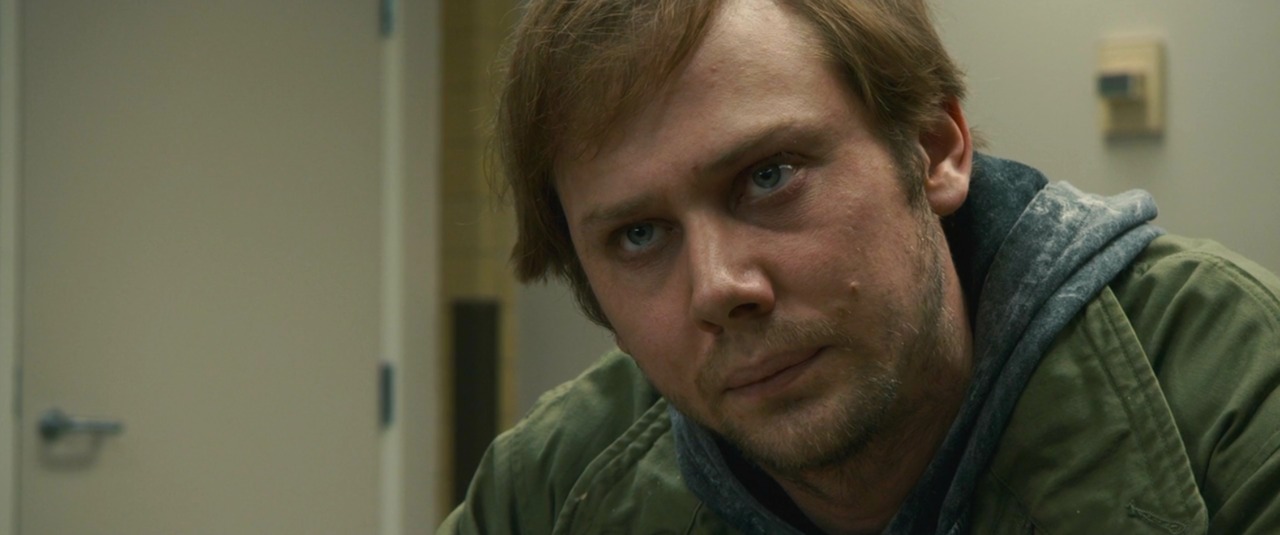

 You wake up one day in this town and suddenly decades have gone by while the path that originally brought you to Los Angeles stretches further back into the past. The road you’ve been on, mixed in with all those people you’ve met up to this point, is now so crooked that you can’t tell where it came from and what lies in front of you seems even hazier. Released in 1973. THE LAST OF SHEILA is a film where barely a few minutes are actually set in L.A. and yet it seems like one of the most perfect films about this city where I live, or at least what I still imagine it to be. It’s a film about friendship and yet it’s the most cynical film imaginable. Perfect for the decade when it was made. Perfect for now.
 A number of weeks ago—4/9/13 to be exact—I surprised some people on my Facebook and Twitter feeds by saying I was at the 40th Anniversary screening of THE LAST OF SHEILA. They weren’t aware of the event and, truthfully, I was a little taken aback that I was there myself. This particular path began when I started following actress Susan Blakely on Twitter since, after all, she was in THE TOWERING INFERNO so doing this made perfect sense. She actually followed me back and responded to a few things I said on there, which led to a few friends of hers on Twitter starting to follow me. This included Lynda Erkiletian who may be known to some out there as one of the Real Housewives of DC and among other things is also the executive director of the James and Paula Coburn Foundation which supports charitable organizations devoted to the arts and sciences. It had put together this special night designed to celebrate the legendary James Coburn as part of the KCET Cinema Series. I suppose they enjoyed the unabashed film geekness of my tweets and that led to being invited to the event but I’m not entirely sure I follow along with this myself. After my platonic date cancelled due to not feeling well I decided that maybe it was best to traverse this particular evening alone since I wasn’t sure what I was in for. I arrived early, maybe earlier than I needed to, and it was about this time while I seated in the reserved section that I left the status updates and got people wondering what the hell was going on. Soon enough the theater started to fill up and before I knew it Susan Blakely sits behind me. I introduce myself, she excitedly gives me a hug, introduces me to her husband and friends which included Sally Kellerman. Lynda Erkiletian then appeared, very happy to meet me as well. What was I doing here? Even after all these years, what am I doing in this town, anyway? But as much as I may have worried that there had been some terrible mixup, it was very real.
 All this led to that night’s screening of THE LAST OF SHEILA shown in 35mm something which I imagine isn’t going to happen again very often. Part drawing room mystery, part dry character comedy, part look behind the curtain at the movers and shakers of Hollywood, on the surface the film might resemble any number of international productions from the 70s, the kind which feature the actor’s faces in boxes at the bottom of the poster. But THE LAST OF SHEILA is more than that, not only one of the best films directed by Herbert Ross in his long career but notable as being the one film written by the screenwriting pair of Stephen Sondheim and Anthony Perkins in their only collaboration which certainly adds to the interest as well as the intrigue of what this movie really is. It's a lot more than that as well and there are all sorts of things to compare it to but, really, there aren’t many films like THE LAST OF SHEILA.
 Exactly one year after the mysterious hit-and-run death of his wife Sheila in Bel Air, film producer Clinton Greene (James Coburn) gathers six of his friends for a cruise aboard his luxury yacht in the South of France. The group includes film director Philip Dexter (James Mason), screenwriter Tom Parkman (Richard Benjamin) and wife Lee (Joan Hackett), movie star Alice Wood (Raquel Welch) and husband-manager Anthony (Ian McShane) as well as powerful agent Christine (Dyan Cannon). Once the group has assembled Clinton announces that the week’s cavorting will consist of an elaborate game he calls “The Sheila Greene Memorial Gossip Game” to commemorate the anniversary of her passing, handing out cards to each person listing a secret that the others are meant to uncover. The secrets make a few of them uncomfortable, getting everyone to wonder what Clinton really has up his sleeve, in addition to his proclamation to make a movie about Sheila’s death, but the game has barely gotten underway when somebody actually turns up dead. It’s not only up to those who remain to determine who the killer is, but what the cards that were handed out might have to do with the answer and what happened to Sheila a year ago.
 I'm trying to be as cagey with certain plot details as possible. Inspired by games that the two screenwriters actually played with their famous friends, THE LAST OF SHEILA is a puzzle movie about people aware they’re assembling a puzzle. As is typical in the Agatha Christie tradition the victim is hated enough that they aren’t missed at all beyond those that are still there feeling compelled to assemble the mystery of what happened, with cocktail hour coming right on schedule. And at least part of what the film seems to be about is how they’re not missed, how it’s populated by people who are well aware they’re moving on to their own insignificant troubles after just a few moments. But in this case their absence is also keenly felt, just one more hole in the lives of these people who have their own disappointments already, as indicated by the cards handed out by Clinton that display their darkest secrets. They’re all members of the Hollywood jet set but maybe one bad decision away from being tossed out and as one character puts it, they’re friends who all know stuff about each other, they just don’t know the same stuff.
 It’s well-known by now that legendary agent Sue Mengers was the model for Dyan Cannon’s character and it’s not a stretch to imagine how part of the back story of the film’s stars are part of this giant shell game as well--Cannon herself had already been nominated for an Oscar at this point but had also been married to one of the most legendary movie stars in history, Raquel Welch’s actress doesn’t seem all that jazzed in taking part in the fun and games Clinton the movie producer is engineering which seems appropriate for someone trying to move away from the bikini stereotype (she appears in one anyway since she’s Raquel Welch after all), while James Coburn himself makes a disparaging joke about one of the other characters doing a rewrite on what he dubs “A Fistful of Lasagna” just a few years after starring in DUCK YOU SUCKER aka A FISTFUL OF DYNAMITE. For all I know one of the key secrets eventually revealed comes from Anthony Perkins and his own secret life as well. But even on its own THE LAST OF SHEILA is a mystery that takes continuous pleasure in twisting around the expectations—appropriate for such a puzzle there are any number of pieces that someone might catch on first viewing without knowing right away how they’re going to fall into place. The dialogue includes various asides that sometimes have nothing to do with anything (or maybe they do, like the weirdness of those puppets) as well as lines which will certainly have greater meaning when seeing the movie multiple times, like one particularly nasty piece of foreshadowing that jumps out if you’ve seen the movie before.
 As much as the moderator during the Q&A afterwards made the observation that movies like this only come out near the end of the year for possible Oscar consideration these days it’s not at all an insult to say that THE LAST OF SHEILA isn’t an awards-type movie—that said, it could easily have deserved a screenplay nod—but instead is the sort of adult entertainment which was once more the norm, featuring movie stars in a sly film that displays their talents set in a far-off locations slinking its way through a plot that forces us to stay on our toes. There’s a bite to the approach in how it reveals the characters through their wisecracks even down to expressing how some of them are more amused by that sharpness than others. THE LAST OF SHEILA is entertaining all the way through and manages to become more so, more resonant, when seeing it again. Ross’s staging of this script is continually expert, knowing just when to emphasize certain touches over others and zero in on what we should pay attention to. Plus a surprising amount of subversive elements within the quiet moments such as one of the uglier secrets held by the characters which doesn’t seem to inspire much more than a shrug and even how things are resolved in the end provides a sting of how people are willing to turn their back on certain actions by people since, after all, there’s a movie to get made. Maybe, according to the film, the worst possible punishment in life is to do exactly what you were doing already. As the host of this week in the Riviera, Coburn’s famous toothy smile has a particularly demonic shine in this context (he’s even in drag at one point which deserves a mention) and his presence is such that when he’s not onscreen it almost feels as if that image is subliminally burning its way through the frame regardless. Along with the layers of the story the very title has multiple meanings—not just Sheila’s death but how it becomes clear that the characters will never be rid of everything surrounding all the problems that entered their lives through her and how it will always be with them. Almost seeming slight as a mystery at first, the intrigue of THE LAST OF SHEILA as we stare at those “YOU ARE A…” cards over and over holds all the way even through its laughs but its bite leaves a mark as well, one that stays with you as the layers reveal themselves on multiple viewings.
 There’s fantastic work by all involved and it’s a treat to watch a few of the actors involved in the drawn-out explanations of the second half (to avoid spoilers in this twisty plot I’m even trying to not mention who those are) play mental chess with each other. Everyone is a joy here—James Coburn’s relish as he chews his way through his speeches, Dyan Cannon’s energy, Richard Benjamin’s canniness, James Mason’s gradual awareness of what’s going on around him. Their differing energy works for the film like how the different energy of Joan Hackett (particularly good) makes her seem like the one genuine human being of the entire group and the intentionally less flashy personalities of Raquel Welch and Ian McShane (I guess he didn’t just pop into existence when DEADWOOD began production) provides just as much of an effect. The end credits song “Friends” is sung by Bette Midler and feels like just the right bitter bill to take after all this—incidentally, Midler is now playing Sue Mengers in a one-woman show on Broadway.
 The film that night was followed by an enjoyable Q&A with stars Richard Benjamin and Dyan Cannon in which they recounted various tales about its making such as when the unpredictable nature of shooting on the water forced the production to rebuild the yacht interiors at a studio in Nice—Truffaut’s DAY FOR NIGHT was filming there at the same time—so the actors had to wait around for a few weeks in the south of France, which doesn’t sound too bad. Going along with the theme of the evening emphasis was placed on memories of James Coburn—maybe my favorite anecdote told involved Benjamin remembering driving along in a fast sports car Coburn had just bought when on a whim he suggested they drive to Italy. Benjamin said he didn’t have his passport on him but Coburn told him not to worry. Sure enough the Italians weren’t going to let them across the border but when Coburn flashed that famous smile they exclaimed, “Ah, Signor Flint…” and waved them right through. At the reception afterwards Susan Blakely brought me around introducing me to various people so I can now say I've met Richard Benjamin and Dyan Cannon. It was a thrill to be there celebrating such a bitterly funny, cynical film about the nature of friends in Hollywood (or, what the hell, friends everywhere) so my thanks to Susan Blakely and Lynda Erkiletian for making me feel so welcome on this night that felt something like an odd comedy and mystery in itself. I once heard somebody say that it was a shame Sondheim and Perkins never collaborated on another screenplay and while that may be true at least we have THE LAST OF SHEILA, a film which deserves to be celebrated all these years after it was made--it’s available at the Warner Archive, so treat yourself. Sometimes one film is all that matters, especially if it’s as good and sharp as this one is. Just like certain evenings can matter as well, becoming one more unexpected detour through that road which starts and ends in the city of Los Angeles, or at least what I imagine it to be even after all this time.