Saturday, May 29, 2021
The Intangibles Are Everything
Not sure how long ago it was but some years back, I spotted James L. Brooks in my neighborhood. At least, I thought I did. The guy looked like him. It’s impossible to be certain, but there’s no reason why he wouldn’t take a weekend drive over to Los Feliz with some people for lunch or whatever. While I know next to nothing about the man’s personal life or where he lives or any of that stuff, I just imagine it to be way over on the west side in somewhere like Santa Monica, Pacific Palisades, or up in Malibu, one of those places I only rarely venture to these days - the sort of place the characters in his film SPANGLISH lived is what I’m saying - maybe just going to and from the Fox lot to work on THE SIMPSONS. Of course, I have no idea if any of this is the case, but my point is that I sometimes wonder how much time he spends out in the real world to see how people actually behave these days. Los Feliz counts as the real world, right? I’m never sure anymore.
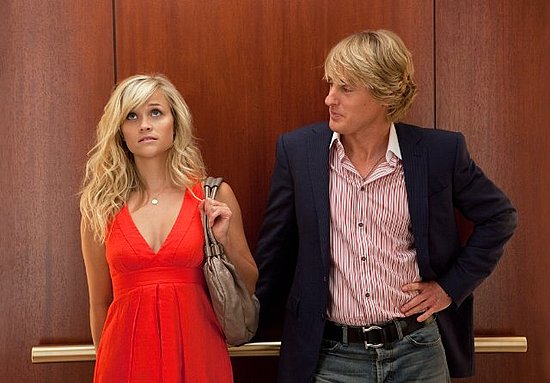
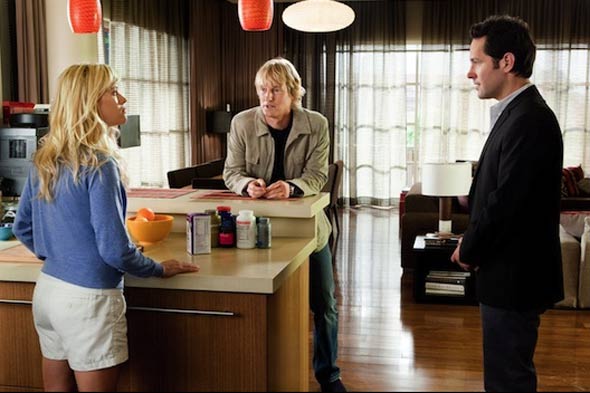
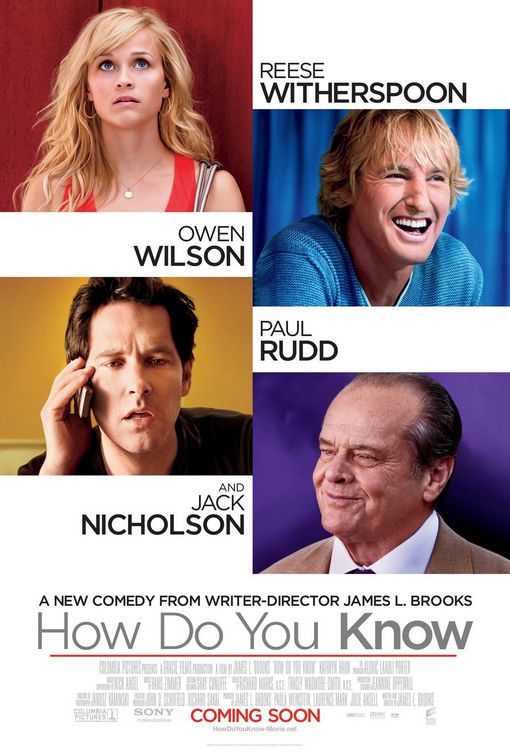
Now having passed its tenth anniversary, HOW DO YOU KNOW is the last film to be written and directed by James L. Brooks. To date, at the very least, and technically there’s still the chance for another but a decade is a long time. Opening the week before Christmas 2010 the film died immediately, even with a reported $120 million spent on it and a cast that included Jack Nicholson in what is also his final film to date. It has its admirers out in the wilds of Film Twitter and, hey, I get why. It’s recognizable as a film by James L. Brooks and I’m willing to defend it to a certain extent on that basis in the way it explores the neuroses of its characters to their utmost depths as if this is the final statement on everything people in his films and TV shows have ever gone through. It’s a film that asks the question of how two people can be compatible and what to really do when faced with the impossible possibility of being together. But it’s also a film that seems to continually ask itself what sort of movie it is for much of the running time and what the story actually is, until it ends so it seems like the film has barely even started and all you’re left with is wondering what it was. How do you know when you’ve even seen a film, anyway? What are you really able to take from it?
Professional softball player Lisa Jorgensen (Reese Witherspoon) is unknowingly on the verge of being left off the team’s roster for the coming year when she begins dating hotshot pitcher Matty Reynolds (Owen Wilson). After getting an awkward call from George Madison (Paul Rudd) to let her know that he won’t be calling to ask for a date after being set up by a friend of hers, George is served with a subpoena for corporate maleficence at the company he works at, run by his father Charles Madison (Jack Nicholson). With his life suddenly in shambles, he calls Lisa again to ask for that date but by the time they meet, Lisa has gotten news of being cut from the team. The dinner goes awkwardly but they soon run into each other again and Lisa is faced with the decision of which of these two men is the right person for her at this point in time, while George has to decide how much the possibility of this woman matters and what that means for his relationship with his father.
The basic notion of two people on a blind date the day both of their lives have fallen apart is a promising kernel of an idea, meeting as they try to figure out where their lives are supposed to go now - asking should they fight what has happened or should they accept that ending and find a new way towards an actual, fulfilling life? How do you know, right? The thing is that I’m not entirely certain this is the idea the film wants to explore and it gets so fixated on the simple, Brooksian aspect of behavior with the separate inciting incidents done in such a way that it’s hard to really get invested in what has happened. The softball team setting feels promising, but it’s discarded almost instantly so we can barely understand what Lisa has lost. The corporate plotline is never clear enough to be all that interesting even when what’s behind it gets revealed. It’s hard to be sure what to focus on here, and while HOW DO YOU KNOW does have a story, it’s often tough to figure out just what that is as if the purpose of many scenes in the film is to figure out why they need to be in the film in the first place. Two of the leads who never actually meet live in the same building, which you’d think could have been established in a clever way but, just like all sorts of other possible connective tissue to get us acclimated to things, this never happens, so we’re left to find our own way from scene to scene. In a way, this is a narrative that wants to strip everything about the plot down, discarding several interesting characters in the early scenes who feel like they’re going to be prominent but then aren’t in order to focus on the main characters away from the worlds that they’ve gotten to know best. There’s an idea to that, but it still insists on dealing with various other elements without any clear idea of why it needs to focus on them.
Having recently written about Brooks’s first theatrical screenplay STARTING OVER, this made me even more aware of the echoes found in HOW DO YOU KNOW as if he was mining the past for inspiration—the back and forth of a woman moving in with a guy she’s seeing, the rare (for films) occurrence of people using buses and even the proposal of two people having their first dinner together in silence. This film actually lets the idea play out during the date in question but even so, STARTING OVER always felt like part of a recognizable world within its own tone while this film never sheds a certain antiseptic feeling that makes it play like the whole thing was shot on a backlot even when it’s clearly filmed on location (the film is set in D.C.; parts were also shot in Philadelphia). The street scenes always look so clean, sparkly and oddly lifeless, everything constantly wet down to make them glisten without a drop of rain ever spotted. It turned up on Netflix for a period in 2020, and that continual, incessant brightness of every scene went perfectly with what has become the Netflix romantic comedy aesthetic in recent years, everything looking perfect and seemingly never part of any recognizable reality. Some of those films never seem to have any apparent goals beyond simply getting you to zone out, which at least can’t be said for HOW DO YOU KNOW, which has characters who spend much of the running time overthinking things to the breaking point. It beats the alternative these days, but it still never quite achieves a flow to allow each scene to go naturally from one moment to the next.
Of course, this reality of behavior is all part of the Brooks approach going back to his sitcom days. Still, especially during the likes of TERMS OF ENDEARMENT, he seemed to revel in the messiness of day to day life and how people interact, driving each other crazier with each new decision of how they’re going to screw things up. The scripts of both that film and especially BROADCAST NEWS feel so finely honed, every moment matters so much, but here it becomes a continuous question of why people are behaving in a certain way and what all sorts of moments are even doing there. Even the opening scene, showing Lisa as a young girl discovering softball and how that gets boys to behave towards her, feels off and not establishing any particular themes that would justify it being there. A lot of time is spent with the characters played by Owen Wilson and Jack Nicholson as if to justify why they’re being played by such big stars when it’s not really needed, and the film never figures out the right way to resolve either one of them. Wilson as the womanizing hotshot millionaire ballplayer, with a closet filled with souvenir sweat suits for every woman who spends the night in his place, gets scenes on his own where he explores his feelings for Lisa but it never makes sense why he’s technically one of the leads. Jack Nicholson automatically becomes one of the leads due to his very presence but the scenes between him and Rudd, simmering with a presumed hostility coming from whatever the backstory is between them that we don’t hear about, don’t click enough to warrant so much time spent on that either and the bones of the conflict never feel genuine.
There’s a certain push-pull to the plotting that feels familiar with Brooks—the going somewhere that gets interrupted like the Correspondents’ Dinner we never actually enter in BROADCAST NEWS, the trip to visit parents that never happens in AS GOOD AS IT GETS—but here the path it takes constantly seems to lead to dead ends that circle around and start over again, never really leading anywhere. If we needed to siphon the film down to the stuff that feels like it’s essential, I’m not even sure that the results would be what the film itself thinks is right. Maybe the scenes that were taken out needed to be left in. I’m reminded of Pauline Kael’s review of HEAVEN’S GATE, where she said finding stuff to cut from that 219 minute running time was easy. It was figuring out what to keep that was the problem. A movie withholding what it’s really about is one thing. This film feels like it spends much of the running time groping for an answer.
In every way, Reese Witherspoon seems like ideal casting for a James L. Brooks heroine, the sight of the inspirational quotes that surround Lisa in her bathroom mirror that have resulted in nothing feeling like it crystalizes what is going on inside her, not a single one of them containing what she needs. But, too often, the film doesn’t know what to do with that inner conflict unless it wants to say that the opening flashback showing her as a girl means that she’s destined for a life of always getting knocked down by men and the softball thing never mattered anyway? One turning point for the character, silently realizing that she has no place anymore with the team she’s been cut from, is brushed over so quickly as if it was salvaged from footage meant to be used for something else. The things in the film that register happening within scenes often feel too isolated as if it barely matters that they’re in the film at all. A scene where she visits a psychiatrist played by Tony Shalhoub feels promising, but anything learned from it is dropped just as one bit where Owen Wilson loses his temper while trying to make a point. For a moment, the character actually seems human, but all we’re left with is that one brief glimpse of relatability.
You can feel the film searching for those themes to focus on through all of that, and occasionally it comes within reach. Paul Rudd has a few moments, especially silent ones like the calm displayed by George after his first dinner (the pasta also looks appealing) with Lisa and even Reese Witherspoon’s abrasiveness, annoyed that the guy she’s with might actually be looking at her, sometimes makes total sense. The film at least knows to look for these quiet passages, like the way the camera follows behind her as she heads for their first dinner, but just as many such moments feel like the movie is just killing time. And when Brooks isn’t willing to let things stay quiet, the question of tone also becomes an issue, revealing how much he needs to get the actors to take it down a few notches. But at times, it comes close to feeling right, especially during the long hospital scene late in the film after George’s secretary, played by Kathryn Hahn, who’s getting all sorts of attention these days, who has given birth. The single funniest reaction of the entire film happens here, thanks to her, and it’s the one scene where everything makes sense. Even a joke involving Nicholson that feels shoehorned in works because it feels like it came organically out of the character’s feelings towards each other. Much of it involves Hahn’s boyfriend played by Lenny Venito (who’s just great here) coming in to propose to her and the mess that develops involving getting the moment on video almost seems to make sense of the entire film, turning it into a display of life improvising what once happened to try to make it even better. You could say that none of this feels like a part of the real world. Still, it is a part of the director’s world, as much as anything made by Howard Hawks after 1960 was, resulting in films that stripped the interests of the director to its essentials while also displaying an older filmmaker presenting what he still thinks of as the world out there. It almost doesn’t matter that it’s something else entirely. In this case, it’s the minutiae, the nervousness, the reasons for why they feel like they need to be together in the end. If anything, this is what HOW DO YOU KNOW has and what the story feels like it needs to be.
At one point, Paul Rudd’s George states, “Optimism is sanity,” as a way of approaching what he hopes will be his relationship with Lisa, a curious restatement of the way Jack Nicholson’s character declares, “Cynicism is sanity,” early on as a way of protecting yourself in the world. The repetition in the phrasing is barely noticeable. At least, it took me several viewings, but maybe one of the things that the film is saying is that making the second choice can be the only way to connect with people, even if it means going against what you’ve known your entire life. And, if I’m going to be honest here, the things that connect are the things in the movie that I identify with almost against my will and don’t even feel entirely comfortable pointing out. Certain moments of the developing relationship between the two leads are scattered in there, when Reese Witherspoon gets a little too testy with Paul Rudd in ways that still seem genuine followed by the actual connection. The overall message seems to be that even when something perfect that you’ve already achieved in life gets fucked up, you can still find your way with help from the people around you who matter and care and want to understand who you really are, that one small adjustment George gets to tell her about when he finally has the courage. I have some affection towards HOW DO YOU KNOW and even find some of the messiness endearing since the idea of searching through all that clutter in life is something I can relate to, but whether that’s my own screwiness in trying to find value in a lesser James L. Brooks film or actual things found inside of the film, I’m still not sure.
You can feel Reese Witherspoon and Paul Rudd trying to make this work, and occasionally between the two of them it does when they’re able to connect in the moment. Witherspoon balances out the uncertainty of the character in the broad sense with what the character is always ready to insist on without even being asked while Rudd is best when he’s just in the moment looking at someone, able to relax in just playing off someone. Even Owen Wilson clearly wants this to work even though his character, always willing to talk around the idea of how monogamous he is, never connects in a broad sense so he just falls back on the Owen Wilson vibe which never feels entirely correct. It’s the sort of curious energy that makes what Kathryn Hahn is doing all the better. She feels like the most human presence here no matter how big she plays it, a very emotional person getting more emotional without even trying. Deceptively simple reaction shots of her are astonishing. She’s the only person who seems to have a life that continues when she’s offscreen, a feeling that only grows when Lenny Venito makes his appearance as her boyfriend. We can only imagine the rest of this romantic comedy starring them that we’re only getting to see the climax of. A few other people like Mark-Linn Baker, Shelley Conn and Molly Price have roles that seem promising like they will be important but turn out to be briefer than expected. Maybe they were always small roles. Maybe the film got reworked so many times that that’s what they became. And then there’s a performance by Jack Nicholson which feels like he’s doing a favor for his old friend Jim Brooks with every scene playing a little as if he’s letting his glasses do most of his acting for him, with a standoffish vibe to the father-son storyline, but also maybe like he wanted to use it as an excuse that he just wasn’t feeling it anymore so why not simply bow out. It’s hard not to think about how this is his last movie after forty-plus years of stardom, but there’s nothing in the material to warrant reading too much into that.
But it takes time for dreams to fade, like it or not. If we admit the truth to ourselves about what the reality is, that can help, but sometimes all we can do is fight through those feelings until there’s nothing left to fight anymore. Even if we believe that truth, even if we can look at ourselves in the mirror and admit it, it still isn’t an easy thing to face. Of course, it’s entirely possible that I didn’t really see James L. Brooks in my neighborhood that time, but that’s not the issue. This film, which opened the same day as TRON LEGACY, is mostly forgotten now except for likely being Jack Nicholson’s last, along with that reported $120 million budget, presumably made up from star salaries, reshoots and Brooks’s own indecisions. It’s very likely that we’re not going to get something else like it anytime soon. Maybe the thing about HOW DO YOU KNOW is that the film asks too many questions it doesn’t know the answer to instead of being willing to come out and say something, anything at all, which, come to think of it, is kind of like life, especially this past year. But at least it’s a film trying to improve itself in the search for whatever it’s supposed to be. In that sense, it’s honest. To find the answers in a movie like this, you sometimes have to dig for it. That’s kind of like life, too.
Thursday, May 27, 2021
Send In The Clones
Sooner or later, probably sooner, I’ll go back to the movies. It hasn’t happened yet, but it will. Not sure why I’m taking my time with the return but maybe it just has to feel right. I keep thinking about how the world is opening back up the but a place like the Cinerama Dome remains closed, part of the Arclight/Pacific announcement that the chain will be permanently closing, and we don’t know what’s going to happen to that place. After the past year anything is possible but I have to believe that the Dome isn’t going to go away. I have to believe that. The place means too much. To me, to other people, to this town and its history. This is the place that opened back in 1963 with the premiere of IT’S A MAD, MAD, MAD, MAD WORLD before running for 67 weeks, the place where I saw THE AGE OF INNOCENCE on opening day, the place where I saw ONCE UPON A TIME IN HOLLYWOOD on opening day, the place where I saw THE MASTER in 70mm twice on opening weekend each time in a packed house, the place where I saw the Sidney Lumet remake of GLORIA on opening weekend in a theater that was practically empty. There was also something else that I’ve been thinking about but I’ll get to that shortly and the very idea of this glorious place never reopening is simply unacceptable.
Way back when I first started going there, the Dome was all by itself, next to nothing but a giant parking lot that I would traverse, having parked on the street to save money, on my way to see THE CABLE GUY or DONNIE BRASCO or whatever, knowing that something would take up that space eventually. Inside the actual theater it was a glorious place with that enormous curved screen enveloping you, making every film that played on it more special, more epic. Admittedly, not every movie worked on that screen with the curvature but when the right film was there it felt like there was no other place to see a movie that made any sense.
By 2002 the Arclight was up, becoming one giant complex so I grew to love that place too and together this became just about the best and most exciting place in Los Angeles to go to the movies with memories there over the past few decades that I will cherish. And through it all, the Cinerama Dome is the most special part. There’s nowhere else like it. Going over everything I’ve seen there through the years in my head—a reissue of EL CID was the first, not a bad way to start—one fond memory is for a film that never actually played there. It was some sort of advance screening, maybe for press and media but who knows, of the Sylvester Stallone JUDGE DREDD exactly two weeks before it opened in June 1995. Even at that late stage playing to a packed house the film was actually still unfinished with credits missing (opening or closing or maybe both, who can remember) as well as at least one big difference. Maybe it’s not all that good a movie but it is the sort of thing you want to see at the Cinerama Dome, the sort of reason the theater is there in the first place.
It feels a little forgotten but JUDGE DREDD comes from a time before the comic book movie explosion so the people making it apparently felt the need to explain such a concept with a montage of Judge Dredd covers over the opening credits. Watching the sequence now makes me think of the Spider-Man segments back on THE ELECTRIC COMPANY but the film which follows isn’t quite as educational. It’s entertaining in an empty calorie sort of way but it’s also kind of a loud mess, lots going on in every scene but little of it sticks around long enough to make an impression, a giant sense of scale felt in the imagery while still playing like it was sliced down to around ninety minutes as if it knows we’ve got things to do and places to be which, in fairness, we probably did in 1995. As a completely honest admission, I remember liking the film that night. Maybe I was just younger, maybe it was the excitement of that advance screening. Seeing it again about a month later (at an AMC way down in Santa Monica, which was nowhere near as impressive) caused me to think that mayyyyyybe I’d overrated it slightly. But this happens to all of us. Revisiting JUDGE DREDD for the first time in some years it’s not that I think the film is all that good but there is a sense of scale to the jumble that it is which makes me feel a little nostalgic for the days before CGI took over everything. The film has actual sets, for one thing, so everything feels tangible and since the comic book formula hadn’t been cracked yet this gives the film a sense that at least it’s trying lots of different things to see what sticks. It’s got way more machine gun fire than anyone ever needs but there is a certain enjoyment to the mess at least in small increments. It also helped that my first viewing was at that particular theater. We were more innocent then. At least I was.
There is a plot in JUDGE DREDD, but also a lot of noise surrounding it. Far in the future with the planet turning into a wasteland known by all as The Scorched Earth, much of humanity resides in what are now called Mega Cities with massive populations where the huge surge in crime has caused the traditional justice system to be replaced by street Judges, part cop but very much also judge, jury and sometimes executioner. The most famous and powerful is the feared Judge Dredd (Sylvester Stallone) who never has any doubts about the criminals he passes sentence on, living or dead. When a TV news reporter who has been investigating Dredd’s methods is killed he is arrested for the crime and with falsified evidence is quickly convicted, not knowing that one of the people behind this is the mysterious Rico (Armand Assante), who he shares a little known past with. Also in league with Rico is crooked Judge Griffin (Jurgen Prochnow) looking to replace Dredd’s mentor Chief Justice Fargo (Max von Sydow) and take over the Council of Judges. After being banished to a penal colony Dredd is able to escape with help from fellow convict Fergie (Rob Schneider) and once the two of them are back in the city they team up with Judge Hershey (Diane Lane), Dredd’s friend and defender at his trial, to track down who set him up in the first place and uncover the full extent of Rico’s ultimate plan.
To get another admission out of the way, I have pretty much zero awareness of the Judge Dredd comic and even the better received DREDD reboot from a few years ago isn’t something that stuck with me beyond the fact that I was ok with it. Released by Hollywood Pictures, gone but still not forgotten, the 1995 version feels like it uses the comic book as mostly a jumping off point to make a the biggest sci-fi/action summer movie imaginable, sort of ROBOCOP set in a future that’s a cross between BLADE RUNNER and Tim Burton’s version of Gotham City (production design by Nigel Phelps, previously the art director of the 1989 BATMAN). But it’s also very much a Sylvester Stallone vehicle and in the end wants to be that most of all with the mask that always covers the main character in the comic (so I’m told) being removed about fifteen minutes in. The two words that come to mind when thinking of the film are Loud and Expensive, loud in terms of all the gunplay, expensive in terms of all the sets and special effects and star power. For a few minutes at the start when the film takes Fergie on his flight through the city during the opening credits the sense of scale is genuinely impressive giving it a feeling of excitement that primes us for the world to come it feels like it might be more than this. Looking at it now feels a little like a preview of the city planet Coruscant in the STAR WARS prequels and the overall look to the effects isn’t as advanced as it would be just a few years later but the heightened feel of the images brings a kick of excitement to the moment as if it’s getting primed for some other futuristic adventure instead of the one we’re actually about to see.
Directed by Danny Cannon (who went on to direct I STILL KNOW WHAT YOU DID LAST SUMMER and lots of TV including the CSI pilot), there’s a lot of visual clutter which makes the look inconsistent but at least it’s active. And the cluttered writing credits (story by Michael De Luca and William Wisher, screenplay by William Wisher and Steven E. de Souza, from the comic book by John Wagner and Carlos Ezquerra) are fitting for a story that’s pretty cluttered too, rushing through moments of breathless exposition, speechifying and imagery which gives the impression that the script went through many, many drafts to nail down the necessary story beats but in the end wants to pay more attention to coming up with all the one liners (“Who says politics is boring?” says the bad guy as he blows away the entire council or bad guy Joan Chen spitting “Bitch!” at good guy Diane Lane who replies, “Judge Bitch!”) instead of making the plot compelling.
That kinetic feel now seems very much a piece of nineties would-be blockbusters with cinematography by Adrian Biddle (ALIENS, THELMA & LOUISE and later the 1999 THE MUMMY) that always gives it a fittingly epic feel but the pacing is so rushed, moving from one set piece and plot point to the next that the general feel is all over the place. The grandiose quality of the world’s gritty design has weight but it doesn’t match up to the goofier elements, especially the uniform on Stallone and the other Judges designed by Gianni Versace that feels so ridiculously stylized it doesn’t seem to have much to do with everything around it making me wonder if this film is one of the reasons why such costumes in later comic book movies, like in X-MEN just a few years later, decided to drain the comic book feel out of everything to make them seem more grounded and ‘real’. That wasn’t quite as big a deal back then and even though lack of reality isn’t the problem with JUDGE DREDD it still has too much going on to develop any sense of consistency, parts feeling out of a satirical comic book while others feel totally straight faced in a big action movie sort of way. The sense of scale is impressively big with a genuine sense of craftsmanship felt in all those giant sets and there’s a lot to appreciate in the design especially something like the giant ABC Warrior robot commandeered by Rico that is something that would definitely be CGI these days. It’s a silly concept the film doesn’t really do much with but just seeing it there actually able to interact with the actors is impressive all on its own.
For Sylvester Stallone, this came in the middle of his mid-90s semi-resurgence, right between the sleazy fun of THE SPECIALIST from the previous fall and Richard Donner’s overlong ASSASSINS later that year. More than any other of his vehicles from the period, JUDGE DREDD feels like a concept where he doesn’t entirely belong no matter how much it was reworked to accommodate him. Maybe the basic concept shouldn’t have been a star vehicle for anyone, Stallone or not, but the plot still seems tailor made for his persona with the basic structure of being framed for murder, sent away, then escaping with buddy/sidekick and finding his way back for the big confrontation with the main bad guy never all that different from TANGO AND CASH (or being thrown into prison at the start of DEMOLITION MAN, or being let out of prison at the start of the second RAMBO or being in prison for all of LOCK UP), trying to squeeze the Stallone comeback narrative of so many of his films into a sci-fi/comic book world whether it belongs or not. Judge Dredd stands in the middle of the street during his first appearance bellowing “I AM THE LAW!” to the criminals above and it feels meant to be iconic or at least a spin on his first appearance in something like COBRA but it plays like he hasn’t been let in on the joke yet.
There are ideas buried in the script to go with Dredd’s inner turmoil, especially getting him to learning what the idea of justice really is and how he pre-judges someone like Fergie without a second thought but they’re either the wrong ideas or they’re being placed into a movie that doesn’t have much use for them so if the character has even learned anything by the end the movie doesn’t bother to tell us, it just needs to reestablish him as the strongest force in this future dystopia, the one person who can be counted on to protect the innocent, or something, and prevent this futuristic fascist world from becoming…an even more fascist world, I guess. Much of the system he serves has been destroyed with a pretty high body count by the end but that barely seems to matter. Lest we forget, this film isn’t ROBOCOP, a film that was not only perfect but more than anything was ultimately about a person trying to recover his humanity in a futuristic hellscape. JUDGE DREDD has the hellscape but feels like it’s really about Stallone being Stallone, the special effects and all that machine gun fire. Even the massive production doesn’t always feel consistent with a few daytime sequences filmed on those enormous sets meant to represent Mega City with sunlight somehow getting in there, make them look like enormous sets and remind me how the likes of the more noirish BLADE RUNNER kept so much mystique by being set mostly at night.
When Paul Verhoeven directed ROBOCOP, a film that didn’t have to depend on one single personality in the lead, he brought to it a deadly combination of the inner turmoil the lead character was going through with the nastiness of its satire and the collision of tones worked beautifully, making it a film that became even richer over no matter how many repeat viewings. JUDGE DREDD has an off kilter sense of humor around the edges of the thing; the roving gang of cannibals out in the Cursed Earth that attacks Dredd and Fergie makes it briefly feel like a Sam Peckinpah film in the post-apocalyptic sci-fi world as well as the street corners named after Abbott & Costello and Burns & Allen for reasons that I can’t imagine. Plus when Rico says, “Send in the clones,” to introduce the new army he’s creating, well, it’s nice to know that a futuristic bad guy has an appreciation for Stephen Sondheim. Stallone even seems ok with how appropriately ridiculous in the outfit but since he’s not in it much that doesn’t really matter. Having him run around without it so much of the time gives the feeling that the film takes so much of the goofiness of the concept seriously to the point that not much of it can be taken seriously at all and there’s never a reason to really care about anything.
Judges are assassinated, Rico chomps on a cigar and kills a bunch of people, a plan involving clones to take over the city becomes clear, Dredd and Fergie outrun a fireball, there’s a chase on flying motorbikes with Rob Schneider joking that he has to clean his seat and it all goes by so fast you barely notice any of it. The movie spends so much time building up the clones that are seen briefly while coming to life then presumably burn up in the climactic explosions that quickly occur, or at least they’re just forgotten about. There’s enough striking imagery to suggest that Danny Cannon, not even thirty when he made this, has the right sort of directorial eye whether the husk of the Statue of Liberty where the climax takes place, Von Sydow setting out on the long walk into the Cursed Earth when he makes his greatest sacrifice or even just the way the shape of Stallone’s face goes with the mask in the few scenes he actually has it on. Not to mention the whole anamorphic vibe that always helps the thing seem appropriately enormous. Maybe that’s why it came to mind when I was thinking about the Cinerama Dome, a place that would be nothing without a film showing there, even a piece of junk like this. It’s a theater that was made for this sort of movie, even if it’s not very good and that sense of scale is felt in every scene. Hoping for that feeling is one of the reasons why we go to the movies to begin with. Or at least why we go to something like this even when we suspect it’s not going to live up to our dreams.
I could also point out that in the year 2021 there’s not much use for a movie venerating a character like Judge Dredd, even in the service of a futuristic dystopia that needs saving. The plot is about teaching him what he hasn’t bothered to learn but in the end we know everything he does is for the greater good anyway. So post-1995, it feels like there’s not much to say about JUDGE DREDD. If anyone, like the writers, tried to make the film critical of the concept there’s not much of the idea left. Before he’s killed, Mitchell Ryan’s reporter points out that maybe the main council of judges should be dissolved which is exactly what happens indicating the film knows he’s right but that doesn’t seem like it matters either. It’s a film I have a fond memory of seeing under heightened circumstances but also a weird case where it isn’t very good, doesn’t have much to say and there isn’t even that much to say to defend it yet I don’t mind it all that much. It’s fast. It’s kinda fun. There’s a lot going on, enjoyable character actors, it’s a reminder of when movies actually built sets and even the early digital work still has a kick to it. It’s also kinda dumb and after watching it a few times for writing this I don’t feel too much need to revisit it again any time soon. To say it could have been called GENERIC 90S SCI-FI/ACTION MOVIE is a little harsh but it gets the point across that JUDGE DREDD never becomes its own unique thing.
The cast seems into it, I’ll give it that. Sylvester Stallone is as committed to the role as he always is even if something like the running gag of his saying “I knew you’d say that” never really clicks. But he seems determined enough to go big which means that Armand Assante, especially in their scenes together, is more than happy to go even bigger so when he shouts “LAWWWW!!!!” right back at Stallone it’s like he’s throwing the entire theme of the movie in his face. In that sense, everyone seems to know what they’re there to do even if it’s not very much; Diane Lane is earnest and determined, Jurgen Prochnow is deadly serious, Max Von Sydow gets the big speech about the meaning of justice and is as distinguished as you’d expect, Joan Chen seems more than ready to play a bad guy except she doesn’t get to do much beyond that big fight with Lane during the climax. Even Rob Schneider brings the right sort of energy, I’m just not sure he needs to be here unless it’s to remind us that he co-starred with Stallone in DEMOLITION MAN (which is better, just for the record) but the main issue is that the movie can’t seem to decide if he’s the comic relief or an audience surrogate co-lead. A few familiar faces like James Remar playing a very James Remar role and Scott Wilson, bringing a nice spin to what feels like a Dennis Hopper part in his brief appearance as one of the cannibals, are uncredited for their small roles which adds to this eclectic feel of what the hell are these people doing in this movie while also giving the impression that maybe this plot could continue to spiral off into even more unexpected directions even if it barely has time to do it before the 95 minutes are up.
My guess is the unfinished state of the film that night at the Cinerama Dome meant that the completion went way down to the wire before the film’s release on June 30, the same day APOLLO 13 opened. One additional sign of post-production issues could be that Jerry Goldsmith was set to do the music before dropping out for whatever reason, leaving behind only an enjoyably propulsive theme found in the film’s brief teaser trailer, a pretty tantalizing glimpse at what he would have done even if I don’t mind the absurd sense of majesty that Alan Silvestri brought to his crack at the final score. And, for the record, the big difference in the film that night, at least the one I remember, was that (spoiler for a different ending, I guess) the climax included the death of Rob Schneider’s Fergie after being mortally wounded by the giant ABC Warrior robot, pausing for a moment as Dredd leans down to say some final words to him followed Fergie saying, “You are the law…” and he keels over, dead. Pretty sure one of the first things I said to my friend after the movie was, “They killed off the comic relief?” Which I guess would be why the release print of the film cuts to him alive and cracking jokes while being led away on a stretcher, even if the final movie never bothers to pay off the plotline of Dredd refusing to apologize for wrongly judging him at the beginning. Considering how noisy the movie is, nobody probably cared.
The story behind showing this version to the public mere days before release is something I’ve always been curious about. All this seems important somehow, at least to my own history of seeing films in this town. The Cinerama Dome is part of that, on this night and many others, a place that I dream of going back to and, in the end, this memory means as much as anything else I ever saw there. I miss going to the movies. I miss movies I used to go see. Even something like JUDGE DREDD. It’s not going to be what I see on my first visit back to the movies, or on that day somewhere in the future when I return to this particular theater, but I could still do a lot worse.
Tuesday, February 23, 2021
Questions We Can't Ask
Change is inevitable, like it or not. Even now. Especially now. If we’ve learned one thing over the past year it’s that eventually everything goes away. People and place disappear, and there’s no going back to the way it was. So when it comes to the future, figuring out what to hold onto is never easy. And when it comes to the past, understanding how much certain things actually mattered can make little sense. If only I could have figured it all out sooner.
The 1979 romantic comedy STARTING OVER is a reminder of this, a look at middle-aged angst and the struggle to hold onto some kind of hope, to not give into the way you think it has to be. A well-received box office hit at the time with a couple of Oscar nominations, for the most part it’s an enjoyable film with fairly sharp dialogue and well-drawn characterizations even if it does feel a little soft for this day and age. Looking at the film again recently it’s become the sort of ‘70s comfort food which has been nice to have around for late night viewings, maybe as some sort of primal return at this point in time to what I once thought adult life was supposed to be and maybe deep down still wish really was. Even watching the film now there are bits and pieces around the edges of the frame, department stores and the like, that provide a late ‘70s nostalgia rush of what the world looked like through my eyes back then that would be nice to live in for a few minutes. These days we wish for a lot of things.
When Phil Potter (Burt Reynolds) splits with wife Jessica (Candice Bergen) after she has an affair he leaves New York and heads up to Boston, taking an apartment near welcoming brother Mickey (Charles Durning) and wife Marva (Frances Sternhagen). Setting up his new life which includes attending a church support group for divorced men, Phil finds himself at Mickey’s for dinner one night which turns out to be a setup with schoolteacher Marilyn Holmberg (Jill Clayburgh). After their extremely awkward introduction Phil displays his interest but wary of how recently he’s been separated Marilyn turns him down when he asks her out. He finally talks her into it and their relationship begins but just as it gets going Jessica, now achieving success as a songwriter, reenters the picture leaving Phil to decide which way he really wants his life to go.
STARTING OVER was directed by Alan J. Pakula, more than several steps removed from his paranoia-infused trilogy of KLUTE, THE PARALLAX VIEW and ALL THE PRESIDENT’S MEN earlier in the decade, but it’s likely more notable now as the first feature screenplay by James L. Brooks, coming after a long stretch in television that most famously included being one of the creators of THE MARY TYLER MOORE SHOW. Looking back at the film over 40 years after it was released there are echoes here of the sitcom dating world that Brooks had already explored but it’s clearly intended to move things into a more grownup, therapeutic vein, ready to take advantage of the R rating even if the closest it comes to earning it is a couple of f-bombs. But when it does use them it’s memorable, especially during the unexpected meet cute between the two leads that plays a little as something that Brooks had dreamed of writing for Mary Richards all those years so with that along with a more relaxed pacing away from the sitcom world the film is able to take its time through the language used by the characters as they try to figure each other out. It’s done in a style that now feels like an early version of some of the films Brooks would later make whether TERMS OF ENDEARMENT or BROADCAST NEWS all the way up to his final film (to date) HOW DO YOU KNOW, with the neuroses of the characters always apparent but not as intentionally quirky as they would later become.
As for Pakula’s directing style, he’s clearly working in a more relaxed key than what he’s famous for with a sense of control to the filmmaking that feels like he’s dipping his toe into an unfamiliar style while trying not to upset things too much. The year before this film he directed the western drama COMES A HORSEMAN (one of many first time viewings from this past year during quarantine) which has a certain Sydney Pollack quality to its romantic sweep but STARTING OVER is closer to the the ‘70s Neil Simon-Woody Allen vein while taking a quieter, more mannered approach to the material, taking its time with the one liners about the singles world and viewing that battle of the sexes through the insecurity everyone is fighting. Based on the novel by Dan Wakefield, the film is grounded and feels like part of the real world, or at least a relatively plausible late 70s romantic comedy real world, one where Phil Potter writes articles that appear in airline magazines for a living, which sounds like a movie job if there ever was one, and even if his ex-wife is in the process of becoming a successful singer-songwriter it still manages to feel somewhat relatable.
This is also a mustache-free Burt Reynolds, clearly part of an attempt to branch out from car chases even toning down his laugh so the result is likely the most subdued performance the actor ever gave during his superstardom period or at least the most successful example of displaying a more sensitive side to that star persona. It’s not the only time he went clean shaven for a movie but here it feels like watching a man who has had his armor removed so it causes his entire body to droop, not quite knowing how to move himself anymore and he uses that for the character, uncertain how to sit down or at times even talk to another person. It’s felt in the way he seems to crumble in a few key moments when his charm doesn’t work, finding a love letter to his wife that includes the word ‘evermore’, and you can feel everything in him collapse. Those bastards probably always include the word ‘evermore’ in those letters. It’s a discomfort that is even felt in the divorced men’s church group he tries to connect with as they all talk around each other, fighting off the women’s group waiting for the next hour in the hall, the sense of fear of what’s out there coming from everyone always around.
That body language matches up well with Jill Clayburgh, two years after she and Reynolds starred together in SEMI-TOUGH (another first time viewing during quarantine) and coming one year after her performance in Paul Mazursky’s AN UNMARRIED WOMAN the actress is perfect for Reynolds here in the way she’s ready to challenge him, playing what is in some ways an extension of that character while fighting against the heartbreak she figures is inevitable. In one scene Phil shows up at her place to find Marilyn essentially in the middle of a date with herself and there’s the feeling of a life fully lived off camera where she has fought to become her own person, a single woman with her own valid viewpoint that has nothing to do with what the male lead is going through, even determined to stay home in her glasses and robe rather than go out there and have the same bad night one more time.
The fall-winter setting as photographed by Sven Nyquist takes the story through Thanksgiving and into the Christmas season giving the film an undeniable coziness, a feeling so prevalent that if this had been made during spring or summer it might have been a totally different movie. Shots only call themselves out on occasion, one moment circling around the despondent men in the support group the most impressively cinematic flourish of all, but the element that sticks out more than anything is the prevalent sense of quiet through the film, the way it holds on Phil’s nervousness or the half empty restaurants where the camerawork gradually becomes more intimate through the scene. This also includes the whisper Candice Bergen seems to speak in as the ex-wife whenever she shows up, the movie half-treating her newfound success as a joke, a bored, aimless woman who cheated on him and doesn’t want anything more than what she’s grabbed for herself. It’s as if the character got the idea to pursue music from a few viewings of ANNIE HALL but still wants to use him for her songs and, I suppose, the vaginal orgasm she proudly tells him about in one scene. But the film also knows how to use the intensity of Bergen’s very presence to let us believe how much Phil is drawn to her so she becomes more than just a running gag even as it builds to her big scene, likely the reason for her Oscar nomination, where she overdramatically belts out her latest song to her ex-husband’s astonishment. It’s one of the best moments of the film thanks to the fearlessness of that performance, not holding back and doing it all for him while still taking no notice of him in that moment at all, with the stunned look on Reynolds’ face making it just about the biggest, most rewarding laugh in the entire film.
One scene at a nursery school shows Clayburgh’s Marilyn working there, showing her kids the best way to let out some anger and this is also a film about people who sometimes need to be reminded that they aren’t kids anymore while still trying to understand the best way to reveal their feelings. The look at the dating world is very much a product of that decade with the always welcome Mary Kay Place turning up ready to pounce on Reynolds as soon as she meets him for their blind date but unlike AN UNMARRIED WOMAN, which Roger Ebert seems to spend much of his review comparing this to, it doesn’t seem interested in making some all-purpose grand statement about the period or the singles world, let alone feminism, as much as just the individual insecurities of the various characters. Even with a valium joke that feels as late 70s as it gets and probably got the biggest laugh at the time, the focus is more on the inner workings of the characters, the things they are drawn to and what causes those neuroses. It’s not all that far removed from the world of Brooks’ TV work but it is an expansion of those themes with the extreme mellowness of the Marvin Hamlisch score that I can never quite get out of my head feeling like it’s from a lost MTM sitcom because of course it does and Marilyn hooking up late in the film with a basketball player also feels like something Mary Richards or Rhoda Morgenstern would have spent an entire episode on.
But it really does feels like the first step in the direction that the films later directed by Brooks would take, the specific nature of all the quirks becoming more pronounced and comical later on. Maybe the biggest difference in the Pakula directing style is that this filmmaker seems inclined to underplay things at key moments and brings to it a sense of low key class that permeates the overall feeling, some of the most cutting dialogue in the film spoken no louder than a whisper. Other directors might have gone for a broader Neil Simon style but here the sense of quiet becomes so prevalent with the feelings playing as that much more intense; oddly, while watching Pakula’s THE PELICAN BRIEF recently for the first time in ages this very same type of whisper coming from the performances in a few scenes stood out to me but here it feels more surprising in looking for a way to find what the characters are holding back, what they’re afraid of and the dumb mistakes they’re always trying to keep from making yet again.
Maybe that’s why some of the moments that always stick with me aren’t jokes so much as simple bits of behavior whether Clayburgh during some of the moments when she thinks no one is looking, the completely genuine warmth of Charles Durning, Reynolds sitting awkwardly at the start of his date with Mary Kay Place (“The place we’re going specializes in duck,” he tells her in a moment I always enjoy) or Bergen’s aside about a song while she’s in the middle of singing it. Since the characters are more than just types there’s an unpredictability to them that keeps the movie alive and it goes by in the blink of an eye even if the way it keeps the plot spinning longer than it needs to, whether plausible or not, becomes a little frustrating. If it has to be compared to AN UNMARRIED WOMAN, then I think of the clarity of the deadness in Jill Clayburgh’s face as Michael Murphy makes his confession to her, but STARTING OVER is more about talking its way through all that uncertainty so it’s not as angry, instead trying to look for that connection while afraid to find out if it’s actually going to be there.
Things never stay the same, even if they should which is something we know now more than ever. In many ways STARTING OVER is a nice film about realizing that, moving away from the cynicism which might have been more apparent if the film had been made earlier in the decade to actually finding an answer to the question of why they need to change in the first place. Both sides are afraid. And, as the movie seems to think, it will never work if they’re not afraid. The trick is to face that fear and take the risk to be happy, not miserable, to refuse to let yourself stay at home forever, having dinner with yourself. By the time Brooks got to BROADCAST NEWS some years later, this formula be perfected, but the way it plays here still in development is rewarding in itself. It says something about the time it was made that the last line of the film isn’t so much a joke as a warm payoff to a crucial plot thread. It almost feels like that final moment, and maybe the rest of the film, needed something a little punchier to drive the point of it all home. But it’s still nice. That’s ok, too.
If the film is in some ways a star vehicle for Burt Reynolds then it’s also about showing just how vulnerable he can be onscreen. He embraces that, fully invested in every moment while taking his insecurities and trying to find the likability in all that. The chemistry he shares with Jill Clayburgh is perfect for this, allowing him to carry each scene but also giving her the chance to take what he’s doing and make it even better, as if challenging the script just as much as her character is challenging him. Her moments are the most genuine in the film with a naturalism to those quirks and it makes everything between them matter that much more so we want it all to work out with them, even as we don’t know why he doesn’t automatically see that. The intensity of Candice Bergen’s ice queen mode mixed with her own awkwardness around Reynolds adds to what is happening between the two of them and gives her performance a gravity; even if she’s funny in a scene it’s never just a joke. It’s a terrific supporting cast with the always smiling face of Charles Durning, the way Frances Sternhagen spits out “Why? Because she doesn’t have large breasts?” when Phil hesitates on asking Marilyn out along with the intimidating energy that Mary Kay Place brings to her few scenes. Austin Pendleton, who appeared with Durning the very same year in THE MUPPET MOVIE, is the most memorable part of the support group playing someone who has married the same woman four times but Wallace Shawn and Jay O. Sanders are in there as well and Daniel Stern, the same year as BREAKING AWAY, appears briefly playing one of Phil’s students.
On a personal level that feels extremely random, there are my own distant memories of when STARTING OVER was playing in theaters way back before I ever saw it even if they barely matter. I wasn’t old enough to see it at the time but I was also aware that I wasn’t old enough to see it yet something about the advertisements caused it to represent to my young mind what movies aimed at adults were supposed to be. The advertising campaign, including commercials that showed Burt Reynolds snapping Polaroids of a woman in the shower (probably the broadest moment in the whole movie), likely made an impression. This is what life is going to be like when you grow up, I must have thought. This is the way things are going to be. As you’d expect, this did not turn out to be the case. But since it’s a film partly about learning how to stop holding onto the past, thinking back to the past seems to matter somehow. And now I’m forced to face it as a film I’m watching now in the world of adults that really exists. And all the pain that comes with it. So much has changed in the past year and it’s not that I even wanted certain things to be the same but this was still a surprise. I’m not so sure what some of it is anymore, what it is about escaping to New England. Those answers never feel very clear.
In addition to Oscar nominations for Clayburgh and Bergen (sorry, Burt), the box office for STARTING OVER ranks among other 1979 hits such as MANHATTAN and THE IN-LAWS but now feels so forgotten that Pakula’s Wikipedia page doesn’t mention it outside of the filmography. It apparently even opened the same day as Blake Edwards’ “10”, that other film about white middle-aged dating angst which apparently was all anyone thought about back in the late ‘70s. This was a long time ago.
Burt Reynolds followed up the success of this film with the likes of SMOKEY AND THE BANDIT II and THE CANNONBALL RUN, then a few years later famously turned down the chance to reunite with Brooks, making his directorial debut, when he was offered the role of Garrett Breedlove in TERMS OF ENDEARMENT to work with Hal Needham yet again on STROKER ACE, likely the worst career choice he ever made. Hell, it’s probably one of the worst career choices anyone in Hollywood ever made. We still love Burt anyway. After all, everyone has that time in their lives when they turn down TERMS OF ENDEARMENT, if you know what I mean. And sometimes we just need to forget the past and accept that everything changes. And try to be thankful you knew some of those people, some of those women, at all. Which may be the only hope these days of ever actually starting over.
Wednesday, October 21, 2020
Out Of Respect
Memories fade. Just like films do. But of course there are films, just like certain memories, that still matter to us no matter how much time goes by. Sometimes they mean even more. They remind us of where we came from and why we want to be who we are in the first place. And they remind us of who we never became, making us think of what we did with our lives, if we really belonged somewhere and all the ways we screwed up while flying too close to the sun. And there’s no way to get back without feeling that pain. In those memories are the films that mean the most to us, giving us what we want from them, our dreams, our fantasies, the life we aspire to, the joy of being whatever we wanted to be, even if it was the very worst version of ourselves. The hope that we belong. At the start of his documentary A PERSONAL JOURNEY WITH MARTIN SCORSESE THROUGH AMERICAN MOVIES, the director quotes Frank Capra saying, “Film is a disease. When it infects your bloodstream it takes over as the number one hormone. It plays Iago to your psyche. As with heroin, the antidote to film is more film.” Capra was right, of course, because through that sickness of film we get better each time we see a new one, then the next film infects us even more, grabbing on to those dreams. But film is also food, at least it is for me, and the very best films nourish us, make us feel richer inside. These are the films that mean the most of all as we desperately try to remember.
Because as much as we might want to think that it doesn’t matter, facing the past is unavoidable. No matter how much we shouldn’t dwell on it we wind up going there, trying to understand what our past really was. One of my own personal flashbacks that feels like a dream now is the day back in May of ’89 when I saw Martin Scorsese shooting a few scenes from his new film, witnessing greatness happening in front of me. If you’ve seen that film, and of course you have, you assume the scenes in question take place out on Long Island in the Five Towns but they were actually being shot over in plain old New Rochelle in Westchester County, not far from where I lived in Scarsdale. The film didn’t have an official name at this point but since it was based on the Nicholas Pileggi book “Wiseguy” and there was an unrelated TV show with the same name, not to mention the recent Brian De Palma comedy WISE GUYS, it would likely be called something else. One crew member said the name was going to be “Made Men” but of course that changed by the time the film called GOODFELLAS came out a year and a few months and a lifetime later. But that night no one in the crowd watching knew this was going to be GOODFELLAS. That night it was just another movie, an idea that seems impossible now.
GOODFELLAS is one of the most purely enjoyable, addictive films imaginable but even that doesn’t sound like high enough praise. Even saying that it’s one of the best films I’ve ever seen barely seems like enough but every single moment becomes its own drug, powerful enough to give me multiple rushes as I get sucked further and further into it over countless viewings. There’s a freedom to each moment which maybe means more right now than ever but that makes it even more powerful, an unrelenting energy that can’t be shaken. These are awful people, yes, but there’s a joy found in each shot, an excitement that keeps the camera moving to catch just the right snatch of conversation, the right glimpse of nasty behavior. The film never stops. I never want it to stop. If it ever stopped, it wouldn’t be GOODFELLAS. Based on the true story of Henry Hill (Ray Liotta) and the years spent in the mob alongside the likes of Jimmy Conway (Robert De Niro), Tommy De Vito (Joe Pesci), the boss Paulie Cicero (Paul Sorvino) and wife Karen (Lorraine Bracco), showing us how Henry rises in the ranks moving to bigger scores, getting thrown in jail and back out again until it all comes crashing down because of how he couldn’t stop, couldn’t stop the drugs, the fucking around, couldn’t stop thinking that this would never end. With a screenplay by Pileggi & Scorsese mixed together through all the improvisation and embellishments with editor Thelma Schoonmaker making every single moment explode as it all connects, the film catches the feel of being in that life like no other with a power that keeps it going, never letting us catch our breath and it gets us to understand the appeal of how beautiful it can be to say go fuck yourself to everyone, that this is my life and there’s nothing you can do to stop it.
“It was when I met the world,” Henry Hill tells us in that neverending voiceover about his first encounter with Jimmy Conway and that’s what it was like seeing GOODFELLAS when it finally opened in September 1990, thirty years ago. Thirty years. Within its totally unapologetic look at this world is the feeling of total freedom coming from Scorsese in how it’s all filmed, an excitement as if this is one long musical number with lots of criminal activity and food mixed in. Right from the start just before a trunk is opened when Joe Pesci pulls out that enormous carving knife, courtesy of his mother as we later learn, the movement seemingly timed perfectly with the camera panning away unimpressed, not bothering to linger as if to say it’s just a knife, what do you care. Every movement in the film and cut and action down to the tiniest gestures by an actor counts just as much, everything feels absolutely real, every laugh is bigger than expected because of the absurdity of how real it is. Every shot is part of that whirlwind, the feeling of being at home in the Bamboo Lounge with everyone there greeting Henry, giving us a taste of that freedom we all want out of life. In that one shot Scorsese places us in Henry’s point of view moving through the place past everyone then before we realize what’s going on puts Ray Liotta there in the shot to haggle over those fur coats, a moment that places us both inside and outside of the action all at once, maybe one of the best examples of doing whatever he wants to make this film and it probably breaks some sort of rule but what the fuck are rules, anyway? It’s the freedom that it shows off in being able to observe yet bring us right in there, presenting every moment as a document not just of the mob world but the feeling of being inside of it with the people around you that you think are the ones you’re loyal to, but you can never be sure.
Henry Hill knows this because he’s watching, always watching. That’s what he’s doing the first time he’s seen as a boy, when the film cuts right from the director’s credit to the close-up of his young eyes doing that watching, a reminder of whose eyes all this is about just as much Henry Hill, wanting to be nowhere else but across the street hanging out with those wise guys who seem to control the world. He grows up and watches when the deals are made, when the beatings happen and during those few moments confronted with his own awfulness he doesn’t do anything. It’s just onto the next score, the next card game, the next night out at the Copa and when called out on this by Catherine Scorsese as Tommy’s mother for never saying anything, just listening to them, he doesn’t even know how to react. His life is his own movie, these guys seem to want to mythologize everything they do into the movies even while sometimes telling us that things don’t happen the way they do in the movies. You can spend your life watching and Henry Hill wants to do that, maybe he’s even ok with doing only that since not being fully Sicilian will always keep him a little bit on the outside, always watching a little but as long as he’s close it means he gets to be somebody, whatever that means, living this life without a care, his friend Tommy making that legendary “How am I funny?” challenge to him and it’s all one big test that he cackles through. All of this information seen through those eyes of course gives it a documentary feel but one that’s combined with the flourishes of the stylization that Scorsese brings to each moment so everything goes together but, hell, you could say that we all see the world stylized in our own way crossed with the reality that’s there. This is just as Henry Hill sees it but it’s also the director’s version of that, filming all this better than anyone else possibly could, paying attention to every little detail so it all matters. Every moment is all about what happens in it so the way he famously doesn’t bother with matching, no point in keeping track of the exact location of a cigar between cuts, instead caring about the emotional connection between every single shot, those small touches to connect them together and the frenzy throughout it all keeps those moments alive, always adding to the reminders of how much we feel at home at least until it all goes wrong.
Everyone around Henry is watching people too, everyone is watching everyone, keeping tabs on each other, the wheels turning in Jimmy’s head as Cream plays on the soundtrack, the undeniable rage of Tommy when the wrong thing gets said to him, Paulie’s accusatory looks when he insists that he’s not going to die in jail, Karen and her eyes like Liz Taylor that finally catch Henry’s attention, the way Illeana Douglas looks at her with a tinge of sympathy at the wives’ get-together. Even the shots of small children that pop up throughout peering into this world to get a look at what Henry is part of, witnessing the behavior in front of them that they can barely comprehend. So many Scorsese characters through the years are about watching people around them with those giant close-ups of the eyes of Travis Bickle through the steady buildup to the madness that TAXI DRIVER culminates in. Even the growing freneticism of AFTER HOURS as Griffin Dunne’s Paul Hackett becomes increasingly paranoid over what any random person is thinking as they hold their glare on him, the dark comedy of that film seemingly informing how GOODFELLAS pushes that feeling to make the danger seem all the more real, when after fucking with so many people Henry Hill is the one being fucked with, drugs and helicopters everywhere, and he doesn’t find it so funny anymore.
The way the film tells us everything is never about plot but it is about the sheer amount of information in the voiceover, all the names we’ll never keep track of, the incessant and unending details of it all and, if you dig in between those lines, even a fondness for some of the people he’s ratted out. It’s the memory of the lives they lead, the diners they hang out in, all those nights of playing cards that lead to the worst of what we see in Tommy’s response to the one person who talks back to him. Those details matter as much as anything whether it’s the restaurant that will inevitably be run into the ground or the new couch in Henry and Karen’s home, so the specifics of the all-important Lufthansa heist and who has to do what barely make a difference. What matters is their world and how much of it appears to be set below all those overpasses and elevated trains always looming above, these guys ruling their own subterranean world in the outer boroughs as people overhead drive through to Manhattan or the rest of the world out there that doesn’t matter. It all makes me think how it’s been so long since I spent any time there that in my mind it’s always 1979 in Queens. Part of this is my own memory of visiting family who lived out there back then, part of it is this film. It probably has changed by now but I don’t have to believe it.
The men are in charge, always ready to snap back at the women if they get out of line not to mention fuck around on them, but it’s clear that the few people we see from the real world people aren’t much better, the way Karen’s mother screams at her and the normal, clean cut guy across the street who turns out to be a total piece of shit with no clue what he’s messing with. Some of the best moments hold a few seconds too long on the simmering rage that comes out of that especially from Tommy, not even letting his date get away with finding Sammy Davis Jr. attractive. The casual racism of these guys isn’t dwelled on but it’s there so when the one friendly civilian in the whole film is an African-American doctor taking pity on Henry with some valium the kindness stands out even more (the doctor is played by the now-familiar Isiah Whitlock Jr. the same year he turned up briefly in GREMLINS 2: THE NEW BATCH which makes him, as far as I know, the only person who appeared in the two best films of 1990). The women accept the reality of all this but not always without a fight and when the film unexpectedly shifts to Karen’s point of view as she’s introduced in the middle of her first date with Henry it’s a jolt, one of the most important cuts in the whole film in telling us that someone like her notices what’s going on with Henry, the danger of it all attracting each of them to the other. And she willingly becomes a part of it, ready to hang on to the gun Henry used on the face of the guy who assaulted her to drive home the connection between them but so much of the dialogue in the entire film is about that give and take, the women always more than ready to laugh at all this even when there’s a joking-but-not-really vibe to the laughter on both sides. The instantly legendary Steadicam shot through the Copacabana is filmed like a dream for Karen, seducing her as she floats along with Henry leading her to the table just for them suddenly appearing in frame, but of course ending one of the greatest shots of all time on the glorious image of Henny Youngman there to tell a joke about all those fights between men and women that never end. The one sighting of him that I ever had in my life was at the Carnegie Deli, because of course it was. The things you remember.
There’s a danger always around that comes with that energy, those screams of agony carrying over into the next scene mixed with the comfort level that makes it all so welcoming in spite of everything. The smell of cigarette smoke and coffee always hovering in the air in all those bars and diners plus the pitch perfect feel of Morrie’s wig commercial so the New York flavor is always tangible, it feels like every TV is turned to Channel 11 WPIX with the local ads endlessly blaring between Abbott & Costello. And there’s all that food, both in the very careful way it’s all prepared (How many onions are too many, anyway? How much should you balance that out with the razor-sliced garlic?) along with the simple, perfect slam cut to dinner at Paulie’s and that giant plate being brought over to the table, one of the greatest in a movie already filled with the most memorable transitions in all of cinema. Even all these years later I still dream about this food, including when it's mixed in with the drug-induced frenzy of the big final day, the paranoia of those helicopters always on Henry's mind but always circling back to the the sauce that has to be stirred for that glorious final feast. Even the brief glimpse of the dinner has that feeling with Karen insistently and nonsensically telling her daughter “Please don’t feed the dog from the table from the plate on top of it,” easily one of the greatest lines in the whole film that passes by almost unnoticed, one of the best reminders that the food and all that nitpicking in the out of nowhere dialogue that probably wasn’t scripted is just as important as everything surrounding it. These things matter just as much as the drugs that have to go out to Pittsburgh, all part of this world which, in the end, is what Henry knows and it makes him the perfect person to share it with us.
The film does stop even if Henry Hill doesn’t want to stop, he just wants to keep talking about how great all this is. He’d talk after the credits if he could. But every Martin Scorsese picture stops eventually, that point in his movies when everything suddenly gets quiet, when the camera is no longer moving and the music cuts off to let us know things won’t be the same after. It’s the blandness of the office setting in that scene when Henry and Karen confer with the federal agent about witness relocation with no more hyperactivity between the cuts and the angles so cinematically it’s all just dead, all of the excitement turned off at the moment as everything reset in the zoom in/dolly out in the diner. Even today, GOODFELLAS feels like the most quintessentially Scorsese of all Scorsese films. It’s not a culmination of everything he does since it was too soon in his career at this point but it does feel like a fulfillment of all that promise of everything he was doing up until then, a perfect combination and renewed sense of freedom unlike anything his films had expressed before, mixing his life and the films he cared about leading to every Scorsese ending that cuts to the credits with the main character isolated, hidden away from the world and everyone he ever knew as things go on without him, forced to reckon with the actions of his life even while never fully admitting what was so wrong about it in the first place, never apologizing for who he chose to be.
There’s no introspection to any of this, that’s what Martin Scorsese films written by Paul Schrader are for. Instead the feeling is sheer, dazzling exhilaration mixed with a reportage that always keeps an unapologetic distance no matter how repellent the behavior is. Starting with his remake of CAPE FEAR released only fourteen months later Scorsese shifted the aspect ratio for the majority of his films to 2.35 Scope and the feel of them largely got slicker, bigger, often reveling in the movie-movieness of it all. GOODFELLAS holds onto the roughness so it feels perfectly at home on those streets, with all these people that it loves and hates at the same time. Even with the backing of a major studio the film often feels like it was made on the run, desperately keeping any anachronisms out of frame but in the end who cares if a license plate falls off, not when everything else matters so much more. The deeper meaning comes not from anything these people say or do but from the music that, just as it does for any of us, means whatever you want it to mean when the mix tape of a life is put together. Jerry Vale performs at the Copa, Bobby Darin is heard as dinner gets prepared in jail, Nilsson to get Henry going at 6:55 AM, Donovan singing in “Atlantis” about being way down below the ocean. That’s where these guys are anyway, in their world below all those overpasses ready to bash in the head of anyone who tells them to go get their shinebox all the way to the haunting, wordless sounds of the “Layla” piano break as we view Jimmy’s carnage, that point when the good times are over and there’s nothing left to do but look at all those dead bodies, people too stupid to have known it was going to end like this but you feel a tinge of sympathy anyway. All they wanted was the world, after all, they just couldn’t keep quiet about it.
And it’s the Billy Ward and his Dominoes version of “Stardust” that plays when the film flash forwards to Henry as an adult in 1963, a song that came back again a few years later in another version at the very end of CASINO, each time reflecting back on each other. The lyrics say it all about the dreaming of a song, the stardust of yesterday, the music of the years gone by and all that, how this film looks back with all the joy but also an emptiness felt, asking what did it all mean and there’s no answer except for what’s in those words. That’s the past, remembering those days of thirty years ago. What it meant was what we saw, what we experienced, what we thought we had until all that is left is the dream of getting it back. Of course, at the end of the film when he’s fled from the life into the bland nothingness of witness relocation Henry Hill hasn’t learned anything and he still doesn’t care. He just knows that he misses it. As far as he’s concerned the life as a schnook is just one more beating he has to take.
The charm of Ray Liotta comes through just as much as the rage, putting so much in his eyes, the eyes doing that watching but also as he crosses that suburban street with the gun in his hand and his unstoppable energy keeps going all the way through, walking that tightrope of being us, the audience surrogate, understanding what this all is but still loving it, embracing this world as long as it lasts. Robert De Niro takes what is basically a supporting role and makes it more crucial than you ever expected, a symbol of the star power that Henry wants but De Niro is willing to stand off to the side in scenes sometimes laughing his ass off, just waiting for the fight moment when he can explode in moments like the way he won’t stop when laying in on Johnny Roastbeef about that damn Cadillac. It’s the little moments in the small things he gets annoyed by as well as the small, unsung pleasure found in the way De Niro says the word ‘hoof’ in a certain scene. Joe Pesci in his Oscar-winning role brings all the power imaginable, embracing the simmering rage that builds as Tommy sits there, waiting for his moment, even during the casual joking with his mom and during all those viewings over the years it's those moments that stand out at least as much as the rest of it along with the unexpected shame in getting blood on Henry’s floor. Lorraine Bracco and her own eyes do just as much, almost like she's out of a silent movie at times and she becomess the counterpoint to everything Henry does as she stands off to the side watching, forcing him to take some accountability and during the growing desperation that becomes so palpable during her best moments she seems absolutely possessed. It’s that feeling of anger bubbling up that makes every moment genuine and even when it feels like Paul Sorvino is doing almost nothing in his scenes, which I mean in the best possibly way, when his head moves an inch it means everything and whatever he isn't saying is right there in his look. Just like the songs, there are way too many people to mention in their small roles but there’s the unforgettable Chuck Low as Morrie, Frank Sivero as Frankie Carbone with the Mutt and Jeff act in his scenes with Pesci along with Kevin Corrigan as Henry’s brother stirring that sauce. And there’s the women who get caught up in all this particularly Welker White as the babysitter intent on retrieving her hat or Debi Mazar stumbling as she backs up when Henry approaches her but especially Illeana Douglas, not that I have any idea who that is, who has only a few lines but just as much as the best performances in the film not only clearly gets the joke but knows exactly how far to take it and how dangerous that can be.
As a film, GOODFELLAS is everything. It still feels like everything, all these decades later. There’s no way to put all that it means to me into a few paragraphs, the excitement and dream of this life mixed in with the ugliness of it all. But I don’t need films to make me feel better. I need them to make me feel alive, to find that life in every other film that I see, searching for that next hit. To nourish me. To remind me. To keep the disease that is film going inside of me. The legend of Martin Scorsese is undeniable by now but even on that the day he was directing scenes in New Rochelle (this included the phone booth scene where Henry picks up a sobbing Karen followed by stuff outside of her house nearby) he was no doubt as obsessed as always, watching it all come together, turning this into the masterpiece that it became. A film that asks what did you want out of the world and how close did you come. And how many ways did you manage to fuck it all up. There’s nothing redeeming about Henry Hill, not at all. Is there anything redeeming about you or me? Is there anything redeeming about that one person you can’t stop thinking about? Looking at it now, looking at it always, GOODFELLAS is about where the world was going. It’s about where the world is now. Strip it all down, sell it for parts, let the people die, take the money. Who gives a fuck, what are you gonna do, complain? Right now that destruction is the American way.
This is a film about where all that came from, where the people in this world came from. “Prejudiced against Italians,” the New Yorker in me sometimes thinks, hearing it in Joe Pesci’s voice, flashing back to the afternoon when I took my dad to see this film. Once I posted a photo on Twitter of myself taken long ago and someone asked why I looked like an extra in this movie. Hey, when you’re an Italian-Jew named Peter, not Paul, that grows up in New York it comes with the territory. It’s a feeling I’ve had a few other times over the years but we won’t talk about that right now. Flying too close to the sun gets you hurt and the pain doesn’t go away. With Tommy’s brief appearance dressed as a gangster of the old school to fire his gun at Henry at the end that's right out of THE GREAT TRAIN ROBBERY it’s as if Scorsese is saying every film made since that one (not to mention the birth of sound with THE JAZZ SINGER, playing on the TV for Karen earlier) has been building to his. He’s saying this film, this life, is every film and every life. And he's right. But that shot of Tommy is also the past, firing at Henry, firing at us, never allowing us to forget who we were. Because you can’t outrun your own past any more than you can outrun all the films you’ve ever seen and why would you want to. The past barely matters at all. It matters more than anything. Knowing that both things are true may be the only way to move forward.
Subscribe to:
Comments (Atom)