Thursday, March 31, 2016

All Those Chances

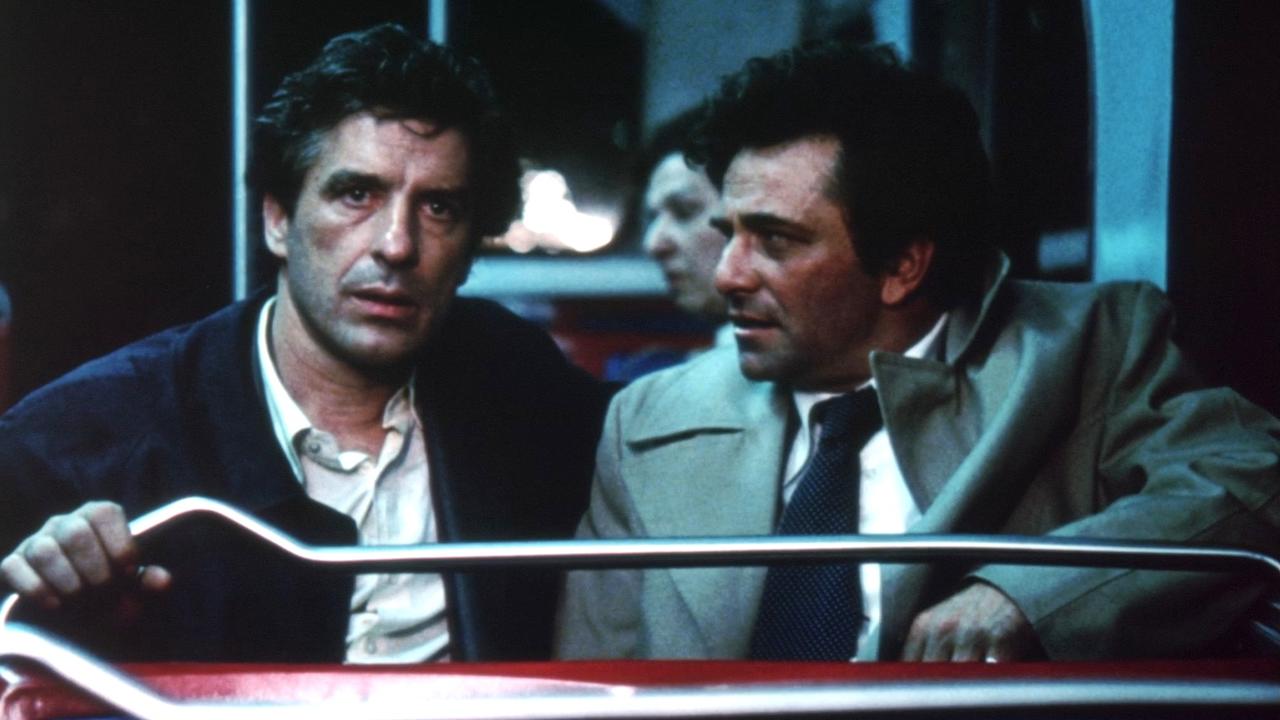
The first time I ever came to Los Angeles old enough to drive I went looking for Johnie’s Coffee Shop, that key location in the film MIRACLE MILE. Imagine my disappointment to discover the place wasn’t really open all night as portrayed. An early reminder that movies can lie or at least exaggerate. Suddenly I blinked and found myself a few blocks away years later, somewhere around 2001, at a LACMA screening of the film which featured an appearance by writer-director Steve De Jarnatt. During the Q&A I got the feeling that certain questions being asked were things people had wondered about for years, obsessing over the movie like an old paperback you read over and over looking for more clues to put everything together. After the film we walked outside to Wilshire where we essentially found ourselves on the set of the film we had just seen and as we stood there waiting for the light to change everyone started to laugh. I blinked again and found myself here, now, still thinking about that film. MIRACLE MILE is heading towards three decades old. I’ve worked right down the block from where it’s set, I’ve been to the County Museum of Art many other times since and I’ve even had a friend who lived nearby in Park La Brea, one of the other key locations. Now I live twenty minutes away from that stretch of Wilshire (traffic allowing, of course) and still pass through it on occasion, the film is in the past yet it seems right there all the time. I’m not sure when that happened.
Now the film has been rescued from the purgatory of old VHS tapes and full-frame DVD by a gorgeous Blu-ray that came out in 2015 (as did De Jarnatt’s previous film CHERRY 2000) reigniting some of the thoughts I’ve had about it over the years. The question I asked that night had to do with the oddness of the opening narration, including a brief opening shot which gives the presumably mistaken impression the whole thing might be a flashback. De Jarnatt acted a little sheepish about this issue, saying he’d fix some things in the first ten minutes if he could and to be honest I always felt kind of bad for bringing this up, even apologizing to him for it years later via Facebook. He said that wasn’t necessary although on the Blu-ray commentary he brings up the possibility how that opening shot, which if you’ve seen it you know couldn’t possibly take place during the body of the film, could be a sort of out maybe allowing for the possibility that the whole film is a dream or other unexplained scenario. I like this answer. Much of the film has a dreamlike logic anyway and looking at it that way opens up the possibilities of what it all means, what MIRACLE MILE can ultimately be in the back of your own mind. Enough of Los Angeles is like a dream anyway and if you find yourself out on the streets between 3 and 6 AM when everything outside your car window looks like outtakes from THE OMEGA MAN you can believe this. Besides, no one ever said a single thing in life was ever going to make sense.
If ever a movie seemed designed to be watched totally cold, with no awareness of what’s coming this would be the one, not that most people would get the chance to do this. I think of the plot of MIRACLE MILE, what happens to trombonist Harry Washello (Anthony Edwards) after he meets and possibly blows it with the girl of his dreams Julie Peters (Mare Winningham) during a visit to Los Angeles, and I think about what could have happened if it never takes the jarring shift it needs to take from the off-kilter romance of the first section to the dangerously panicked thriller it quickly becomes. I think about how Harry in his narration said he waited thirty years to meet Julie, as if his life isn’t really getting started until that moment, as if his very world isn’t really getting started until then, but none of that does any good. We spend too much time looking back. It’s what happens. We think of regret, of what might have been. We find ourselves staring back at a point we just left, wondering about whatever unfinished business we left there that no one else is ever going to care about. Written by its director, MIRACLE MILE was picked long before it was made by American Film magazine as one of the ten best unproduced screenplays in Hollywood. Its long development process included being part of a potential TWILIGHT ZONE film as well as an incarnation with a lead character written as older and possibly for Gene Hackman returning to town looking for his ex-wife. We’ll never know what that version would have been but ultimately it doesn’t matter. The MIRACLE MILE we do have features someone still close to youth, right around 30, someone who’s maybe been living in the past too much already. And on the cusp of grasping onto something, willing to finally take that chance for a future when it all comes tumbling down around him almost as if the world has chosen to end simply because he’s finally taking some sort of action.
There’s an immediacy to every single moment in MIRACLE MILE, grounded in the feelings of what our own reality is, what it has to be, along with an incessant dreamlike tone where not everything is going to be explained. It also contains a certain neon-strobed feel to its nighttime vibe of a down and dirty 80s genre piece that recalls any number of other up-all-night movies from that decade—it’s definitely rooted in the time from the prevalent nuclear feel which made slightly turned it into a period piece when the Berlin Wall fell as well as a few spare articles of clothing some people wear but so what. It’s compact as it’s forced to be by the almost real-time plotting and yet somehow all-encompassing of life down to the very smallest details. Much of what causes it to stick in the brain are those vivid little touches like the offhand visual of Harry dumping all that cream into the coffee during his initial panic—meant to resemble a mushroom cloud, according to De Jarnatt on the Blu-ray commentary and the frame always seems loaded with symbols whether you want to read into them or not. Even the occasional unexpected extra in the corner of the frame who stands out for mysterious reasons could mean everything or nothing.
The undeniable, unexplainable paranoia kicks in early after we’re feeling relaxed by the automatic chemistry of the two leads and it never goes away but always remains grounded by the reality of the nightmare. It’s especially good during the extended Johnie’s sequence which could easily serve as a stage play or, as the director also points out would be right at home in a vintage TWILIGHT ZONE and the film knows how to draw out the odd feeling on the back of your neck of when you’re out there on the street at 4:30 AM and something’s wrong you can’t quite shake. That roving Steadicam creeping along following Harry as well as the floating, otherworldly Tangerine Dream score kicking along and the nagging worry of doubt as to what’s really happening, that this can’t all be true, that there has to be some sort of mistake like fingernails digging deeper into our skin. Even the low-tech nature of a few of the effects shots have a kick that adds to the momentum as the movie ticks forward towards the inevitable. After his first, best hope at an escape the main character never even gets further than a few blocks, perfect for a nightmare in the early morning hours where you wind up running so fast to get away that you go absolutely nowhere.
How much the film pays attention to its own geography is something there was no way I could have known about when I saw it way back in May 1989 at the White Plains Galleria (a twin which closed long ago but the mall is still there). I certainly didn’t know I was still going to be thinking about the film all these years later but I still loved it as maybe only a kid who experiences a film like this all by himself can love it. I felt like the only one who had discovered it but I wasn’t, of course--I even remember around that time day I met someone who claimed to have seen it five times during its brief theatrical run. But even now that I’ve been there of course the correct geography adds to the reality as well how little ground is ultimately covered in this attempt at a getaway, perfect for a nightmare where you wind up running so fast that you go nowhere. The way it is here is the way the area still looks to me in my mind even if it isn’t that way anymore, the darkness that was once around there, the now-gone LACMA parking lot that I remember from a date long ago after seeing Blake Edwards’ THE PARTY. The Pan-Pacific Auditorium that Harry is playing a benefit for was destroyed by a fire in ’89 literally days after the film opened (of course, I didn’t know that then either), Park LaBrea has had more buildings put up around it (I played tennis in courts that are no longer there) and construction of the Academy Museum at the old May Company building in the middle of it all continues. Johnie’s, also seen in RESERVOIR DOGS and THE BIG LEBOWSKI, has long since only been used as a film location and as it turns out I never wound up going there to eat, late at night or otherwise. The site is now a historical landmark and the Googie architecture makes it notable, of course, but the fact that MIRACLE MILE was filmed there is a perfectly good reason as well.
Anthony Edwards successfully walks a tightrope of being an outsider you can tell his character has always been with the Hitchcockian everyman he needs to be right at that moment—even his suit is almost a goofball version of Cary Grant’s in NORTH BY NORTHWEST—and he helps us understand the lies he winds up telling some people about what’s going to happen since the truth itself is almost impossible to say out loud. Not getting as much screentime, Mare Winningham paints a picture of a loner as well—in another movie it might be clear just what a goofball her character probably is and a loner as well, living with her grandmother in a strange city. It’s to the movie’s credit how much it pays attention to the supporting cast no matter how little time there is for them--John Agar and Lou Hancock are Julie’s grandparents, Denise Crosby is the mysterious Landa with the mobile phone that may or may not confirm what’s happening, Robert DoQui is the cook at Johnie’s, O-Lan Jones is the waitress (there is no greater coffee shop waitress than O-Lan Jones) and Kurt Fuller is the disbelieving Gerstead, pissed at Landa for getting him up so early. There are too many others to mention but they all not only come off as fully-formed in their brief screentime but I still wonder what some of their backstories are. Raphael Sbarge, the voice of Chip on the phone, has recently been the human form of Jiminy Cricket on ONCE UPON A TIME and even that seems like an extra layer to his casting now. It says something about MIRACLE MILE and how it’s stayed with me that as much as I’m aware of the reality of film production and whatever must have been in the script if I ever met a few of the actors like Denise Crosby or O-Lan Jones deep down I’d still want to ask them about their characters and what must have happened in deleted scenes I’m certain never actually existed. Somehow I need to think they do.
I had a dream the other night. There's no point in describing it but the very end, right before I woke up, was a moment of such clear cinematic paranoia that days later I still can't shake it as a reminder of not being entirely sure of where I’ve been, of where I am. Maybe like this film. “All those chances…” exclaims Winningham’s Julie Peters near the very end and, of course, we don’t need any elaboration from her. We all have those chances that we fucked up and will never get back. That’s the way it goes. Each time I see the film it occurs to me that the final moment between the two main characters goes by faster than I expect it to and there’s no real chance to pause the moment before we get to the end, to the final bang. Not being able to connect it to the opening shot in a literal way doesn’t bother me anymore now, if it really ever did. In some ways I can take the opening shot as a sort of alternate path taken, maybe winding up at the bottom of the La Brea tar pits, maybe into infinity, maybe just in the dead of night wondering about the woman you screwed up with. Maybe in each of those endings there can be a small piece of hope. After all, the world’s probably going to end in L.A. anyway. Sometimes in life something happens and you think, this is it. This is the way it’s going to be. But everything changes one way or another before you’re ready for it. Life becomes more complex. What happens next isn’t really up to you. Ultimately, nothing ever is.

Monday, March 14, 2016

That Extra Five Yards

Let me back up for a minute. Near the end of the year I started paying visits to Billy Wilder at the cemetery where he resides in Westwood. There were reasons for doing this, which I’d mostly rather keep to myself, and there was something strangely helpful about it. It was like I needed to be there talking to him, pouring out all my troubles to the legend. I pictured him rolling his eyes at it all and not really caring about what I was saying, but it felt good anyway. I even read him the blog piece I was working on at the time (meant to be a ‘final one’ just in case I decided not to do this anymore, but so much for that), imagining him slightly annoyed that it wasn’t quite as finished as I first claimed but he allowed that there was at least a spine to it--you can go read it again to see if he was right--and that imagined encouragement helped me finish it a few days later.
This is all a roundabout sort of way of getting at my recent mindset and why I haven’t been writing lately. For a lot of January I pretty much watched only Billy Wilder films, several multiple times, all of them I’d seen before of course. I guess I was looking for something in them, while also considering the inherent cynicism in those films along with how I was feeling. Are some of them really that contemptuous of humanity or just simply reporting the way it is? Deep down, does anyone really expect their own Miss Kubelik to show up just past midnight on New Year’s Eve? I’d rather not get a definitive answer to that question so for now, I’ll just focus on one of those multiple Wilder films I spent the month watching, maybe one of the nastier ones. THE FORTUNE COOKIE is an interesting case, the film that paired Jack Lemmon & Walter Matthau for the first time, gave Matthau his Oscar and solidified his movie star status yet still feels a little like one of Wilder’s problem films. As enjoyable in its own acidic way that you’d expect, the result is maybe too blunt at times almost as if Wilder is trying to smother any pleasure the laughs are giving us in an attempt to get at the truth of what’s going on. He was even surprisingly critical about the film in interviews later on saying, “It didn't impress the critics and didn't make money and it disappeared in the big garbage pit along with a year of my life.” Which is maybe a little harsh but he’s entitled to think that even if it did get an Oscar nomination for the screenplay, the last one Wilder and co-writer I.A.L. Diamond ever received. The film came just a few years after the flop of his sex farce KISS ME, STUPID and it almost feels like THE FORTUNE COOKIE is the work of someone who has just gone through an extreme trauma like a divorce (which, for the record, he hadn’t) and this was his ferocious shout back at the world in response. It’s still pretty funny, and pointed, at least in parts. It’s Billy Wilder.
After television cameraman Harry Hinkle (Jack Lemmon) is accidentally injured during a Cleveland Browns game when running back Luther “Boom Boom” Jackson (Ron Rich) accidentally crashes into him, brother-in-law “Whiplash” Willie Gingrich (Walter Matthau) comes up with a plan to fake Harry’s injuries for a major lawsuit, getting as much money as possible. Harry, knowing Willie all too well, wants no part of the plan until the possibility of the return of his ex-wife Sandy (Judi West), anxious to get part of any payout herself, is dangled in front of him. So he goes along with it, strapping himself into a corset and wheelchair and not moving with the guilt stricken Boom Boom tending to his every need while awaiting Sandy’s return. But while Willie turns the screws on the lawyers who are doing everything they can to prove the whole thing is a fake, Harry begins to see what it’s all doing to Boom Boom, putting Willie’s carefully developed plan to get as much money as possible from the insurance company in jeopardy.
THE APARTMENT may or may not have been Wilder’s greatest work (hell, it may or may not be one of my three favorite films of all time—actually, it definitely is) but it also laid out his stylistic approach for much of the 60s: stark visuals in widescreen by cinematographer Joseph LaShelle defiantly resisting Technicolor, cynicism coursing through the veins of seemingly every single person, the lead character concealing the dirty business that’s really going on, the folly of living without any consequences. Written of course by Wilder and I.A.L. Diamond, the structure of THE FORTUNE COOKIE seems to strip away all but the basic essentials to get the plot across with chapter titles to each section laying out the bones of the scheme, simple white-on-black credits and even the sets feel deliberately bare giving the whole thing a no-nonsense, just-the-dirty-facts approach. It could even be considered the third in a Wilder-American Dream trilogy closing out the themes that were first explored in THE APARTMENT and KISS ME, STUPID (the international scope of ONE, TWO, THREE seems slightly removed). The greyness of the Cleveland working class vistas that we get glimpses of even contrast nicely with the steel towers of Manhattan in THE APARTMENT and the barren desert town of KISS ME, STUPID. The threads of deception and fraud familiar from so much of Wilder seem to come to a head here with the emotional wreckage bound to occur from it all.
The plot device of why nice guy Jack Lemmon would ever go along with such a scheme (Gingrich says the two of them are in it together, “Straight down the line,” using a phrase from DOUBLE INDEMNITY) is explained by the possibility of winning back his nightmare of an ex-wife who couldn’t care less about him. It’s hard to believe that he wouldn’t already know this deep down but in the world of THE FORTUNE COOKIE it doesn’t matter. It’s saying that all of humanity is just waiting for that one false brass ring to grab on to get our dreams back, the ones that long ago flew away, those few extra yards Boom Boom was going for that caused the accident in the first place (“Everybody tries for that extra five yards and sometimes people get in our way,” Sandy replies when she hears the story). Happiness is a mirage, the film is saying, to try for that instead of a straight payout is just being a chump. Even the recurring use of the song “You’d Be So Nice to Come Home To” isn’t based on any genuine feelings beyond Harry’s hollow dreams of his wife returning. From the guilt Boom Boom feels for reasons that are a fraud to the guilt Harry feels over that almost nothing is real that could result in actual pleasure, any sort of connection to anyone else is bound to be a lie.
While Lemmon is playing what could be the flawed Wilder surrogate caught between good and evil, valiantly trying to be the ‘mensch’ that Dr. Dreyfus tells him to be in THE APARTMENT, Matthau is just as plainly Wilder as he sees the world that really is—cold, calculating, knowing all the angles, the embodiment of the worldview the movie really has. The result contains some of Wilder/Diamond’s most incisive and underappreciated dialogue (“Do you suppose he’s telling the truth?” “I wouldn’t put anything past him.”) that continually seems determined to cut through the needed laughs while going for the jugular. Almost everyone is figuring out their own angles beyond any concern for Harry’s supposed condition and it’s all simply business, nothing more. Even the nuns in the hospital are betting on the big game. The overall coarseness almost seems like an ultimate statement on humanity by Wilder, minus one key element. “It’s about greed, love, compassion, human understanding, but not sex,” Wilder told Army Archerd in Variety at the time, presumably a reaction to the flop of KISS ME, STUPID and there’s barely even the thought of it beyond Willie worrying about what’s going to happen in Harry’s apartment during Sandy’s first night there.
That lack of passion in THE FORTUNE COOKIE seems part of the point but it also makes the film as constricted as the brace Willie forces Harry to wear. THE FORTUNE COOKIE is allowed to break out from that feeling mainly through Matthau’s joy in the scheme, humming classical music for his own pleasure and along with the bouncy Andre Previn music feels like the whole thing feels like it could have moved just a bit more fleetingly. It feels a little too cooped up in the bland apartment where much of the second half takes place, never becoming its own character the way the titular dwelling did in THE APARTMENT. It’s funny but also deliberately stifling, the laughs come with a bucket of ice water poured over the head, we’re aware of the pain that’s really going on behind that charade. For Wilder, it’s a world where genuine tragedy is nothing more than a brief story on the news before the commercial. Everyone is a fake to one degree or another, the film is saying. When Harry opens up the fortune cookie of the title to find the old “You can fool all of the people some of the time…” quote (a lot to fit on there, not that I imagine it was a big concern for Wilder) and as far as the film is concerned, even if you can fool all of the people all of the time, so what? If THE APARTMENT was about learning how to be a mensch, a “human being”, THE FORTUNE COOKIE is about finally building enough character, enough guts, to admit the truth, whatever that really is. Otherwise you’re just another chump in a corset which is no way to go through life. Of course, in getting this message across it’s no THE APARTMENT but, in fairness, few films are.
The one thing that anyone seems to agree on when it comes to THE FORTUNE COOKIE is Walter Matthau and his dynamic portrayal of Whiplash Willie, following up his recent scene stealing work in MIRAGE from the previous year and his success on Broadway in THE ODD COUPLE. He takes what is essentially a supporting character and makes the whole movie revolve around him, even to the point that it was released in the UK as MEET WHIPLASH WILLIE. Matthau doesn’t take control of the film he takes control of the world of the film, fitting in perfectly with the harsh black & white look as if he won’t let someone so much as leave the frame without his permission to fleece something off them. As Gingrich sees the scheme in front of him plain as day there’s joy in simply watching Matthau work things out in his head. As expected, there’s even enormous pleasure in listening to him answer a phone. Top-billed Jack Lemmon obviously cedes the focus to him since it’s clear who has the better part but he still grounds the film in his everyman quality. It’s almost as if he wants to be the lead in the nice Jack Lemmon Technicolor romantic comedy of the time, he just can’t admit that he isn’t and this whole thing is as much his fault as anyone, making his bitterness grow as things get deeper into the plot and deeper.
There’s added interest in the supporting roles but it’s also where some of the problems turn up. Ron Rich as Boom Boom is likable but that’s about it. In one of the few substantial African-American roles in Wilder’s filmography it feels a little like the director trying to engage more with the outside world of 1966 and not quite nailing it. With multiple girls scattered across the country Boom Boom isn’t even meant to be a total innocent but he comes off as so nice and guilt-ridden that something else is needed, either in the performance or on the page, some extra level of bite so he makes sense in this world. There are even a few comments that Harry makes, expecting the chicken dinner Boom Boom is preparing to be fried, where it’s tough to know if Wilder is making a comment on Harry’s tone deafness to the situation of if it’s just the film doing that. Judi West, playing essentially an unrepentant bitch as the ex-wife, brings to the role as many layers as she can but there’s just not enough to her on the page and even when I first saw the film long ago, young and stupid(er), I thought the character might be a bit much. Watching it now the character and her behavior makes more sense to me but it still doesn’t feel like enough. Even ultra-cynical nastiness has to be fully clarified, after all. I can’t help but imagine what a still-alive Marilyn Monroe in 1966 willing to demolish her image could have done with this role, built up to more of a co-lead. The shifting focus might also be a problem with the film—it bounces back and forth between Harry/Willie, Harry/ Boom Boom and Harry/Sandy so much that it never fully becomes about any of them. Or maybe we just want more of Walter Matthau.
Some of the smaller roles work better as if Wilder knows exactly what to do with these actors to make his points. Cliff Osmond is given a Hitler mustache as the private detective trying to prove the scheme is a fake, Harry Davis as a concerned doctor, Sig Rumann (who goes all the way back to NINOTCHKA with Wilder) as a disbelieving specialist along with early appearances by William Christopher of M*A*S*H and Robert Doqui, later in NASHVILLE and ROBOCOP. Character actor Billy Beck, a familiar face from several bit parts in Wilder films, appears briefly near the end in a scene with two stadium workers playing a game with numbers on the jerseys, proving another example of how everyone always has an angle, they’re always willing to do whatever necessary for just one small victory. THE FORTUNE COOKIE isn’t one of Wilder’s best but maybe like other films by great directors that fall just short it still feels essential to his world view and what once felt almost too nasty just plays in my own personal world of 2016 as pragmatic, the way it really is. But, like I’ve already indicated, maybe that’s my mood. An early beat of the marching band at the game starting up right after Harry is injured says it all, it’s a world of trying to avoid the reality of what’s really going on with music as loud as possible. Ultimately, the reality of it all only hurts as we try to convince ourselves that things aren’t the way they really are. Painful truths are withheld. Beautiful blondes cut you out of life with the deepest insults imaginable. All you’re left with are the depths of self-hatred followed by the darkness which consumes you. And there’s not much that can be done about that. Except go talk to Billy Wilder about it, I suppose.
Which is something I did again on New Year’s Eve, a holiday forever associated with Wilder thanks to SUNSET BOULEVARD and THE APARTMENT. As I stood there thinking about his films and all the other crap that was in my mind I suddenly heard a brief, valuable piece of advice in his voice that seemed like it was meant to help get me through the coming year. I’ll keep it to myself for now, but it meant something. And I’m actually not sure if continuing to write this blog goes against it or not. I’ve actually gone again a few more times since including on Oscar Day, a few hours before the show started. It seemed appropriate somehow. Unfortunately the section he’s in (along with Jack Lemmon and a few other notables) was taped off, it seemed due to some landscaping work. I tried to stand outside the area and converse with him, but no good. It was too far away. Sometimes you have no choice but to stand outside of it all, keeping your feelings to yourself and not much can be done about that, except maybe just watch a few more Billy Wilder films looking for that one ray of hope. But you do what you have to do. Even at your very best, you can only be who you are.

Tuesday, December 29, 2015

Mystical Optimism

Life may be what you make of it, even if it never becomes what you want it to be. But you try. You have to try even if you wind up wondering, was that really my life? It’s hard to understand just about anything sometimes. Released in September 1996, Allison Anders’ GRACE OF MY HEART was never a big hit but it’s lingered in the memory like a favorite song that only a few other people seem to know about. Lovingly crafted, it’s a film that contains a certain amount of messiness but more often than not it’s the endearing kind, the sort of messiness that seems pure, almost like going through the clutter of your own memories as you try to sort out exactly how certain things happened over the course of time. Willing to embrace the melodrama, the film is completely heartfelt and sincere about itself so its portrayal of how the simple act of creativity can really truly matter to a person rings genuine. And even more than that it contains a lead performance by Illeana Douglas that is so raw and powerful it transforms everything about the film around her. It’s not just a film but a searing melody coming from the soul of her screen presence and it makes the film something it wouldn’t have come anywhere close to otherwise. The events in GRACE OF MY HEART matter just like the events of your own life matter, the regrets that are portrayed leave a mark and it avoids breezy nostalgia of the eras it depicts in favor of something deeper. It portrays a life where true creative expression is the ultimate good as we try to figure out what kind of life we’re living while we fight our way through it all.
Illeana Douglas writes about the making of GRACE OF MY HEART in her new memoir, the highly recommended I BLAME DENNIS HOPPER and it’s only one of the many stories she has to tell. She writes about the challenge of working with Robert De Niro on the remake of CAPE FEAR, going days without eating while filming ALIVE and the freedom Gus Van Sant gave her during the making of TO DIE FOR. But she also talks about her childhood, the background of which explains the book’s title, along with her early days of discovering movies at the drive-in as well as deeply affecting recollections of her relationship with grandfather Melvyn Douglas including her formative experience visiting him on the set of his late-career triumph in Hal Ashby’s BEING THERE, the film that won him his second Oscar, where she also had a memorable encounter with the film's star Peter Sellers. This turned about to be one of only several meaningful and often fortuitous brushes with legendary figures in her life that she details including an unfortunate phone call with Billy Wilder (who at another point she correctly refers to as God), a lasting friendship with Roddy McDowall and an unexpected run-in with a presumably hungover Lee Marvin on a New York sidewalk early one morning. She also discusses her own passion for movies and why they mean so much to her, how that connection helped transform her into who she ultimately became and it’s a beautiful, funny, inspiring read, one of the best such books in a very long time. It’s a must for anyone who loves films and a reminder of why they can mean so much as we watch them so obsessively. Her book is a connection to GRACE OF MY HEART as well, it deepens how much the film clearly meant to those who made it, a film in which you can feel the undeniable yearning of its lead character just as you can feel the yearning of Illeana Douglas in the stories she tells about her own life. “I don’t have a song in me,” declares the lead character she plays in the film at a crucial stage, just before writing the ultimate song within her. Sometimes the very thought that we don’t have any songs left in us is the most frightening thing of all.
In the late 50s, steel heiress Edna Buxton (Illeana Douglas) uses an impulse choice during a music competition to sing a song that allows her to win the contest, throwing her into the New York world of hustling for success as a singer and songwriter. With no one looking for girl singers anymore, Edna hooks up with Brill Building producer Joel Milner (John Turturro) who wants her solely for her writing talent and changes her name to the more enticing “Denise Waverly”. As her success as a songwriter grows she begins to take more chances with her work and meets the more socially minded songwriter Howard Cazatt (Eric Stoltz) who she teams up with. The relationship soon turns into a marriage with a baby and as the 60s press forward with the music business changing with Denise meeting famed California rocker Jay Phillips (Matt Dillon) as she records her most personal song ever. But when her relationship with Jay sweeps her away into a new life far away from New York, Denise begins to lose track of the creativity she was once so passionate about.
It can be argued that GRACE OF MY HEART tries to cover too much ground, tries to hit too many highlights of the decade as things move from early 60s Brill Building to late 60s Malibu and beyond. However much it can be seen as an accurate depiction of the setting and period, the film manages to transcend such concerns by knowing to focus on the story of Denise Waverly as things rapidly change around her. “You can be dramatic as long as it’s truthful,” the lead character declares at one point and GRACE OF MY HEART achieves a mixture of being a film which not only displays a love for the music but also for the act of creating that music. Writer-director Allison Anders brings to the material both a sensitivity and excitement, showing how creativity can come from what appears around us as well as the yearning we feel inside. It’s a film that loves the people in its world, just as Anders seems to love placing Illeana Douglas up against her co-stars in the frame so they can play off each other and the result becomes hopeful, sad and raw all at once.
There’s an undeniable energy through much of the film and it feels as excited to explore this world of jazz clubs and recording studios through Denise Waverly’s eyes with an optimism coming from its portrayal of her, a lead character with two names from two worlds trying to find herself in this world even when she’s told by someone that she doesn’t have that ‘grace’. Instead of trying to make it an all-encompassing look at the period the film sees the magic in simply letting some of the songs play out as the lives are lead and the characters discover them for the first time so we share their pleasure in creating them, knowing they’ve discovered something special. The recreations of that era’s sound capture part of the soul of that music without sounding like spoofs or hollow tributes—fitting for the movie, all the songs seem to share the inescapable feel of yearning—and the introduction of Denise Waverly’s own personal anthem “God Give Me Strength” (a collaboration between Burt Bacharach and Elvis Costello) when Matt Dillon’s Jay Phillips enters the story turns what seems to be a minor moment at first into an absolutely shattering sequence, of a connection that suddenly develops from an unexpected glance between two people. The scene as it turns out is powerful, such an exhalation of all the themes that have developed up until then that the movie peaks and there’s almost nowhere else dramatically to go from this private triumph.
It’s moments like that which stay with you in GRACE OF MY HEART even without Illeana Douglas doing her own singing which has always played like the biggest flaw in the entire running time, as if we’re being deprived of a crucial nerve in the film’s bloodstream. Maybe it’s a case where certain scenes, even specific moments, are better than all the connective tissue so the end result plays a little like we’re seeing extremely tantalizing sections of a much longer story. Coming in at a few minutes under two hours some holes can be felt and there is the feel that it’s maybe trying to cover too much ground (of course, one’s reach should exceed their grasp and all that…) so when it becomes clear that the Brill Building section is ending it’s hard not to think that we’re watching the final episode of a long-running series about New York songwriters in the 60s that we never got to see every episode of (there’s a thought—Denise Waverly running into Don Draper in a bar late some night in ’63). It’s like the film we’re gotten attached to has ended without warning and is suddenly restarting which becomes frustrating—the transition is almost too abbreviated, the rhythm doesn’t feel quite right and races to the tragedy almost too fast. Every now and then a moment that sticks out where it feels too rushed or how maybe the film is trying a little too hard for period detail, just like how it’s not really Douglas’ voice singing, it’s as if the movie comes within reach of the greatness being portrayed in the “God Give Me Strength” number but falls just short. Deleted scenes on the DVD may have fleshed some elements out that feel slightly hanging in the release version—executive producer Martin Scorsese’s regular editor Thelma Schoonmaker worked on this film and you can feel the tightness at times particularly when the pacing rushes through an affair with Bruce Davison’s disc jockey so fast that it barely seems to qualify as a relationship but even this manages to make sense in the film’s collage-like approach. Sometimes the people you haven’t spent that much time with fuck you up the most, after all.
But GRACE OF MY HEART’s awareness of itself is important as is the emotion is displays. It matters just as much as the conscious echoes of other films, particularly A STAR IS BORN (presumably the 1954) and the obvious real-life inspirations whether Carol King, Lesley Gore or Brian Wilson. Several of the actors makes hard not to connect it to other films as well, intentional or not, whether Patsy Kensit providing a connection to Julian Temple’s 50s-set rock musical ABSOLUTE BEGINNERS, Matt Dillon playing a California rocker just like his brother Kevin did in Oliver Stone’s THE DOORS and even an appearance by David Clennon provides a direct link to BEING THERE, the film Illeana Douglas once visited her grandfather on the set of and which in her book she writes about how it has continued to turn up in her life unexpectedly. And the awareness is also revealed in how Jay tries to talk Denise into making an album that can be ‘more personal’ because she’s a woman and it feels like that’s what the movie is as well. The film is unafraid of any sensitivity, showing how Denise has to overcome how the industry doesn’t want girl singers, fighting to get a song to tell a girl’s story since it’s not about the guy and even the touch of casual sexism tossed into some dialogue. Douglas stresses in her book that part of the goal was to make a woman’s picture and it’s correctly unapologetic about that. One shot of Douglas and Dillon embracing late in the film stuck out to my on a recent viewing as I realized how long it went on and how insistent the moment seemed to become about their closeness. It’s easy to imagine that most directors wouldn’t have lingered on the shot as long as Anders does, to stress the yearning in that moment, a reminder that for all of the references to other things and people all swirling around it the film is sometimes about nothing more than reaching for that person in front of you, hoping that moment will last and knowing it can’t. The yearning cuts deep and stays with me, just as some of the lyrics in “God Give Me Strength” that play in my head over and over again as I do my best to forget some of the past.
But even more than that is Illeana Douglas since there is no film without her, she is the film just as much as anything that Allison Anders brings to it and the way the director uses her is a reminder of that. You fall for her instantly and in scene after scene she keeps giving you reasons to fall for her even harder. Every moment coming from her huge eyes means something, every time she breaks out into a huge smile means that much more, every time she brings an unexpected laugh to a scene means that much more. You fall in love with her very presence just as you know that most of the men in Denise Waverly’s life aren’t worthy of her either—I’ve seen the film enough by now that I’m certain Eric Stoltz’s Howard doesn’t deserve her even as I can’t decide if that’s my reaction to the character or Stoltz’ deliberately unlikable performance. Some of the best supporting work comes from the people in the margins – I almost referred to one actor in the film as ‘underappreciated’ but the truth is the film is filled with underappreciated people with lots of interesting faces in small roles and some pertinent cameos particularly Jennifer Leigh Warren, Bridget Fonda, Chris Isaak, Lucinda Jenney and Richard Schiff (ask me my story about Schiff and his appearance in this film sometime).
The unexpectedly fragile innocence Matt Dillon projects as Jay Phillips becomes sadder to me each time I see the film and Patsy Kensit is particularly good as the foil for Douglas after the characters’ initial coolness towards each other; you can feel the friendship clicking in their scenes together, their rapport feels totally genuine. Maybe best of all aside from the lead performance, John Turturro is particularly memorable as the Phil Spector-like producer (fortunately the real Phil Spector is actually referenced so we don’t have to worry about that possible future for the character) coming off as appropriately larger than life but always grounded—considering how big he plays it, I’m not sure Turturro has ever seemed as relaxed and as natural as he does in this film. What develops onscreen between Douglas and Turturro becomes the real chemistry of the film which pays off when he returns near the end for a dynamite prolonged confrontation scene done entirely in one shot, the film’s own version of Tommy Noonan yelling at Judy Garland near the end of A STAR IS BORN. Of course, Illeana Douglas channeling Judy Garland makes you think of Liza Minnelli in Scorsese’s NEW YORK NEW YORK which not only adds to the mirrors in this context, it’s a reminder that in the incarnation of the oft-told showbiz story we’re being told here Illeana Douglas surpasses each of them, earning a beautifully haunting final shot in which every conceivable emotion that’s been building up over the past two hours washes over her face and it’s nothing less than a triumph.
Sometimes, in the blink of an eye, things in life suddenly become clear. But too often that clarity goes away as fast as it turned up. That’s what you reflect on at the end of the year, I suppose, when you can’t stop dwelling on what went wrong. In her book I BLAME DENNIS HOPPER, Illeana Douglas writes about how GRACE OF MY HEART has endured in some unexplainable way, that people have taken it to heart no doubt because they see something of themselves in her journey. It’s a reminder of the things you need to strive for, that you can’t let them just fade away as the years go on no matter what happens. You need to hang onto that as much as possible if it’s what you feel deep down. And you still need to find out who you are, what your life is and whether or not you can find the strength, as well as the grace, to move on in this world.

Monday, December 14, 2015

Not In That Direction

Maybe nothing hurts as much as friendship. Sometimes it’s not even clear if you’re more alone when you’re by yourself or with a certain friend, if you even understand that friend. No one can be cruel to you like a friend is. No one can kill you like a friend does. And then one day you find yourself alone in a movie theater, no one to share that popcorn with, but it is one of the best places to be alone after all. Maybe it makes the most sense to see a John Cassavetes film when you’re by yourself, any Cassavetes film, whether he directed it or just acted in it. Throughout November the New Beverly ran a series of films that John Cassavetes ‘only’ appeared in—some pretty interesting titles in there including Don Siegel’s THE KILLERS, the 1958 western SADDLE THAT WIND, the star-packed TWO-MINUTE WARNING, a midnight show of THE FURY (which I missed, dammit) and of course Robert Aldrich’s THE DIRTY DOZEN but for me the main attraction was Elaine May’s MIKEY AND NICKY which may be the ultimate John Cassavetes film of any that he didn’t direct. There’s no other film quite like MIKEY AND NICKY, a film I’ve only seen a handful of times scattered throughout the years, but it always seems to be burrowing in my head as certain random moments and lines of dialogue never entirely go away.
The production of the film is somewhat notorious, maybe overshadowing what it actually is and it can be argued that parts of the end result are a kind of a mess with at times choppy pacing as well as certain transitions that are a little too haphazard but I’m not sure how much that even matters to me. Maybe the distinct lack of perfection evident in the final product makes it matter even more, makes me love the film more as I cherish those raggedy moments. It might be a slippery slope to deem the film a masterpiece because of that messiness (having rewatched it recently, I’d definitely assign that label to May’s THE HEARTBREAK KID) but the moments that have haunted me for years are still there and on revisiting it, much older than my first viewing on VHS long ago, there are more of those moments than ever now. As a meditation on what friendship and guilt can mean deep down when you're staring at yourself in the mirror at two in the morning, as an acknowledgement of death sometimes being right outside the door it might be, I may as well say it, one of the best films I've ever seen. Besides, who needs a movie that isn’t a mess, that isn’t this fucking alive, anyway? Maybe that’s part of what makes it hurt so much, as these things sometimes have to, way down there in the middle of the night.
After stealing some money small-time mobster Nicky (John Cassavetes) is hiding out, certain that a hit has been put out on him. He calls his friend Mikey (Peter Falk) for help and he shows up right away to try to hide him. With a hitman (Ned Beatty) on their tale Nicky leads Mikey off into the night and early morning hours of bars, buses, a cemetery as his paranoia grows, as Mikey’s impatience with his old friend grows and the tension between the two old friends reaching a boiling point.
There I was at sitting at the counter at Fred 62, a few days after the New Beverly screening, eating my pancakes and pouring cream in my coffee when I flashed on a certain scene in MIKEY AND NICKY involving cream in a coffee shop. Of course I did. It might be a long time before I put cream in my coffee and don’t think of this movie and what Peter Falk does in that scene, one of those things that you do for your friends when no one else is going to help, when you’re just about at the end of your rope and terrified about what comes next. The continual sense of danger all famously feels like Cassavetes, as if he’s who you’d assume was the director if there were no credits, and yet it’s unmistakably different, under Elaine May’s eye playing as more judgmental to these guys responding to the world around them and yet strangely even more affectionate, wanting to desperately love them in spite of it all. It seems to stay a few feet away from them much of the time, unlike some of those giant Cassavetes close-ups, remaining a little distant and yet always fascinated. There is humor in it, a sort of dark comedy of its own sort and yet playing as totally, completely tragic as well, keeping us continually off guard as if it quietly knows if things are really comic or tragic but isn’t going to tell us just to make it easier.
In addition to her partnership with Mike Nichols, various acting roles through the decades and numerous screenplays, both credited and uncredited, we have four films directed by Elaine May—A NEW LEAF, THE HEARTBREAK KID, MIKEY AND NICKY and ISHTAR. That’s all we’ve got. Based on that evidence we could maybe call her a female director more interested in the men in her films—Matthau and Grodin in A NEW LEAF and THE HEARTBREAK KID of course but also the double act of Beatty and Hoffman in ISHTAR and the two leads in this film. Falk’s Mikey and Cassavetes’ Nicky are each a nightmare in some way, calling each other by the names in the film’s title as if they’re still kids, messing around with each other and having the same arguments they did thirty years ago with the very same resentments still bubbling up in their fights. The tension builds almost faster than we expect in almost every scene with moments that feel like they’re somewhere between what’s written in the script and improv that’s just happening. Cassavetes staring at Falk for a very long moment maybe with suspicion but maybe not—“What’s the matter, is my face dirty?” Falk asks him as he tries to deflect—or Falk sitting in a dark kitchen while Nicky screws his mistress just a few feet away. In these moments whoever is on camera just sitting there, sizing up the situation, letting the tension build to an almost unbearable degree, with May just leaving the camera rolling looking for that behavior, waiting for them to do something, anything, to break that moment.
Rewatching ISHTAR for the hundredth time, with MIKEY AND NICKY fresh in the brain, her directorial style feels more at home when it’s just two people staring each other down—during the more cluttered sequences in ISHTAR it all becomes maybe too frenetic (I still love ISHTAR, but that’s a topic for another day). MIKEY AND NICKY is controlled and yet always feels like it’s about to boil over, we’re just waiting for the explosion, for the gunshots to ring out. Falk’s Mikey is desperate to maintain what little hold he has on his world even if it’s just a front of responsibility, knowing that he’s just a middle man with nothing he can control but the wife at home and constantly worrying that whatever his best friend does in the next thirty seconds could mess it all up. Cassavetes’ Nicky is an impossible mess, insulting the people he shouldn’t be insulting as if trying to avoid the biggest disaster imaginable by running right towards it, the sort of guy who does something horrible then tries to explain it by saying, “I didn’t know that was gonna happen,” then while joking about it gives you the biggest drunken bear hug imaginable. I sure wouldn’t want to know Nicky but the way Cassavetes describes that all-night movie theater he wants to take Mikey to—“Double features and they got cartoons, they have fifteen minutes of coming attractions! They got a candy counter that’s open all night long. It’s got ice cream sandwiches, everything. The works!”—makes me desperately want to go with him (or maybe Cassavetes in the real world) to see a kung fu movie at a grindhouse for a few hours. But their friendship makes sense as only certain friendships do—they’re a part of each other after all, they’re the only ones alive who know how certain things long ago went down. The two of them make up their own world together during their long, seemingly endless night, riding the bus, getting into fights out in the strangely empty streets with the fight just continuing until the next one begins.
In comparison, Ned Beatty’s hitman is the opposite—a loner, no recognizable personality at all, no chemistry with anyone he talks to, refusing to pay for a driver to help get the job over with faster—even his car has a headlight out as if he’s only one-half of any sort of personality—the sheer boring drudgery of a hitman has never been this drying amusing. The women in these guy’s lives are for the most part Elaine May-types, turning their scenes into very dangerous versions of routines she might have once done with Mike Nichols. It’s a feminist film in a way, lending an extra layer to how these guys are observed and while maybe May isn’t as interested in making a film about these characters since she already understands them and their comical personas almost seem trapped here against their will. Nicky’s lady friend played by Carol Grace (Mrs. Walter Matthau but also, and maybe somewhat pertinent, one of Truman Capote’s inspirations for Holly Golightly) talks about how she’s interested in what’s happening in the world, as if she’s a pet apologizing for learning how to talk—“I guess most girls are pretty dumb,” she says to Mikey, terrified while trying to go along with what he’s saying about women. Mikey’s wife played by Rose Arrick (Dustin Hoffman’s mother in ISHTAR) seems more like a mother not quite following along with the story her son is telling. The friendship between the two guys with so much history where it’s not clear at the start of the film how long it’s been since they’ve seen each other, so precarious we don’t in spite of what we know is coming we don’t know, they fight with each other while understanding each other like nobody else does. Fitting for a friendship with death surrounding it, maybe it’s been surrounding them their whole lives, trip to the cemetery, facing the past. Standing over his mother’s grave Nicky muses, “It’s hard to talk to a dead person, there’s nothing in common,” which was always one of the most memorable lines to me but could also be the film’s mantra—Nicky is closer to being a dead person than he’s willing to admit but it doesn’t really matter since sometimes there’s not enough in common with another live person either. Mikey doesn’t want to get caught up in wondering what happens after you die since he believes that you die and that’s it, it’s over. Sometimes when you’re staring at the ashes of a friendship you just wonder what happened. Does it matter? Did it matter?
Much of what is known about the legendary production of MIKEY AND NICKY now, along with May’s current directorial reputation, possibly originates in an infamous New York Magazine article from March 1987 (“The Road to ISHAR” by David Blum) about the bad word of mouth surrounding that upcoming summer release—it didn’t help matters and the film never really recovered from what got out there. As background the article discusses the production of the earlier film during which May apparently shot 1.4 million feet of film, three times the amount for GONE WITH THE WIND (when Judd Apatow’s THE 40 YEAR OLD VIRGIN hit the 1 million mark during shooting champagne was reportedly sent to the set; the approach presumably turns out better for some than others) and one story about May continuing to photograph a blank wall after the two stars have wandered off that has been retold a million times by now. There’s not much to be found from whatever press the film got during its belated (and miniscule) release in 1976—Vincent Canby’s review in The New York Times makes no mention of any troubles, praising Elaine May but concluding, “It took guts for her to make a film like this, but she failed.” Whatever the reality of the production—and it feels like not much official has been said by anybody since that article aside from some comments May herself made during a talk with Mike Nichols that ran in Film Comment—the final result is seemingly long and rambling but actually tightly plotted, always focused on what it should be even if it’s the minutiae of any given moment (the version shown at the New Beverly was around 106 minutes; maybe because a May-sanctioned cut didn’t surface until the 80s there are several different running times listed). Very little of what happens can qualify as ‘plot’ anyway, with Nicky continually pulling Mikey away from what’s supposed to happen--an interesting comparison in terms of the mob world might be Cassavetes’ own GLORIA which is messy and idiosyncratic in ways of its own.
The most crucial plot revelation is dropped in almost casually during the first half hour anyway as if it’s the most obvious thing in the world and throughout it feels as if some of the narrative is being constructed from all that footage—random lines of dialogue are seemingly looped in after the fact, pieces of information spoken off camera. Various scenes even drift off just as the tension is building with a few transitions that feel almost strangely abrupt at best while making the scenes feel incomplete at worst but somehow that feeling it’s being held together by scotch tape splices on the print only adds to the scrappiness. Much of the film was shot in Philadelphia with a little in L.A. but it doesn’t seem to be set anywhere in particular, an anonymous downtown of bars and coffee shops with its own Elaine May-style contradictions like how Ned Beatty is told he has to go north to get to South Street. This mood filled with smoke, booze and desperation in the air is what sticks in my brain as much as anything, with vague recollections of visiting family members in places like Queens and Long Island I almost imagine this is what the 70s was really like—grim and miserable and alive, a real-life version of whatever bar Archie Bunker went to down the street with music from a tiny AM radio crackling through the air. The one exception to that feeling is a bar with an African-American clientele that opens with The O’Jays playing on the jukebox as the mid-70s extras dance and until Nicky starts making trouble, which is of course what he does, it’s the closest to any sort of happiness the film and the world it’s in ever depicts.
Every single one of the faces in the film adds to the weariness with some of them just there to be slapped around by either Mikey or Nicky for insisting on rules that don’t matter, a few of them ready to do the slapping--M. Emmet Walsh has a memorable bit as a bus driver; William Hickey and legendary acting teacher Sanford Meisner are the mob bosses waiting by the phone to hear the hit has been done. As dryly effective as some of the performances are, the film of course belongs to Falk and Cassavetes, to every moment they scream at each other, both of them seeming like they haven’t slept a wink through the entire length of this marathon shoot. It’s the focus on the two guys, on their friendship and whatever that means, whatever it ever meant and what it has to mean in the end—just as Rogers & Clarke sang over a decade later in ISHTAR, honest and popular don’t go hand in hand. It’s one or the other and if a friendship doesn’t survive that, tough. Peter Falk and the shattered moral compass of Mikey, caught between his responsibilities and the ghosts of his past, John Cassavetes playing Nicky like a man possessed by his own fear, sometimes refusing to even admit that he has that fear. All of the tensions building throughout explode in a fight between the two of them, which is also one of those scenes that seems to stop without a real ending so this stretch of the back end is one of the more frustrating parts of the film—the scene where Nicky goes home desperately looking for his estranged wife played by Joyce Van Patten is my least favorite in the film (not her fault) maybe because I’m losing patience by that point, maybe because in playing out the scenario of the estranged wife dealing with the no-good husband at the door it’s the one scene in the dangerously unpredictable film that goes exactly the way you think it will. I’m more interested in the danger that hangs in the air during a relatively superfluous scene as Nicky wanders into a candy store run by an immediately suspicious proprietor looking for ice cream and claiming he promised his nephew he’d “bring him a comic book” or the conference between Mikey and some of his mob cohorts, involving some very Elaine May-dialogue of whether a hitman can circle a block without alerting nearby security on patrol.
That final section building up to the ending where Falk tells his wife the story about his past that he’s kept from her, the one story that matters the most, haunts me, just as the very final moments haunts me. He tells her a lot of things he claims, but he hasn’t told her the one thing that may have meant the most, who he is with her, who he is with Nicky. The scene, like the entire film, feels like a long dark night of the soul with dawn slowly breaking as the end gets closer, but no hope in this sunlight beginning to appear. He can tell her things that he can’t tell Mikey because he has to tell someone but it almost doesn’t matter since it doesn’t mean what it does to him. MIKEY AND NICKY is about finding someone you can trust in this life only you never really can find someone you trust, at least you never know for sure. Even if you do that may not be enough. No one’s ever going to know what’s deep down in the pit of your soul anyway. Mikey asks his wife “Will you go to bed?” once more at the very end when there’s nothing else to be done. For once, he really needs to be alone. The things you do for your friends.
The New Beverly, a place I’m sure Nicky would try to drag Mikey to, ran the film on a double bill with MACHINE GUN McCAIN starring Cassavetes in the title role (also with Peter Falk and Gena Rowlands; fun and with a great Morricone score) as well as the Looney Tunes short RABBIT FIRE—that’s the one with Rabbit Season-Duck Season--which seemed perfectly chosen to go before a film which largely consists of John Cassavetes and Peter Falk shouting at each other. Part of the complicated history of the film is that original studio Paramount seems to have no ownership on it anymore—any posters from the original theatrical release can’t even be found online. It just adds to the mystique of MIKEY AND NICKY and makes it that much more of an outlier, a film that exists on its own in a world of its own. (When the Trailblazing Women series returns to TCM next year it would be a perfect choice, even if it is about two men) Considering the place I’ve been in lately, something about the film feels almost too close to me right now. And with the end of the year coming I’m feeling like I want to grab that coffee shop guy like Peter Falk does and tell him to give me some fucking cream as I try to figure out what happened. I won’t, of course, maybe because I’m more Cassavetes at the end pounding on the door, knowing what’s coming, not even thinking of running away, just screaming for that friend, for anyone. But maybe find some peace as the sun rises, try to make peace with the demons of the past, try to make peace with all those fuck ups that were probably my own fault all along. By myself.

Saturday, October 31, 2015

He Was On The Moors

It was a moment of truth. There I was, doing the dishes late one night when suddenly the realization entered my head out of nowhere. “AN AMERICAN WEREWOLF IN LONDON really is better than THE HOWLING.” And that was it. Since I hadn’t even been thinking at all about either film I paused to consider this and accepted the thought as correct. Maybe I felt conflicted about the decision since the game of which werewolf film was the better one was something I had long turned around in my head for the obvious reasons—each released in ’81, each at least as much of a comedy as a horror film and the two of them containing what were at the time somewhat revolutionary werewolf transformation effects. Not to mention that the directors of the two films, John Landis and Joe Dante, are both friends so who knows what sort of joking rivalry has occurred because of this. I feel a little bad because Joe Dante has always been supportive of this blog. My feelings for his films don’t diminish, they never will, but nevertheless in this case I had to accept the truth.
Backpacking through Europe, friends David (David Naughton) and Jack (Griffin Dunne) are in a desolate area of Northern England when they receive a chilly reception in the very small town on East Proctor. Leaving fast, they are warned to stay on the road keeping clear of the moors and they soon learn why when they are attacked by a giant wolf. Jack is brutally killed with David only injured by the time the townspeople show up to shoot the presumed wolf and he doesn’t learn what really happened until he wakes up in a London hospital several weeks later. But it’s not the whole story and as he begins a relationship with sympathetic Nurse Alex Price (Jenny Agutter) he soon finds out what really happened when the undead Jack pays him a visit, telling David that he’s bitten by a werewolf and unless he takes his own life he’ll turn into one himself upon the arrival of the next full moon. David of course doesn’t believe this and as his curious doctor (John Woodvine) investigates what really happened in East Procter the arrival of another full moon gets closer.
Part of the surprise of the revelation I had was how AMERICAN WEREWOLF has been, for no particular reason, one of those films that I’ve always liked but just haven’t seen very much over the years. Hey, it happens. I’ve returned to multiple Joe Dante films frequently and maybe I’ve just lumped the Landis in with all his others of the ANIMAL HOUSE school. INTO THE NIGHT may always be my favorite (sentimental reasons and all) but AN AMERICAN WEREWOLF IN LONDON, released in August 1981, plays like his best film now, as arch and scary as it should be while still maintaining a genuine feel of unpredictable danger over thirty years after its release. There’s really no point in comparing the two but it’s still interesting--THE HOWLING has jokes all over the place but takes the situation Dee Wallace is going through totally seriously. WEREWOLF, on the other hand, takes the plot seriously as some of the characters do but in addition to the wisecracks coming from the characters offers a fatalistic sense of humor regarding Jack’s situation that sets it apart. It’s absurd, of course, just as absurd it would be if you or I heard that an old college friend had suddenly turned into a werewolf but Jack doesn’t really deserve anything more than that anyway.
AN AMERICAN WEREWOLF IN LONDON was conceived and written by Landis long before he actually made it, probably when he was around the same age as the characters. Since he was just a kid and at that age you have very little idea of, well, anything, (not that I have much more of an idea now) it makes sense that the main characters and a certain portion of the film itself is that way. “Eventually it becomes less comic than callow,” said Janet Maslin in the New York Times but this seems to be part of the point already, that David barely can comprehend what he’s going through—it’s a second puberty for him—and he has no awareness of what’s really going on beyond just enough self-deprecation to rightly think of himself as a schmuck so when his dead friend turns up in a zombified state he naturally just jokes with him. Even when he calls home late in the film and only speaks to his little sister, when he tells her to pass along a message to their parents that he loves them she doesn’t even think he’s being serious. It’s not an intellectual approach, like Mike Nichols would at least attempt with WOLF over a decade later, but David isn’t an intellectual guy.
The film is at a reserve as John Landis films often are, with what could almost be called a pure apathy toward humanity. But the DRAGNET-like aesthetic of many of his other films isn’t as prevalent here, he almost seems that much more insistent about the material maybe because it was his own. You could call it a world view: whether you deserve it or not, shit’s gonna happen, you’re gonna fuck up because of that (“Whatever happens, it’s your/my fault.”) and other people are going to get hurt in the process. As soon as Jack gets attacked David runs away (so much for Save the Cat, but who cares) and it’s not exactly noble but it is human. Soon after both likable characters are introduced at the start one of them is killed off just like that, complete with a look at the body that in a very flat way removes all ambiguity whatsoever which is almost more shocking than the brutality of the attack itself. Since we lose a few weeks in the narrative the character is buried before we ever realize it, not time for Jack to mourn since he’s missed it already. It’s a heavy concept (and, considering we’re talking about John Landis and what happened to him in subsequent years, one that goes considerably beyond the scope of this film) and it makes sense for it to be about a character who is in no way prepared to grasp that.
That ambivalence towards the lead character goes perfectly next to the balance of comedy and horror along with a form of guilt still feels dangerous; those Buñuel-inspired nightmares begin to seem more and more unnerving so even something about the clip of THE MUPPET SHOW in one of them comes off as slightly sinister. The arch jokiness with the use of songs that have “moon” in the title and the recurring Landis joke of using SEE YOU NEXT WEDNESDAY as a film title, here turned into a porno, contrasts nicely with the dry English drawing room humor of the two investigating officers (reminiscent of Donald Pleasence in the underappreciated RAW MEAT which was also partly set in the London Underground). With the only sense of majesty and fate coming from Elmer Bernstein’s brief but effective score there’s no sage wisdom coming from any experts so all anyone knows is what they half remember from old movies that starred either Lon Chaney, Jr. or Oliver Reed, except for course for the secrets being kept by the denizens of the Slaughtered Lamb in East Proctor where there’s no food to be had. Of course, the bravura scenes that you probably remember years after your last viewing are still spectacular; the legendary (and Oscar-winning) Rick Baker transformation which clearly shows just how painful it is, with no one to witness Jack’s plight except for that smiling Mickey Mouse figurine watching, sort of this films version of the Happy Face in THE HOWLING is still a triumph. And the attack scene in the deserted London Underground with some of the showiest camerawork Landis ever used is still genuinely unnerving in how quickly the tension escalates. The balancing act of comedy and horror is of course no big deal anymore but the deadly dark blackout humor (“That’s not Winston”) of Jack’s first night out still feels relentless. The film keeps insistently moving forward, unapologetic for the nastiness maybe because it’s confident there’s not going to be an easy out. There’s really only one way for all this to end.
When Jack makes a brief, aborted attempt to kill himself (right after calling home to a 516 area code; come to think of it, he does seem more Long Island than Westchester) it’s a moment so thrown away you might forget it was even there; as guilty as he may feel he still can barely comprehend the thought. Stanley Kubrick once named AN AMERICAN WEREWOLF one of his favorite films and maybe part of the reason was that in spite of its willful immaturity because it seems to subscribe to his famous quote about the universe being not hostile but ‘indifferent’. And the film is indifferent to what any of the characters are going through, whether David or one of the unlucky extras in Piccadilly Circus near the end, since it has to be. It even offers its own version of Kubrick’s Grady sisters from THE SHINING in two girls who appear out of nowhere to incessantly giggle at David for no apparent reason. But there’s no one around to explain it to him. As always, the world doesn’t care.
By this point no doubt remembered for this film more than being a DR. PEPPER pitchman (not to mention the short-lived SATURDAY NIGHT FEVER-inspired sitcom MAKIN’ IT) David Naughton brings just the right spirit to the part, likable and confused, partly knowing and of course partly baffled all the way to when we last see him in human form. More likable than I can imagine the character was on the page, he turns him into an everyman, just one who happens to be irrevocably fucked. The forever cheerful Griffin Dunne plays off him beautifully and, yes, it’s hard not to wish that we could see the version that has David and Jack touring Italy without tragic incident. As for Jenny Agutter, this film may be only one reason why people of a certain age like me have been in love with her for decades but she always plays it totally grounded. Even if she is a device in terms of how perfect she is, the dream girl who throws herself at the lead, it somehow feels true coming from her. On revisiting the film John Woodvine gives maybe the most underappreciated performance in it, almost for reasons that have nothing to do with the plot; he’s a character who has reached the breaking point of English politeness and it’s as if the mystery of David feels tangible, even if it is ludicrous, and his full commitment brings a genuine sense of gravity to it all. There are too many bit performances to single out—Brian Glover and David Schofield as two Slaughtered Lamb patrons are favorites as well as Frank Oz in his dual role as both the unfeeling consulate representative and, thanks to the MUPPET SHOW stock footage, Miss Piggy. I imagine he may have filmed this during production of THE GREAT MUPPET CAPER and that sounds like a great idea for a double bill to me.
Now, I may be a schmuck myself and there may be a degree of identification that led me to the conclusion I arrived at. But AN AMERICAN WEREWOLF IN LONDON still has that feel of danger mixed in with the humor in every scene, all respect to Joe Dante and THE HOWLING of course. In a way it feels like other John Landis films but maybe it’s the only one that feels like more than that. Maybe one thing I flashed on when I had that thought while doing dishes was the famous ending, as abrupt and jarring (in the best way) as you can imagine. David’s happy ending was Alex trying to help and declaring her love for him which at least was more than Jack ever got, or probably was ever going to get, from the legendary Debbie Klein. Maybe things just tend to reach a point where someone cries for you but that’s the best you’re going to get. You’re fucked and there’s no way out of it. Cue the music. And beware the moon.