Thursday, October 26, 2017
Everything In Its Place
“She did not answer and I don’t know how much of what I meant she had understood.” The simple, eternal truth of this early line in Philip Roth’s “Goodbye, Columbus” stood out to me as I read the novella for the first time in decades, a piece of description as Neil Klugman, in the beginning of his relationship with the beautiful Brenda Patimkin, is still trying to figure her out. It’s a line that’s not in the film, without narration there’s no way it could be, but because it’s locked together with the book in my memory it’s hard not to judge the two in relation to each other. I’m not sure how much people even remember the film these days except maybe in connection with Robert Evans through his myth-making autobiography, particularly the famous poster tagline “Every father’s daughter is a virgin” and how its success led to Ali MacGraw’s superstardom circa LOVE STORY. It’s a case of a novel that is so interior there’s almost no way to transfer over the essence without it so the film is in some ways missing a key component but at the same time still manages to get richer with each viewing, through every regretful moment. It’s just about impossible to think of the past without regret, after all.
While visiting a Westchester country club as a guest of his cousin, Neil Klugman (Richard Benjamin) has a momentary encounter with Brenda Patimkin (Ali MacGraw) and instantly smitten, he tracks the girl down to ask her out. Almost immediately the two are soon dating through the summer with Neil, out of college and working in a library, sticking out somewhat among the nouveau riche Patimkins and their circle but even though Brenda’s father Ben (Jack Klugman) isn’t exactly welcoming he soon begins staying over on vacation. But when their courtship moves to the next level and Neil convinces Brenda to get a diaphragm what that means for their relationship and what she means to her own family soon becomes very clear.
While the book was set in New Jersey the film has been moved, without much apparent alteration, to New York as Neil travels between the working class Bronx where he lives with relatives and the upper class Patimkin home in Westchester. For purely personal reasons I’ll mention that some location work included scenes filmed in Scarsdale where I grew up, just a few years before I hit the scene (the tennis match, for one, was apparently filmed at the high school and if I squint I can figure out where they are) with some shooting in nearby White Plains as well—Neil and Brenda sneak in to a few movies, ROSEMARY’S BABY at the Colony (long gone; I never went) then THE ODD COUPLE down the street at the Pix (also long gone; I have a dim recall of going there when I was very young and it may have been the first time I ever went to the movies). So I’m always thinking about a small degree of familiarity while watching GOODBYE, COLUMBUS which in some ways seems designed to play like an east coast opposite number to the west coast setting of THE GRADUATE, obsessing over the same themes of sex, maturity and where you’re going in the world. Somehow THE GRADUATE seems set in outer space even when I watch it now while GOODBYE, COLUMBUS looks like it was taking place right down the street from where I was learning to walk.
With director Larry Peerce the first thing that comes to mind is how Robert Evans mentions his name on the audio version of his book identifying him as one of the directors who turned down THE GODFATHER, his voice oozing with sheer contempt. Peerce probably deserves better than that but these days his best known film might be the junkiest, the 1975 sniper-in-a-football-stadium all-star disaster film TWO-MINUTE WARNING. He’s also made appearances in recent years at the TCM Classic Film Festival to present some of his early films including the 1964 interracial marriage drama ONE POTATO TWO POTATO so there’s an intriguing history found in his filmography even though he also happens to be the guy who directed WIRED. The style of GOODBYE, COLUMBUS has a definite late 60s extremism to it with lots of zooms and fast cutting almost out of a TV commercial as part of getting us acclimated to Neil’s view of the world. The specifics of when he describes the very moment he falls for Brenda on the novel’s first page (“I watched her move off. Her hands suddenly appeared behind her. She caught the bottom of her suit between thumb and index finger and flicked what flesh had been showing back where it belonged. My blood jumped.”) is translated into cinema via an extreme zoom into this action that cuts immediately to another zoom into his own face, a moment that gets your attention but is hardly what can be called elegant. Peerce is as interested in the gaze of the flesh as he is in the vibe of all these women, of various ages, living in this form of luxury in the escape to the suburbs and what that represents, cha-cha music always in the air so the first few minutes feel like it’s trying too hard to get our attention in an attempt to establish things.
But while the film always has a cluttered frame along with a slick magazine ad quality to some of the romantic poses it manages to eventually settle down and tell the story, looking for the calm in the summer air and just skirting the edge of playing too broad in an attempt to find the humanity. GOODBYE, COLUMBUS is as faithful an adaptation as it could be if just taking the basics of the story into account and for the most part is a perceptive, knowing romance with a feel of bitter satire coasting through as the characters build. Whole swaths of dialogue are carried over in the screenplay by Arnold Schulman and even a shot of Neil at work with a book that needs binding represents much of the internal descriptions of his world, one where he barely has much interest in anything at all. Just as John Cusack would state decades later in Cameron Crowe’s SAY ANYTHING that he has no plans for the future, nothing in mind beyond the girl he’s got his eye on Neil is the same only not quite as adamant about it, barely even interested in answering the question when asked. Finished with both college and the army the only thing he seems interested in is Brenda because, well, even he’s not entirely sure. Neil just calls her up so while he may lack ambition he definitely isn’t shy and it’s not even clear why Brenda goes for him unless it’s simply because no one else has asked lately.
Neil seems to watch everything from a distance as a visitor who knows he won’t be allowed to stay, just like the African-American boy (the word ‘negro’ used in both book and film, products of another age) in the library played by Anthony McGowan who sits there looking at a book of Gaugin paintings and doesn’t understand why he should take it out when he can just come in every day. “Can you visit?” he asks about Tahiti and Neil’s patient response is, “Maybe. It’s very far. People live there,” as if he can barely believe it himself. Trying to fit in where these people live, Neil isn’t much different from his Cousin Doris who invited him to the club in the first place, reading “War and Peace” every summer and I wonder if she ever actually finishes the book. His hope of ever succeeding is crushed as easily as those cherries from the Patimkin’s well-stocked refrigerator that he puts in his pocket, food that he can barely bring himself to eat while the family sits around him shoving it into their mouths. If any of them ever tried to talk about money with him, you know he’d zone out in ten seconds flat. And while his relationship with Brenda contains passion there’s a hostility to it as well as if she knows this is a summer fling that can never last because there’s no real connection there. When he reluctantly joins her at a local dance where he clearly has no interest in meeting her friends they go away to fight which turns into a fuck, the only dance they even really know even when they’re in her house with her parents sleeping nearby.
Even though Neil is absent from a few scenes in the film, it largely keeps things from his point of view as if Peerce identifies with his inquisitive discomfort more than anything, perfectly happy to just sit back and watch the actors behave. Without any interior element the overall effect becomes a little too spare, missing much of the language that provides Neil’s take on the world but there are still hints through careful direction, how when Brenda argues with Neil she’s kept on one side of the frame while he’s seen in a mirror framed directly below a photo of her father, both the men in her life reflected against her, one permanent and another who can never be anything but temporary. The film isn’t as iconic or knowing as THE GRADUATE since Peerce doesn’t have the careful eye of Mike Nichols but he still has ideas of where to place the camera and while it’s not as overly controlled the messiness of how lived in everything is does feel refreshing, helping the film to dig further into the tension of the relationships. Jack Klugman’s father in particular goes beyond the broad stereotype he seems like at first with shadings revealed to his anger and also to his patience, even as the film’s legendary wedding buffet sequence is given full crass depiction as if to really say everything the film is suspecting deep down about mid-century Jews assimilated into wealthy suburbia.
Brenda’s own view of the world makes it apparent that they find it impossible to imagine anyone who wouldn’t be at that wedding in the first place, how she never imagined anyone—any Jews—actually living in Arizona, as Neil’s parents do. She has privilege without realizing it and a family that in some ways has come closer while shutting doors as they bicker, each with their own phone lines, all through their flight to the suburbs away from the past of the Bronx and people like Neil who remain back there. The novella was written in ’59 and there are only a few changes made to set it specifically in ’69 like a Mickey Mantle reference that becomes Carl Yastrzemski, but why the Patimkins are rooting for the Red Sox is never explained—have they really turned their backs on the Bronx that much? As cluttered as the film is, it now feels like one of those older movies where the world seems so much emptier and even a shot of the two of them meeting across from the Plaza Hotel the way the world around them looks it really does feel like maybe, just maybe, everything is going to be all right, an innocence as perfect as a willing Ali MacGraw swimming nude only for you. And in this version of 1969 the counterculture is nowhere to be found—much of the music, including the Charles Fox score with songs by The Association is so apart from that and yet still locked forever into that time, easy listening of the sort that haunts my early childhood dreams.
There’s something in GOODBYE, COLUMBUS that goes beyond the simple yet forever complex romance that feels like it’s about the primal yearning to remain where you came from, and where you feel you belong deep down, just as the record that Brenda’s brother Ron repeatedly listens to that record as a reminder of his glory days at Ohio state, the refrain where the title comes from. They’re the places where you were formed, that never fully leave you and deep down you have to believe that you’re missed as well. The confusion the film portrays, arch as the laughs might be, feels genuine. If you have the confidence to go for fucking Ali MacGraw (or whoever your own personal Ali MacGraw might be) that’s doable. But like it or not you’re going to have to wrestle with what that really means, whether for you or all the other people involved. Peerce holds back the tricks near the end when the two meet in Boston (Brenda goes to school up there, so let’s just call this a LOVE STORY prequel) but it still contains some of his best work in how he breaks the two characters apart during their confrontation, even when they’re in the same frame they truly seem in different worlds. Brenda may only display hostility towards her mother (who, played by Nan Martin, doesn't get so much as a first name in either book or film) and you know that she’s going to become her mother one day but if she doesn’t have that all important bond with her father, the one with love and trust and the money hidden away that only she knew about, then she’s got nothing. Even the letter Brenda’s father has written to his daughter, capitalizing words in a way that would never be found in the books stacked up in the library that he stacks and repairs every day is like some sort of breaking point for him. The last page or so of the book is so internal that it has to be left out which gives a slight feeling of emptiness as the credits roll every time I watch it but the basic message seems to be that things end and sometimes there isn’t any real completion. You’re left by yourself and that’s all you have. But the world you know, whatever that world is, is still there.
The definitive study of Richard Benjamin’s filmography from ’69 to, say, ’73 has yet to be written but kicking off his film career with this role, Richard Benjamin knows how to work the frame already with perfect comic timing in the way he pauses before answering someone but also a sensitivity that lets you sense his mind at work. Curious to engage with people even while staying in his own bubble he’s also as relaxed as he maybe ever was and not as mannered as he would be later on while still expanding on the possibilities of how far he could push his screen persona. Ali MacGraw may be considerably older than Brenda but she still has a rawness to her screen presence at this point that works for her as the embodiment of every guy’s dream and every father’s daughter all at once, never sure which one she really is. Commanding the dance floor at the wedding without even trying she knows that she’s the center of it all and becomes this character in a way she maybe never was again on film. Jack Klugman takes what might be the stereotypical suspicious father role and deepens it through small moments, faithful to what was on the page but imbuing it with so much more as if Mr. Patimkin’s entire history can be found through every glance, every word spoken to his children. There’s also odd enjoyment in the gawky Michael Meyers as Brenda’s brother Ron who plays each scene broad but still natural, wanting nothing more than to play his records late at night and in the way he cheerily tells Neil, “I want to talk to you” then just sits there in a way that you can never quite pin him down.
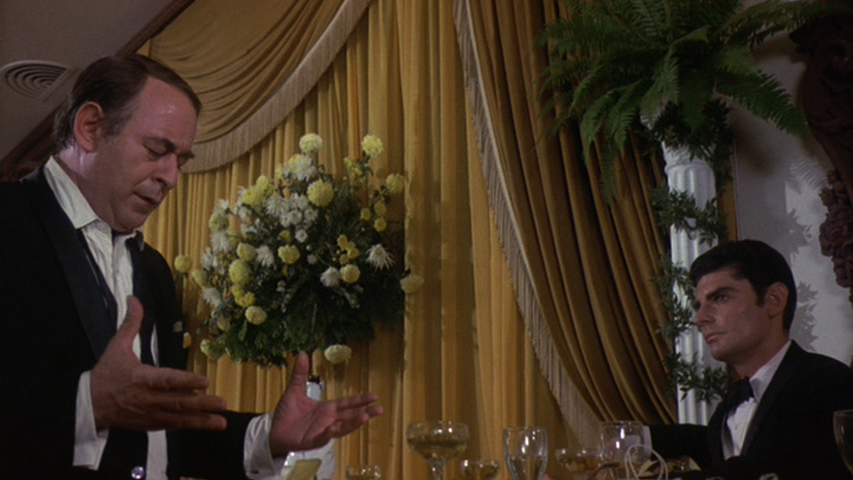
Then there’s the story of Monroe Arnold who appears at the wedding as Uncle Leo, a character from the book with a speech lasting several pages as he drunkenly expresses regret to Neil over how his life has turned out. In the final film we get is what appears to be a brief glimpse of the end of that speech and as the film’s editor Ralph Rosenbloom wrote years later in his book “When the Shooting Stops…The Cutting Begins” a full monologue was shot but as electrifying as everyone thought it was and as much as they loved Arnold in the role, as post-production went on the overall feeling was the massive weight of it all was too much for the relatively light film (why Larry Peerce only shot it from one angle with no coverage is something Rosenblum never answers) so it was almost entirely cut out. By that point in the story, I suppose, all that matters is Neil’s silent reaction to everything around him which leads into a quick montage of flashbacks courtesy of Rosenblum, an early version of what he would later do as editor of ANNIE HALL for the end of that film. The tragedy turned out to be that after all the praise Monroe Arnold had received during filming no one bothered to tell him this before he saw the movie at the premiere. He’s just there, then suddenly he’s gone and soon after this experience Arnold stopped acting entirely.
It’s inevitable that eventually in life you’re going to find yourself somewhere you don’t belong, somewhere you’ll never fit in because you’re not part of a certain history. You don’t know the people, you don’t know the stories and jokes they share and you never will. You'll never understand. GOODBYE, COLUMBUS may not be a classic but it still has a bite to its bittersweet romance with a complexity that feels rare these days. On the one hand I identify with Neil’s sense of never fitting in but I also remember the time I went to a wedding in Minnesota of all places and the half I felt comfortable with were all the other New York Jews. Of course, I’m not entirely sure what my past was either and I’m still not sure if I really ever belonged there. Don’t louse it up, Neil is told about the relationship he finds himself in. But sometimes you have to say goodbye. You have no choice. You have to find the answers in the possibilities of your own world.
Thursday, October 12, 2017
Where Ignorance Is Bliss
There’s something to be said about the fantasy of being a stranger in a strange land, of thrusting yourself out of normal life into somewhere far off. This sounds particularly nice these days. A few Paul Mazursky films touch on such a theme even if only in minor ways but the overall idea becomes, You have to go as far away as possible to find out who you are, what you can do, who you can love and what you were meant to be in your own world. It’s a small idea to discover, but it can matter. Paul Mazursky’s MOON OVER PARADOR was released in early September 1988 and even though it opened in the number one slot at the box office the film didn’t stick around for long. Only a week later the top spot was taken over by A FISH CALLED WANDA, which had already been playing since July. The following week the number one film was David Cronenberg’s DEAD RINGERS. What I’m saying here, kids, is that it was a strange and different time. This was Mazursky’s first film after DOWN AND OUT IN BEVERLY HILLS, one of the biggest hits of his career but as much as that one seemed to totally click, MOON OVER PARADOR feels like a screwball concept aiming for high comedy that becomes more pleasant than anything and in the end sort of fizzles. Even the ideas similar to other Mazursky films, which are there if you dig far enough, feel shoehorned in so it’s mostly a nice diversion where the pleasures are maybe a little too minor.
While filming a movie in the South American dictatorship of Parador, actor Jack Noah (Richard Dreyfuss) decides to stick around a few extra days for Carnival when he is suddenly kidnapped and brought to Roberto Strausmann (Raul Julia), the dictator’s head of secret police with the news that Parador’s president Alphonse Simms has suddenly died of a heart attack. Having seen Noah’s uncanny impression of the dictator, Strausmann gives him the chance of a lifetime to impersonate Simms and help the country avoid revolution. Noah accepts, even though he has very little choice, but soon encounters Sims’ mistress Madonna Mendez (Sonia Braga) who quickly learns the truth about what has happened. She offers to help Jack out with his new role but even as he gets further into the part and achieves more success as Simms he gets increasingly fearful of the insane Strausmann while continuing to look for a way to escape playing this role forever.
The opening shot showing Joseph Papp’s Public Theater in New York that leads into the framing device makes it clear that MOON OVER PARADOR is mostly a theatrical piece, not as concerned with the agonies of the real world as some of Mazursky’s other films are. It also feels like one of the only Paul Mazursky films that doesn’t seem designed to be set in the specific moment it was made, as if the life of an actor resides outside of such earthly matters. Maybe Mazursky just liked the idea of making a broad comedy without too much personal introspection but it’s sort of an outlier in his filmography which consists of stories that seemed almost designed to date instantly, set during the exact cultural moment in which they were conceived. Aside from the fact that this is obviously an 80s movie set during the 80s there’s next to nothing about it that comments on the period except for maybe a random Reagan joke and a few other small details. The idea apparently came from the plot of the 1939 film THE MAGNIFICENT FRAUD but MOON OVER PARADOR (screenplay by Leon Capetanos & Mazursky, based on a story by Charles G. Booth) is also somewhat similar to Ivan Reitman’s DAVE which came only five years later, written by Gary Ross and slightly more of a comment on actual politics of the time, arriving in theaters at the end of three terms of Reagan-Bush. PARADOR is set in more of a fanciful movie world taking place in a fictional country and the film itself is one that cares more about the art of performance than anything. Even if what could happen to Parador becomes a plot device meant to be taken more or less seriously it still never seems part of the real world and it never feels like Jack Noah is in any real danger. The country is all kind of a dream in his head and so is the film.
Filmed in Brazil with bright, cheerful cinematography by Donald McAlpine, MOON OVER PARADOR always looks good in a movie-movie way and certainly has a wide, expansive feel, clearly the biggest of all Mazursky productions complete with what appears to be thousands of extras in some shots. Maybe the peak moment of the entire running time comes early on during the Carnival sequence as none other than Sammy Davis Jr., playing himself, glides into frame singing “Begin the Beguine” with Sonia Braga dancing in a tight gold dress next to him, the image so decadent that it almost seems beamed in from another planet. Nothing else lives up to how truly out there the moment feels but what also sticks out is how Mazursky doesn’t seem very interested in all the activity around them. He goes right for the people he cares about in the middle of all this and other filmmakers may have gone for a few extra angles of everything going on but Paul Mazursky was never a director that you went to for epic scope. By a certain point in the film the lack of attention paid to how many extras there are almost becomes part of the joke, the main character growing more unimpressed and along with that scale it’s perhaps the most benign film that Mazursky ever made. It’s also one of the slightest, mildly engaging but never delivering on the big laughs as if he was so content to be amused by what the actors were doing that he never went beyond that. The scripting is loose, not surprising since Mazursky is at his best when he digs inside his characters and their foibles, but the people in this film aren’t deep enough to explore since it’s mostly just a lark. His films were never about clockwork plot structure either but it’s such a light story that there’s not much to gleam from Jack Noah’s predicament and as things play out not enough laughs to support that either.
It may be fair in this day and age to ask if the basic premise counts as a form of brownface and it’s certainly not something the film is ever concerned about. The real dictator is quickly forgotten by the people who knew him and no one seems surprised that he’s dead, being all too familiar with his extravagant lifestyle. Jack Noah’s concerns as an actor mostly has to do with how needy he is, how antsy he is to move on to the next job. Instead of worrying about how his life is in jeopardy all it takes is a few old reviews waved in front of his face to convince him how perfect he is for this part. If you’re looking for a character arc, not exactly something this film is that concerned with, you could say that what he learns is that the praise needs to come not from cheering crowds but from those closest to you and, in the end, yourself. That’s how you find peace. The film wants Parador to slightly come off as a fantasy kingdom like Freedonia in DUCK SOUP (forget about any language issues; I think the convoluted history of the country we’re given is meant to account for that) but still have us worry about the citizens caught between the fascists in charge and the rebels threatening revolution. When the phony dictator finally takes action to really do something the plot mostly peters out. There’s probably a biting satire to be made on Latin American politics but this isn’t the film and it’s not really what they were going for anyway.
Naturally the people close to Simms figure out that something is up right away and simply decide not to say anything out of fear of losing their jobs with the declaration, “The dictator is the dictator” which is a good joke but it also means that they don’t do much aside from that. Up against the maniacal raving of Raul Julia there’s something automatically funny about having almost all of the great Fernando Rey's performance as Simms’ valet be one giant poker face but the film still doesn’t do very much with the idea. Even Charo is there as just a sight gag announcing her presence and not much else. It’s a film filled with people who give it a slight tinge of madness but too many of them have little to do so Mazursky’s skewering is just a little too genial as if he likes people too much to get too nasty with them. Instead he focuses on the broad bits of business like Julia teaching Dreyfuss about the art of flipping his hand as he salutes although it has to be said that skewering the vanity of a Latin American dictator feels a little subdued compared to the real world these days. Running jokes about the presumably escaped Nazis living in Parador flitter in and out, the rebels have their own actor on their side (cameo by Ed Asner) and even the real dictator was likely just a puppet as well. Everyone is an imposter and no one cares.
The overall message approaches being cynical but the tone is still so benign that it isn’t one of the more interesting Mazursky films although as a flat out comedy it’s probably not supposed to be anyway. It’s breezy and moves so fast that I’m almost surprised the film is as long as it is (103 minutes) with the boisterous Maurice Jarre score bringing just the right larger than life quality. Even when the material is half baked it feels like Mazursky is always doing something with the frame, always giving an actor in it something to do so nothing about it is ever dull or dumbed-down, it’s just a little too mild. The film has spirit but it needs more of a manic streak, more doors being slammed, more panic coming from Richard Dreyfuss being Richard Dreyfuss. Working lyrics from MAN OF LA MANCHA into a speech is cute as is the new Parador National Anthem patterned after “Bésame Mucho” but not much more than that and when Mazursky himself turns up in drag playing the dictator’s mother the whole thing takes on a slight in-joke feel, nothing really at stake. In Sam Wasson’s book “Paul on Mazursky” the director, who mostly recalls the film with genial fondness, talks about how there were issues with Universal during the cutting very late in the game. Some of what the studio wanted done sounds like executive doublespeak to make adjustments to the story or bolster the main character’s arc, not really what he cared about. It’s fair to argue that there were problems with the film but they probably should have been addressed while it was being written, not during the eleventh hour when at best all you could do was apply a few random Band-Aids.
It’s a film that feels like what it was meant to be but it’s still a little too mellow in the end and as a result not very memorable. It’s nice and that’s really it. More than being a farce it’s almost like a spiritual journey by the main character, the sort undertaken in Mazursky’s WILLIE AND PHIL and TEMPEST which helps Jack Noah convince himself of what he’s able to pull off both as an actor and as a person. Acting, the very concept of being an artist, is real and tangible the film seems to say, something the maniac Strausmann can never comprehend. He hates actors but loves celebrities, an obsession that is his Achilles heel, and it’s all surface for him, all about empty power, never about the art of truly being. The framing device is still a glimpse at the Paul Mazursky film we’d rather see, an actor living in New York with the Sunday Times always nearby in that familiar world instead of this prolonged vacation. The movie we get in essence is the Mazursky world view of loving life but that quality removes any bite the story could have. Because of the flashback device it’s a little open how much of what Dreyfuss tells really happened but it doesn’t matter because reality often feels somewhat fluid in Mazursky films anyway. To him, the journey is about enriching yourself and if you do something useful for others along the way that’s good too. Sometimes these glories have to be created in our own heads and, as the end of the film reminds us, that’s the way we need to live our lives in order to survive.
What the film does have is its three lead performances and the chemistry that’s always there when they play off each other. When he’s simply Jack Noah, Richard Dreyfuss is about as loose as he’s ever been in a film, almost with no inhibitions in between identities and even amused by his own insecurities. When he’s the dictator the broadness makes it more of a caricature that the true character never really comes through, a reminder that Noah himself feels he’s giving a “result-oriented performance.” But in either guise some of Dreyfuss’ best moments on a pure acting level are him up against Raul Julia, truly maniacal as Strausmann displaying a sense of comic danger that combines joie de vivre with the ever-present threat that he really could go mad at any second. When the rest of the movie cruises along, he forces it into overdrive with the sheer Nazi ferociousness of his laughter. And when Sonia Braga is onscreen the pure physicality of her presence (her hair deserves its own screen credit) combined with sharp coming timing is in its own way a dream for Dreyfuss to work with so their banter becomes an actual relationship combining chemistry with friendly bickering in the middle of this fantasy romance. Jonathan Winters gets a few moments as the retiree with his own secret identity—some of his muttering to Dreyfuss early on sounds like ad-libbing and I wish there was more of it. Polly Holliday is Winters’ wife, Marianne Sägebrecht of BAGDAD CAFÉ is the dictator’s masseuse, Dana Delany is Jack Noah’s co-star in the film shooting in Parador, Michael Greene of LOST IN AMERICA is the special effects guy, Dick Cavett is Dick Cavett, Mazursky’s wife Betsy, who recently died on Oct. 3 2017, appears briefly as does Richard Dreyfuss’ brother Lorin, playing the real dictator when the two are in the same shot.
Right now we seem to find ourselves as strangers in a strange land as far as the real world goes, it just feels like more of a dark allegory than a fantasy. MOON OVER PARADOR is a nice enough movie and even a hopeful one it’s just a little toothless even if it is a reminder that we’re all experts on fake presidents/would-be dictators these days. The film is ultimately a lark, complete with a couple of Parador cops who turn up throughout as a sort of Greek chorus throughout as we follow their journey from cynicism to a sincere nod of the head as if to say, maybe this could work. In some small way it counts as progress. The punchline to the whole theme of everyone acting as an imposter comes at the end with a suggestion that we’re seeing someone as they really are for the first time and the moment doesn’t quite land but it is a nice thought. “Sonia Braga is Hillary Clinton, but I didn’t know that then,” Mazursky offers in “Paul on Mazursky” (published in 2011) and if he had maybe there would have been sharper focus towards where the film was going. But it also makes me think of what Mazursky has missed out on since he died in 2014. MOON OVER PARADOR is still likable and not at all a travesty, not then or now, it just never clicks as maybe it could have. But it does make me think that all the world isn’t just a stage, it’s a theater. And it’s up to you if you want to watch or come up with your own character. In life the clock is always ticking towards what we’re meant to be with the hope that maybe someday we’ll figure it out.
Saturday, September 30, 2017
Just Passing Through
The world is what the world is. Mostly people are no damn good and that’s the future we’re living in. So it’s important to remember that your own redemption, if you choose to go down that path, needs to come from yourself and no one else. It would be nice to blank out the past, and in some cases that’s exactly what I’ve tried to do, but it’s not always so easy. You just have to carve out your own place in the world no matter how much it’s tried to beat you down and look for the few good ones out there who want to come along. Sam Peckinpah’s THE BALLAD OF CABLE HOGUE might be the least well-known from the golden ’69-’74 period of his films but it’s a lovely piece of work, beautiful and sloppy, emotional and erratic. Released in 1970 and his immediate follow-up to THE WILD BUNCH, it’s nowhere close to perfect but it’s a downright gentle film, presenting a world that’s always fighting the memory of the past while wrestling with the inevitability of the future but is still sadly decent down to its core. Recently made available by Warner Archive in a gorgeous new Blu-ray it’s likely better looking here than it has ever been before, including how the 35mm prints no doubt looked at the time of release. It’s a flawed film about a flawed man and both deserve to be loved anyway in the end. There’s nothing wrong with dreaming that maybe someday things will be better. Sometimes that’s all we have.
When Cable Hogue (Jason Robards) is left for dead out in the desert by his two partners (Strother Martin and L.Q. Jones), he wanders for several days in search of water, occasionally asking God for help and saying he’ll repent. After several days and in the middle of a nasty wind storm he suddenly discovers mud on his boot and when he digs to investigate finds an underground spring filled with, as he puts it, “water where it wasn’t”. Realizing that he’s made this seemingly impossible discovery right along a stagecoach route midway between the towns of Dead Dog and Lizard, Hogue sees an opportunity to capitalize on the need for water there so he acquires a deed for the small amount of land, a mere two acres, builds himself a house and opens for business. He soon befriends the wandering minister Reverend Joshua Duncan Sloane (David Warner) and upon visiting the nearby town of Dead Dog encounters Hildy (Stella Stevens), the local prostitute. When he finally gets the homestead which Joshua names Cable Springs up and running Hildy comes to stay with him for a spell on her way to San Francisco after she’s been kicked out of the town but instead of going with her Hogue is determined to wait where he is for the former partners who abandoned him to turn up so he can finally get his revenge.
Unlike the carnage of THE WILD BUNCH and the increasingly cynical outlook of all existence found in his later films, THE BALLAD OF CABLE HOGUE is a downright benign feature length musing about the very nature of existence out there in the vastness of the desert. Like a few other Peckinpah films there’s a killing of a small animal at the very start but in this case it’s just about the most brutal act committed by anyone through the entire running time. That includes the few human deaths which feel downright justified in comparison since this is a world where those things are sometimes justified and can be forgiven, a west where Slim Pickens rides up on a stagecoach and he couldn’t be more willing to help you out. It feels like the directorial credit is held back a few moments past the title sequence, as if Peckinpah doesn’t want to officially sign his name to this story until Hogue makes his discovery, essentially learning that he’s not going to die just yet, underlining how much this particular west is a benign flipside to the brutally ugly universe of THE WILD BUNCH even if it is about some of the same early twentieth century end-of-the-west themes. There’s even the return of Strother Martin and L.Q. Jones teamed up again as if that film never even ended and once again a tent revival with the expected chorus of “Shall We Gather at the River” turns up only instead of carnage it merely results in a slapstick sequence that takes the tent down, mere gentle mockery instead of bodies violently blown away.
The undercurrent of revenge that Cable has his mind set on is one reason the plot keeps going in the script by John Crawford and Edmund Penney; that pays off but it’s more about how he takes advantage of his good fortune since finding water out there is almost as good as finding gold. “I’m worth something, ain’t I?” he angrily barks out while trying to get seed money for his new spread, with an anger that indicates no one has ever thought that before. When Hogue is presented with an American flag to officially coronate Cable Springs the moment has a sudden extra meaning in 2017 just as I imagine it did back in 1970, a reminder of how to really, finally be part of this country is something to be proud of, and he’s done it on his own terms. Watching the moment right now it’s hard not to wish this version of America really existed somewhere out there.
The best moments have an offhand loveliness and a true sense of calm, gently adding to the tall tale aspect, as if there’s no end to the amount of reflecting Cable Hogue can bring himself to do out there. The film takes its time, particularly during the first half with a long stretch of Hogue setting up the paperwork for his land, always more interested in the people and colorful dialogue than the plot which by a certain point has more to do with Cable determined to stick around mainly because he’s certain his former partners will eventually show up. Running a sliver over two hours the pacing is raggedy at times with a few beats going on a little too long and a few pieces that feel like they needed a little more finessing in the cutting room but there’s also continued inventiveness of the editing both within scenes and during transitions. It’s not the most visually aggressive Peckinpah film, photographed by Lucien Ballard, with the camera placement sometimes a little too random and it lacks the primal fever always felt when his films are in Scope, even if the 1.85 framing here goes better with the more relaxed vibe. But the lack of urgency and immediacy makes sense even more than usual since his films are so often about desperately trying to hold onto a world that is dying so what’s a few extra minutes anyway; it doesn’t want this way of life to end any more than the characters do even if it’s something that can’t be prevented.
That lyricism is also felt in the beautiful Jerry Goldsmith score which instead of playing up the majesty of the old west fuels Hogue’s own determination to not see his end just yet then aims for the simple acceptance of finding some kind of peace out there. In addition there are the prominent Richard Gillis songs, fitting for the post-BUTCH CASSIDY-Raindrops Keep Falling On My Head era but here turn out to play more of a part to bring out the true soul of the film, including a full-on duet between Robards and Stevens when their romance blossoms—an upbeat musical number in a Sam Peckinpah film is one of the more surprising things imaginable in all of cinema—but even better are the quieter grace notes that turn up particularly when David Warner is found singing a few bars of one of the songs by himself, totally unexplained where he might have heard them before, the sadness of the words hanging in the air which gives more power to the piece when it’s heard again later on. The songs go perfectly with the ramshackle rhythms of the film and these characters, each on their own road and determined to keep things that way; as Cable puts it, to join the normal people of the growing west in civilization would make them ‘nothin’’ and that’s something to put off for as long as possible.
Whatever miracle has led to Cable’s discovery he never questions it. He just accepts what happened and makes the place his home, calling out his own name to the horizon, willing the sound of it, willing himself to matter. The film is somewhat contemptuous of organized religion—even the local banker is suspicious of them and gladly chortles when the tent comes down—and Hogue, as Joshua puts it, makes the entire desert his cathedral which is the best way to stay true to himself. Just as Joshua is also a loner, his self-named parish “The Church of the Wayfaring Stranger” being of his own revelation (“Wherever I go, it goes with me.”) and even Hildy seems to proudly be the one prostitute in her town, perhaps a sign that civilization is encroaching even in a place called Dead Dog. The message seems to be, stay true to yourself and accept what comes. Don’t overthink it. Do something with what little time you have here. That’s what sticks in the brain from the film, a feeling of beauty and simplicity and isolation from the world, whether it’s Robards sitting there lost in his memories or Warner walking through the town at night in a west where he is all alone. And along with the running time are stretches where the mood doesn’t quite hold particularly during some moments of heavy-handed slapstick, complete with shots that are speeded-up in search of laughs that aren’t really there. Definitely not aging well are some of the skeezier elements, particularly how Stella Stevens is sometimes photographed and treated by the film, which in some ways recalls how Jerry Lewis had the camera linger over her in THE NUTTY PROFESSOR (it’s pretty clear she brought something out in her directors) but here going even further, zooming into her breasts and other body parts while lingering all over her, undoubtedly representing Hogue’s own view of Hildy but clearly the director as well, the Peckinpah Gaze made pure.
This isn’t the only one of his films that seem problematic today in that sense, of course, and it also spends a few minutes longer than it should with David Warner—phenomenal in this role, it needs to be said—taking physical advantage of both Stevens and what he believes to be a distraught widow played by Susan O’Connell (her husband, played by Gene Evans of Peckinpah’s PAT GARRETT and multiple Sam Fuller films soon turns up) which are clearly made to have him seem like a charming rapscallion when it comes to the ladies but the scenes play way too crass. Even if Hildy is essentially a whore with a heart of gold it’s still one of the best roles that Stevens ever had; the relationship between Hogue and Hildy gets more complex the longer she stays with him and a big fight over dinner between the two is stunningly good in how almost nothing is said, they know all the hurtful stuff already. By a certain point they’re on equal footing in Peckinpah’s eyes, Hogue even returns the favor of her giving him a bath by doing the same, but the intensity remains along with the feeling that another explosion between them isn’t too far off if she sticks around. Neither one can totally forget the past of the other person during their present.
“Just passing through,” Joshua drunkenly says after falling down some stairs, just as Cable builds a home out of a waystation for people making their way through the desert. Just like we all are, ultimately. Even this way of life is coming to an end when the credits roll although no one seems to want to admit it. There’s a sense of sobriety to THE BALLAD OF CABLE HOGUE that I can’t quite shake, even with its most unfortunate indulgences, even with its ramshackle nature. To compare it to other Peckinpah films, THE WILD BUNCH is a fun and determined drunk, THE GETAWAY is a dinner party drunk, JUNIOR BONNER is a family reunion drunk, PAT GARRETT AND BILLY THE KID is a sad drunk and BRING ME THE HEAD OF ALFREDO GARCIA is an angry drunk. HOGUE, only drinking water although maybe a little woozy from all that sun in the desert, looks for a sense of peace through clarity that none of these others do as if continually asking what kind of revenge do you really need to keep going. It was by various accounts not an easy shoot due to weather problems and other issues so it stands to reason that there actually was a fair amount of drinking by Peckinpah, and presumably others, going on. But what the film presents in its depiction of hope of trying to accomplish something along with the feel of sober that is trying to stay that way, aware of how temporary all this is, inspirational in its own cockeyed notion. Nothing lasts forever but if you can prove something in spite of whatever the past is then maybe that matters in some way. The final moments are almost borderline perfunctory in its lack of total reverence towards what has just happened, racing to the inevitable close, as if a reminder that the things which get remembered are what happens when you’re alive. You don’t stop being who you really are. And just a moment can matter.
For once the actors in a Peckinpah seem cast not because of any particular iconic status but because of how much they fit these roles, the physicality of Jason Robards bouncing back and forth between his innate decency and a certain degree of bitterness that still lingers along with the power of his presence. Thanks to Robards you can never entirely pin down Cable Hogue only he is every bit the man that he deserves to be remembered as. Up against him, the abrasive charm of Stella Stevens has more of an effect than ever going right back and forth from the comedy to the darker moments; the way she plays it you just know how much she’s revealing to Hogue that she’s never shown to anyone else. The rogue quality of the awesome David Warner is like a revelation (as I’d imagine Joshua would put it) for anyone who only knows him from his bad guy roles and it’s a joy to see him as he enters scenes as if in a daze from wandering through the desert appearing truly happy to sit down and talk with someone like Cable, dropping as many biblical quotations he can into a single conversation. Plus the various Peckinapah players, the worminess of Strother Martin, the conniving of L.Q. Jones, the joy of seeing Slim Pickens turn up again, the disarming assistance coming from the banker played by Peter Whitney or the cagey by-the-book nature of R. G. Armstrong, each of them one with this particular western universe.
You never get rid of the pain of what you lose. You never get rid of the dreams that they’ll come back. The film itself dreams of a country, of a myth, of an idea of this land that maybe never was. Of decency, of goodness, of meeting that lady, the ladiest damn lady that you would ever want to meet, of finding water where it wasn’t, and having it all work for just a little while and all you want is for it to never end. It’s all a dream, of course, nothing more than a myth, a dream that no one ever notices because of course you’re not going to share it with anyone and you’re never completely certain just how much you’ll be able to forgive. THE BALLAD OF CABLE HOGUE was mostly ignored upon release but has admirers even if they can’t quite be called a cult—no Bob Dylan soundtrack with this one, no Steve McQueen star power and it’s not the dive into total insanity that BRING ME THE HEAD OF ALFREDO GARCIA is. It’s just messy sweetness and has been appreciated more recently if only because of how it plays into the Peckinpah mythos. When I tweeted out the main title song “Tomorrow Is The Song I Sing” not long ago someone replied, “I think about this movie every day.” It’s that kind of film that gets into you, cuts right in. Hopefully the new Warner Archive Blu which ports over the special features from the earlier DVD will play into that and making the film look this good is about as heroic as anything Cable Hogue did to survive out there in the desert. If you love Peckinpah, if you even have an interest in Peckinpah, I can’t recommend this disc more. It even restores the correct Kinney National-era Warner logo to the opening. A minor point but, well, sometimes the past really does matter, just like when you remember why you stopped doing certain things—right now I’m closing in on eighteen months but I still make no promises. I know why I stopped but the way things are these days you sometimes wonder if that’s a good enough reason anymore. It’s one more reason to try to keep on figuring out things for yourself. People don’t change, even if you want them to. As Joshua says to Cable when they muse over what it is about certain women, maybe when you die you get over it. Right now, I’m not so sure. But there’s always a chance.
Thursday, September 7, 2017
To Win Without War
There is no humanity without the awareness of cruelty. As much as we want to believe in reason, in goodness, we have to remember otherwise and understand that it may not get any better. That’s just the way some people are. John Frankenheimer’s SEVEN DAYS IN MAY was released in early 1964 and is meant to take place in the near future although it’s barely evident from watching the film. A date seen on a map possibly sets it in 1970 but there’s very little that would actually qualify it for some form of science fiction aside from the usage of video monitors for tele-conference purposes. The very concept of television and how it relates to people is something of a recurring image throughout Frankenheimer’s career and though SEVEN DAYS IN MAY, recently released on Blu-ray by Warner Archive in a stunning new transfer, is only a film about The Future in the loosest sense beyond an “all this could happen tomorrow…” feel the basic idea of how much would eventually play out on television wasn’t too far off. Frankenheimer was an extremely cultured, intelligent man, almost intimidatingly so but in spite of how much the film believes in a certain degree of justifiable paranoia he clearly also subscribes to the notion that the human brain is something which can eventually be won out by rationality. So he got some things wrong. On this particular point, if only for the optimism that he possessed, maybe he shouldn’t be faulted.
After a disarmament treaty with the Russians is ratified, the poll numbers for U.S. President Jordan Lyman (Frederic March) are at a record low. Almost by accident, Director of the Joint Chiefs of Staff Colonel Martin “Jiggs” Casey (Kirk Douglas) stumbles onto a few seemingly random pieces of information—a betting pool among high-ranking generals of the upcoming Preakness Stakes, the existence of a military base he was unaware of, which leads him to consider that there may very well be a secret plot led by the popular General James Scott (Burt Lancaster), the Chairman of the Joint Chiefs, to stage a coup which will remove Lyman from office. With enough evidence and anecdotal information to at least convince the President of the possibility, Lyman sends various close allies off on secret missions to investigate and use what they know about Scott, including whatever may have happened with his former mistress Eleanor Holbrook (Ava Gardner), to discover the truth behind the plot and do whatever they can to stop what’s happening before it’s too late.
Based on the novel by Fletcher Knebel and Charles W. Bailey II with a screenplay by Rod Serling, SEVEN DAYS IN MAY is pure paranoid reportage, in some ways an extension of the hysteria portrayed in Frankenheimer’s previous film THE MANCHURIAN CANDIDATE but more grounded, more aware of the flaws within people that could lead to such potential calamities. The possibilities of what the end result might be are potentially far worse on a global scale, any satirical exaggeration in the earlier film is buried in favor of deadly seriousness with him taking one of the best scripts he ever had to work with and presenting it cleanly, briskly, tautly, always aware of what is at stake. There’s very little in the way of scale other than a small riot filmed in front of the actual White House and the closeness gives a feel of immediacy to every scene which hides how much is staged on sets, hinting at gigantic developments but only showing the briefest of glimpses. It’s a film set in a grown up world, a foreign concept right now, made by grown-ups, the premiere just days before Frankenheimer’s thirty-fourth birthday in ’64 and his total sense of focus is evident, throughout, each scene directed in a way that allows for total clarity as if it really is his own eye peering at every shot, waiting for what the characters are going to do next, every cut displaying a sign of his passion for the world to remind us how important it is to know what may possibly happen.
It’s essentially a thriller that mostly involves people conferring in rooms and the few traditional suspense beats are relatively low key but always compelling, its visual style consistent with other Frankenheimer films in how characters are often framed in relation to each other making every dialogue exchange even more intense. The overall feel is a little nightmarish at times, partly because of the Serling dialogue but also because of the claustrophobia felt by this insular world with certain elements offering a feel of ellipsis possibly for budget reasons but also possibly because the movie knows that it’s not really about the escape from the secret base in the middle of the desert. The plotting also keeps things close to the vest at times as to exactly what sort of plans are in motion with characters kept offscreen for stretches to add to their intrigue and if there’s more to a key plane crash than just an accident we never hear about it. Ava Gardner, the one prominent woman in the cast, is in for a few scenes as Scott’s ex-mistress with information that may be used against him which in one sense feels like an excuse to stick a semi-love interest into the picture and it’s a little soapish in how it plays but the subplot also becomes a reminder of the real world out there beyond the corridors of power, something that’s been discarded in favor of the job that never ends.
The heroes are conflicted, believing so strongly in the rules of their world that they can’t accept that something might come along to upend all of that until they have no other choice. Kirk Douglas’ Jiggs might not even be a ‘hero’ at all, ambivalent at best about the treaty and the information he’s passing along, while March’s President Lyman isn’t as torn about what he believes but he’s just uncertain enough about what he needs to do that it’s believable he won’t be strong enough in the end, firmly aware that even if he’s done the right thing it could still be his downfall. So it makes sense that the only person totally assured in what he’s doing is Lancaster’s General Scott, a few shots framed directly behind him that place us literally in his headspace as if a reminder that to him, his head is where the wisdom flows from, his decisions are what should be obeyed. The paranoia always in the air brings an otherworldly quality to the narrative helped by the rich, weighty intelligence of the Serling dialogue, every utterance with all the significance imaginable bringing a certain big budget TWILIGHT ZONE vibe to it. It’s made almost made more unsettling by how there’s nothing supernatural going on, events that can be explained if only they can be understood. As grounded as it is there are still a few elements that feel part of the ZONE/MANCHURIAN DNA to keep us uneasy and even Scott’s overcooked proclamations goes perfectly with his point of view as well as odd touches that skirt that vibe, particularly Andrew Duggan as one of the unknowing colonels at the secret base playing part of his role as if he’s in a slight daze, slowly waking up to the realization that there’s something off about it all.
It’s a version of the MANCHURIAN kaleidoscope that’s a little closer to the real world, the suggestion that Raymond Shaw play a game of solitaire turned into continued attempts here to have Edmund O’Brien’s alcoholic Senator Clark investigating the secret base to have a drink instead, to forget about all those things he’s being told are happening. When all else fails here the conspirators resort to simple gaslighting (“I’m afraid your memory fails you, Mr. President.”) which certainly helps to tie the film in to the world of 2017 even more. The crumpled piece of paper that might be a clue reveals more than any possible futuristic technology and all these TV monitors meant to show us what’s going on only make the true allegiances that much murkier although the thematic conclusions the film reaches courtesy of President Lyman, stating that the enemy isn’t Scott and his supporters but instead the paranoia of the nuclear age may seem naïve today, not when we have a major political party seemingly intent on stripping away all rights of a large amount of the populace. But this President, and the film as well, correctly labels it a sickness, the product of minds filled with desperation and impotence. There is the dream buried in the aspirations of the people who made this film that someday this can all be fixed, maybe someday this hatred can be wiped away, maybe someday Jiggs will redeem that raincheck Eleanor Holbrook keeps alluding to. There’s no point in waiting after all. We have to fight for the future, not stand around assuming it’s going to happen. Because that’s when the end comes.
Right now we live in a world beyond satire but this film is from another time, an extension of the live TV plays where Frankenheimer got his start, as well as films from long ago which aspired to people who might, just might, display the potential to be better, of what you’re tempted to do, and the good you might actually be capable of, when you’re down at the bottom of the barrel. The overall message is essentially pacifist but while still aware that the military is a reality it's purely, simply hopeful that one day we may be able to move past certain things. It’s also from another time when not only might certain love letters possibly incriminate somebody the people who have them actually have to think about it. What they have is dignity, something the traitorous Scott doesn’t possess nor does he care about, freely shutting somebody out the instant they start talking about ‘the Democratic way’ and the conservative commentator played by Hugh Marlowe of course folds under pressure instantly. Jiggs is human enough that he needs to take a gulp of that scotch before putting his suspicions into words and he agonizes over the choice he has to make, a reminder that it’s usually the good ones who argue over the morality of how to achieve their goals.
Very much a product of the Kennedy years, made pre-Dallas but released after and the specifics of the future don’t matter since Frankenheimer had no idea what was coming, no idea what would happen to JFK, no clue that in just a few years he would be accompanying RFK to the Ambassador. He couldn’t have known that one day there would be someone in power basing his decisions on what the TV ratings would be just as much of General Scott’s plan depends on being seen by the nation on television, the best way imaginable for a God (or a monster) to be anointed, at least until Facebook and Twitter came along. You shouldn’t have to wait for the future to happen before something is done but sometimes we’re forced to live with the consequences of those who didn’t act when they could have. The final words heard in the film immediately after a speech that sums everything up and states exactly what we want to hear (and, goddamnit, watching it now almost brings tears to my eyes) are of an announcer stating, “Ladies and gentlemen, that was the President of the United States.” With the final crash of Jerry Goldsmith’s brief score we are assured. It would be a nice feeling to have right now in the version of the future we’re living in, but I suppose we really do need to think of this as science fiction.
It’s a phenomenal cast. Burt Lancaster brings all his power and cagey intellect, spitting out the ferocity of his speeches without a care what the answer will be, the smugness of Scott daring the other person to even try to disagree. Frederic March is total dignity, coming off as someone you could imagine as weak but what he does he’s the strongest of them all, willing to keep from blinking and the power in his eyes and the uncertainty as well. It’s Lancaster and March who get the big confrontation of the entire film with each of them simply brilliant in how they come at each other. It was Kirk Douglas who reportedly realized as they were making the film that he had the lesser part so it could be argued that he visibly transfers that frustration to his performance of a man straitjacketed by what he’s compelled to do and the immense guilt he feels even though he knows what’s right, his silences left hanging there as he becomes more anguished over which side he’s on. As the woman who Scott won’t even say a word about when her name comes up, Ava Gardner plays her role a little like Ava Gardner as Ava Gardner Movie Star, waiting at a party with a drink in her hand to film her Special Guest Appearance. On the audio commentary Frankenheimer refers to difficulties with Gardner and she doesn’t always seem as confident as her co-stars; you can feel the director forced into coverage during a few of her scenes to help them play out. The great Edmond O’Brien received the one acting nomination for this at the Oscars and he’s electrifying, in some ways playing the audience surrogate, the one person in the film who appears to feel mortal, trying to keep his flaws in check for a little while to get the job done. Plus there’s also Martin Balsam, Whit Bissell, Richard Anderson (RIP), George Macready (also in PATHS OF GLORY and TWO WEEKS IN ANOTHER TOWN with Douglas), Colette Jackson as a girl in an El Paso bar wondering about the nearby secret military base (she pops so instantly that on the audio commentary Frankenheimer wonders what happened to her; sadly, she died in ‘69 with only a few other credits) and an unbilled John Houseman, pitch perfect in his first film as an Admiral holding back the truth of what he knows about the plot.
People are who they are. And that’s what they want to be. Sometimes I wish it wasn’t true, but it is. The new Warner Archive Blu lives up to the importance of SEVEN DAYS IN MAY, with a transfer that is a huge improvement over the old DVD playing like a crisp new 35mm print after watching a muddy TV broadcast. Plus it contains the illuminating audio commentary that Frankenheimer recorded several years before his passing (he was one of the best at this—he remembers f-stops on certain shots, for crying out loud) and I wish he was still around to tell us more stories about this film to maybe shed more light on the path that led us to where we are right now with people who want nothing more than to be in command, just like the general working under Scott who we’re told subscribes to “out and out fascism”. At the very least, the people in this film seem more intelligent than certain people in the real world these days; certainly the film has better dialogue. So maybe that means there’s hope. Because right now we’re forced to deal with the madness while the intelligence that people like John Frankenheimer and Rod Serling delivered to the world gets left behind. Which is where we are right now. In the future.
Saturday, August 19, 2017
Circuses Are Past History
Like the man says, the past is a foreign country. My own past in Los Angeles is of little interest and the more time goes on, the less any of it matters except in the most insignificant way imaginable. Way back in the 90s I always enjoyed going to the mall in Century City, partly for the movies and the bookstore, partly for the food but also because of the vibe of the place. I certainly got more than a few celebrity sightings there (Janet Leigh and Jamie Lee Curtis together was one of the best) and maybe to me the design of it seemed like what I had always imagined Los Angeles, or maybe just that generic southern California vibe, to be. The mall has been totally redone now so it doesn’t look like that anymore and by a certain point I stopped going to that part of town anyway. I miss it but that’s the way it goes.
One particular point of interest that was always attached to my fondness for the place is that it’s also where much of CONQUEST OF THE PLANET OF THE APES was filmed, the location meant to represent the future world of the film’s “North America 1991” as the opening title put it, an indication that the country may not even be the United States anymore. Presumably they knew something about the future even if the years were slightly off.
The Twentieth Century Fox studio is right nearby—just up the street is where Fox Plaza aka “the DIE HARD building” would later be built—and the mall actually sits on what used to be part of the backlot so they didn’t have to travel far to use that location. Because of the extensive redesign of what’s now called “Westfield Century City” there’s not much left that’s recognizable, the mid-century modernistic feel to the place scrubbed away in favor of a certain plastic Kardashian vibe which somehow feels even more oppressive. The bridge that goes over Avenue of the Stars is still there of course even though the ramp leading up to it is new and though the staircase where Roddy McDowall’s Caesar makes his speech at the end is gone the building directly behind him is actually still there—I knew it as a Bank of America back in the 90s, now it’s something else. And there’s not even a plaque or a signpost or a statue there to indicate that this is the spot where the apes took over. But I guess it doesn’t matter. As far as CONQUEST OF THE PLANET OF THE APES is concerned, the future is now the past which in some ways means that the present is now the future, which is all it ever becomes.
North America, 1991 – Roughly twenty years after he acquired the baby chimpanzee offspring of Cornelius and Zira, the apes from the future, circus owner Armando (Ricardo Montalban) travels to the city with the now-grown ape Caesar (Roddy McDowall) at his side to advertise his upcoming show. But what Caesar encounters is a fascistic world where apes were turned into pets after the deaths of all cats and dogs but are now servants, essentially slaves to humans with Governor Breck (Don Murray) in charge of Ape Management which is designed to condition all simians so they will do the jobs they are trained for. Though Caesar is well aware he needs to not speak for fear of being discovered the treatment he witnesses soon causes him to shout out. In the melee of people convinced they have just heard an ape talk he is soon separated from Armando, who tries to take responsibility for what was heard, and Caesar is forced to blend in with the servant apes, soon even finding himself a slave under the command of Breck himself. But when the truth of what has happened to Armando is revealed, Caesar soon realizes that he has no choice but to take action and plot revolution.
The previous two films in the APES series, BENEATH THE… and ESCAPE FROM…, climaxed with the violent deaths of its main characters which in the first sequel was immediately followed by the total destruction of the entire planet. This apparently qualified each of them for a G rating but, hey, it was the 70s. CONQUEST OF THE PLANET OF THE APES, released in June 1972 and the fourth film in the series out of five, not only went beyond what even the MPAA was willing to hand over a G rating to it had to undergo considerable alterations during post-production to make it palatable for even a PG. After all, it depicts what is essentially a successful armed slave revolt that brings down the human race, which even in the 70s may have been considered a little much for kids. But it’s clearly a low budget armed slave revolt and considering that there are only a handful of locations actually used in the film we sort of have to take its success on faith, through dialogue telling us what will happen after the credits roll. Even after countless viewings I’m still a little unsure about the about the exact geography of the film’s primary location as depicted, presumably to make the area seem bigger than it is but it’s to the film’s credit how much it sidesteps issues of technology for this film set in the future such as how there’s not even a single automobile seen in the entire film. But science fiction or not, CONQUEST OF THE PLANET OF THE APES isn’t about detailing a futuristic world or even presenting an ape revolt as it is detailing its own subtext, something which may have been in the air when the film was made and in some ways still is.
There’s surprisingly little in the way of plot with the three acts of the screenplay by Paul Dehn (who had also worked on the previous two films) serving as essentially capture, slavery and revolt. And that’s it. Most of the exposition is packed into what Ricardo Montalban’s Armando has to tell Caesar the film’s start (really, you’d think he’d have told him all this ahead of time) so we don’t ask too many questions about how much it remains consistent with the other films. It doesn’t match up exactly anyway, forced from a continuing storyline that backed into what it became by the destruction of the world in the far off future as seen at the end of BENEATH, creating a time loop that never made any sense even on a science fiction level but we just go with it. It’s one of those things that make the flawed storytelling of all the films put together so compelling that certain elements meant to connect can never be fully reconciled. The future of 1991 as presented is clearly a cold world as if without their pets any shred of kindness or even humanity has been wiped away from these people, almost in a very early CHILDREN OF MEN sort of way. It turns out no children are even seen in this film anyway but it feels like a safe bet that if there were they’d be just as bad as their parents. The recurring imagery of waves crashing up to the surf from earlier films are nowhere to be found and in its place is a world of metal and concrete, no joy, nothing but business.
“Circuses are past history,” a guard awkwardly states early on which in the context of the actual 2017 has turned out to be close to true with Ringling Bros. closing down this year. Of course, in our real world that’s a reminder of increased attention paid to animal rights and how people don’t like clowns very much anymore. In this film’s future the very concept of a circus is almost a symbol of all things pure, of art, joy and knowledge having been done away with. Which, looking at it again in the context of the real 2017, doesn’t seem so far off either. Even the concept of space travel, that symbol of optimism where the entire APES series began, is now little more than a place that astronauts have brought viruses back from. The slave outfits given to the simians are somewhat obviously meant to foreshadow the color schemes they would evolve into by the time of the original film far off in the future while most of the humans are all dressed in oppressive black as if they have no color in their lives to lose. The pleasures they now have are totally sterile with even cigarettes apparently having been made too safe to ever enjoy again. Everyone, every human, seems either angry, unpleasant or simply arrogant. The few we see out and about in this futuristic shopping plaza are clearly part of whatever the upper class is, living in paranoia as if they know the revolution is inevitable, the less fortunate ones tossed further down by their service jobs being taken over by the ape slaves.
It’s difficult to tell if things would be such a police state even if the apes weren’t around and Governor Breck is concerned with little other than maintaining his power, barking out orders to underlings. Even one command to “simplify that last paragraph” in a speech makes clear than anti-intellectualism is now the order of the day. Thought doesn’t matter anymore. Only adherence does. Only loyalty. In his paranoia Breck serves the function of Dr. Zaius from the original film only without the intellect, which makes him a perfect human leader. For a film that has to present a future on a tight budget (reportedly $1.6 million; by this point the budgets for each sequel were getting progressively smaller) it’s clear enough to be understood immediately. It’s a fascist world and it deserves to have a revolt by the apes. Plain and simple. With much of it shot on location (in addition to Century City, a few scenes filmed at UC Irvine) there are only a few sets that seem to have been built, the masks on many of the background apes are worse than ever and even if global ramifications of what happens are bigger than ever the plot is the slimmest of the five films, fitting nicely into the 87 minute running time. But it’s so effective in its stripped down way that very little of that matters.
Director J. Lee Thompson was a workhorse of a filmmaker, with a career going from the 50s to the 80s that included THE GUNS OF NAVARONE and the original CAPE FEAR but also a lot of sludge. Whether he responded here to the themes or even took the production limitations as a challenge there’s more ferociousness and energy felt here than in a number of his big budget prestige pictures. Along with DP Bruce Surtees (whose work during this period included DIRTY HARRY and NIGHT MOVES) brings to every scene an immediacy that the earlier films in the series never had, whether handheld cameras to make the ape riots resemble newsreel footage or shots which accentuate the coldness of the architecture. They seem energized by how to shoot Century City with the austerity of every sharp angle lending itself to the minimal plotting, looking for the hardness in the angles everywhere and makes the world seem that much more foreboding; it’s the only APES film after the original which feels like it contains a genuine point of view to how it’s shot with the total darkness during night scenes handled particularly well. One imagines John Carpenter seeing the film in ’72 and ideas forming in his head for how he could expand on these themes and visuals but the film is still no slouch.
It’s a film with not just blunt power but full on anger that goes beyond the satire of the concept into pure documentation of the horror, knowing there is only one side and this is the way it’s supposed to be. While the ham-handed protests meant to reflect Vietnam demonstrations in BENEATH felt hackneyed, in this film the imagery emerges perfectly out of where the story has gone. And with the somewhat liberal African-American MacDonald is the only character in the movie who seems to put actual thought into his actions and opinions but while he may be in a position of power he still hasn’t achieved any form of respect. “What’s he, like apes or something?” “Yeah, don’t it figure?” goes an exchange between two guards talking about him, a clear sign that apes may have been moved over to the bottom of the human food chain but old-fashioned racism among humans is still there. There’s no longer any one clear voice of reason with any authority whether the calm, collected president played by William Windom in ESCAPE or even a scientist like Eric Braeden’s Dr. Hasslein in that film who even as the bad guy had a point of view, ugly as it was. Even Caesar is without any real guidance whether Armando or the absent Cornelius and Zira so there’s no longer wisdom to pass down to the younger generation. Guards dressed like Nazi Stormtroopers patrolling the apes combined with the subpar masks of the background apes somehow add to that nightmarish quality. Even on its own level I still have a few plot questions but it doesn’t really matter since having it all match up with the correct timeline isn’t important. Just as the repeated sounds of ‘No!’ are used to mollify the apes from their conditioning and gets repeated when Armando eventually uses the same word to plea for his life, it’s a movie about imagery and sound connecting to the ideas of which the only real answer reached is this is a world that deserves toppling. And since no one else is going to rise up, it may as well be Caesar, the one already named for a king.
The minimalism gives the film an objective and a total sense of focus, helping the movie age well although what it is makes it sometimes more compelling than what it does; even at 87 minutes you can tell there’s not much story so all the sneaking around Caesar does can’t always hide how listless it is, the electrocution sequence feels muddled in a way that hurts what follows and the disobedience section gets short shrift maybe because the film just wants to get to the revolt by that point. But the appearance of a special unrated version on Blu-ray a few years back makes some of these flaws seem minor considering what it turns the film into, dispensing with the original conciliatory speech that had to be cobbled together in post to soften the ending along with some of undeniably shocking violence during the revolt and even a few additional music cues that feel like they were dropped for just sheer intensity almost as if the film itself is shouting at you to understand the message. The overall feel of the last half-hour, not just that final speech, is much harsher and bloodier almost to the point of genuinely wanting the audience to rise up. In just about the most shocking newly added moment to this version Governor Breck takes a gun from a guard (hey, at least he’s willing to do things himself) and shoots a gorilla right in the face, firing directly at the camera, in effect firing it at us. The message is clear. We are the apes. It’s the real monsters, whether they’re the fascists, the Nazis, the republicans, who all need to be taken down. And there should be no sympathy for them.
That jangly score by Tom Scott which, based on the Film Score Monthly soundtrack release, had a fair amount unused which may have been for the best although while the silence in certain scenes adds to the minimalism, a few parts are still too dry as a result. There’s more of it in the unrated version and in both is transformed from atonal bombast into an instantly recognizable Jerry Goldsmith track from the original (part of “The Search Continues” on that soundtrack album) at the very end to signify that the new world is born. I wish there was more information out there on this version—was it basically just sitting in a vault at Fox since the early 70s? Did the studio really make them take out music cues that were too upsetting? Is this really Thompson’s preferred version of the film? But it does manage to make the film feel as complete as it ever will, much more than the 4:30 movie that it’s always been in my memory. Thompson confirmed in Eric Greene’s book “Planet of the Apes as American Myth” that the film was based on the Watts riots and there had certainly been other forms of civil unrest during the years in between. Watching it now, I can’t help but view it with a whiff of Stonewall as well. The revised ending which was once all that was known pulls back and so does BATTLE FOR THE PLANET OF THE APES, the next and last in the series also directed by Thompson, which is pretty kid oriented as well as more hopeful but it is a sequel to this film’s theatrical cut after all. But that’s another story. Considering other films that were made in the early 70s—DELIVERANCE, for one, opened a month later—what they changed it to it passed for a happy ending. Of course, maybe we’re living in a world where an ape did take over after all, just not an intelligent one. After all, as this film and recent times reminds us some people were not born human.
Clearly reveling in the chance to play a new character in the series, so much of Roddy McDowall’s performance is in his movement and eyes, letting the silences play out as if he’s just waiting for his character’s explosion at the very end. It’s one of McDowall’s finest moments but even the small touches stand out particularly when he and Don Murray take a moment to just stare at each other as Caesar chooses his name, everything imaginable stated in that silence. I can’t help but imagine the two actors finding that bit of business on the set and suddenly not caring about anything else in the scene going on around them. Murray, once opposite Marilyn Monroe in BUS STOP and currently on TWIN PEAKS: THE RETURN as the boss of Dougie Jones, has stated that he deliberately rehearsed his dialogue in German to give it the proper cadence when he translated it back and it provides the right tone for his performance which gives each moment he plays the exact amount of contempt for all necessary. Even at the very end Breck’s arrogance won’t let him break eye contact with the ones about to do him in, making him seem somewhat braver than certain real life versions do these days. Returning as Armando, Ricardo Montalban dives right into the insane amount of exposition he has to spit out in the opening minutes with a passion which would defeat other actors, proving how good he was at dealing with preposterous dialogue and the character’s own true passion of what he believes in the midst of pure hatred is always evident. Hari Rhodes, also in Sam Fuller’s SHOCK CORRIDOR, provides a weighty middle ground of humanity in the film between the emotion and cold, calculated hatred bringing unshakable moral authority even when he knows there’s only so much he can do to change things, Natalie Trundy, wife of producer Arthur P. Jacobs who played several roles in the APES franchise, is the female ape Lisa and the icy oddness of Severn Darden, who returned in BATTLE as did Trundy, coming off as the most vicious kind of simple, pragmatic evil.
My own past doesn’t matter. Only the present does and what sort of actual future we’re really going to get, who can say. As far as the recent reboot/prequels go, I liked RISE, thought DAWN was pretty terrible and I’m moderately sort of ok on WAR even though it’s little more than empty spectacle. There’s not very much in the new film to discuss since aside from the effects there’s nothing there, as empty and hollow as you’d expect from an effects extravaganza made in North America 2017. But to this day I’ll still occasionally watch one of the sequels from the original five-film cycle, even the ones I never think are any good, maybe for some twisted nostalgia of how daring movies like this were sometimes allowed to be. CONQUEST feels compromised in some ways and it’s clearly aimed at kids but the film has a danger to it which in some ways makes it more appropriate for kids than any of them. They need to learn who the bad guys are, after all, and why such a revolt happens. It’s never too soon to be aware of such things, especially these days.
Subscribe to:
Posts (Atom)