Thursday, May 31, 2018

Time Without End


There was no particular need for me to see Billy Wilder’s WITNESS FOR THE PROSECUTION again when it played at this year’s TCM Classic Film Festival. I’ve seen it many times already. I’ve written about it before. There wasn’t even anything particularly noteworthy about the event, not counting the appearance by Ruta Lee who as anyone who’s seen it knows has a small but crucial role in the film. Plus during that slot I could have gone to the screening of John Frankenheimer’s GRAND PRIX at the Cinerama Dome. But that lengthy film would have taken up two slots, I’ve seen it before and much as I worship Frankenheimer that one is sort of more awesome than actually great. I guess I just wanted to see a Billy Wilder film right then. It played like gangbusters for the packed house at the Egyptian and though you’d expect that a crowd filled with classic movie fans would be made up of people who had seen it already based on the response near the end that clearly wasn’t the case and as things built towards the shocking conclusion that the film itself asks you not to reveal, I heard gasps all around and felt an undeniable shiver as the power of it took hold. And it was as if this film I’d seen at least half a dozen times before was revealing its greatness more than I’d ever realized. Of course, you should never underestimate Billy Wilder but you should also never underestimate the power these films can still have when you see them in the exact right place. For me there might not have been a better reminder all weekend long of how valuable this festival has become every single year. In the end, I didn’t care what else was playing right then. At that moment there was nowhere else I wanted to be.


This was the 9th TCM Classic Film Festival which by now has become a vacation from the real world that I look forward to all year and for those few days I’m gladly in the bubble of the whole thing, moving from one theater to another, determined to get to the next film as I cross paths with familiar faces who are doing the same. Right now it’s an unusual time for revival houses in L.A. with the death of Cinefamily last year and the current prolonged absence of the New Beverly. The American Cinematheque and the Billy Wilder Theater at UCLA out in Westwood can’t cover each of the bases, after all. So as an outgrowth of the network the festival is a reminder of how much these films can still matter and how important it is to see them this way and what they can mean to us. The channel is still important, and it’s literally playing in the background as I write this, but the future is evident in the form of the already essential streaming service Filmstruck which is continuing to grow and has already become its own oasis of films, classic and otherwise, that is badly needed right now. But for those few days the festival is exhausting and overwhelming and is several days of pure joy. It’s now become essential.


This year’s theme was “Powerful Words: The Page Onscreen” featuring a variety of films that addressed the concept of the written word, whether Agatha Christie mysteries like the Wilder film, a few Shakespeare adaptations, several tributes to the press along with a few other Wilder films that involved writers like THE LOST WEEKEND and SUNSET BOULEVARD. Even the several nitrate screenings were as much about the written words that they originate from as the format they were being seen on. I have my own weird rules of figuring out what films to pick every year that somehow involves balancing out some that I’ve already seen before many times (like a Billy Wilder film, for example) with others that I’ve never encountered and sometimes otherwise wouldn’t. Because of the nature of certain restorations I’m not even ruling out films that are shown digitally anymore. I’d miss out on too much otherwise.


Club TCM at the Roosevelt Hotel essentially serves as home base for those few days, this year featuring several items on display like Robert Bloch’s typewriter, the script for SOME LIKE IT HOT and even the “Sarah Siddons Award” from ALL ABOUT EVE. Things kicked off there on Thursday afternoon with the Ask TCM panel featuring various executives from the network talking about the state of the channel as well as the continuing success of Filmstruck. This was followed by the annual trivia contest run by Bruce Goldstein of New York’s Film Forum (a place I spent many hours long, long ago when I lived back east). I’d actually been on the winning team for the past two years and got roped into taking part once again but although I was able to contribute by providing the answer that Roger Moore once played the son of Yiddish theatre legend Molly Picon (feel free to look this one up) the questions this time around seemed harder than ever so lightning unfortunately didn’t strike again. But by that point it was time for the festival to truly begin and as the big red carpet event geared up at the Chinese across the street featuring the first ever Robert Osborne Award presented to Martin Scorsese as well as the official opening night screening of the restoration of THE PRODUCERS with Mel Brooks appearing, I made my way to the Chinese 6 multiplex behind the grand theater for my first film. Which brings us to the ongoing saga of theater #4. As many TCM Festival veterans know by now, theater #4 in the multiplex has become its own special challenge. The smallest theater at the festival, it is one of the few equipped to show film, often running rarely screened pre-codes and filling the place with lightning speed. Other choices in this slot included TO HAVE AND HAVE NOT down the street at the Egyptian and a digitally restored DETOUR but since I’ve seen both of those many times I decided to risk the theater #4 melee that was destined to occur and went for the pre-code FINISHING SCHOOL from 1934 starring Frances Dee and Ginger Rogers, co-directed by George Nicholls, Jr. and Wanda Tuchock, a female screenwriter with this being her one directing credit. Considering how fast the line grew getting there early turned out to be the right choice.


As you’d guess from the title, FINISHING SCHOOL is about young Virginia Radcliff (Frances Dee) who is enrolled in such a school by her domineering mother (Billie Burke) and as much as she tries to follow the rules aimed at turning her into a lady is unable to keep out of trouble so when she meets a young medical internist making ends meet at a bellhop (played by Bruce Cabot of KING KONG) their courtship only makes things worse. The screening featured a discussion with Wyatt McCrea, grandson of the film’s star Frances Dee (as well as Joel McCrea) who enjoyably passed along memories of his grandmother and how she felt about her film career. FINISHING SCHOOL is a pre-code filled with all the snappy dialogue you’d want as well as an undeniable sensitivity for the lead character with a particular stretch of a few minutes late in the film taking place in near total silence to illustrate her complete loneliness, the sort of loneliness that may not appear to be much to anyone else but can eat you up inside. The film is wrapped up fast with just the right last line so it doesn’t spend too much time on certain plot possibilities but it's still much more than a curio, a valuable look at what the woman’s picture was becoming during the late pre-code days. After FINISHING SCHOOL I headed down the street to the Egyptian for STAGE DOOR, the first nitrate screening of the festival and a film that also starred Ginger Rogers who was one of the characters that felt somewhat underused by the earlier film (it occurred to me that since I closed out last year’s festival with the Ginger Rogers vehicle LADY IN THE DARK that made three TCMFF movies in a row with her but the streak ends here) but moving from young girls to young women on their own, this time trying to find success it in the theater world made this an unexpectedly ideal double feature. STAGE DOOR also went perfectly with the festival theme thanks to the screenplay by Morrie Ryskind and Anthony Veiller from the play by Edna Ferber and George S. Kaufman which balances the witty dialogue spoken by the likes of Eve Arden, who somewhat famously spends some of her role with the house cat draped around her shoulders, and the emotion that comes with the tragic events later on.


Friday morning at the Egyptian began with THE MERRY WIDOW, what feels to me like the prototype of what I always imagine a Lubitsch film to be even if it isn’t my favorite since I prefer his modern dress films over the operettas set in some mythical far off land. This one isn’t my favorite but it does have that elegance with the full might of MGM evident. But I’d be lying if I didn’t admit that part of me was really waiting for the second film and seemed perfectly natural for Lubitsch to lead into Wilder with that screening of WITNESS FOR THE PROSECUTION which featured a discussion with the exuberant Ruta Lee (no spoilers, although she kind of gave away one detail but never mind) who talked about the unintentional role that Frank Sinatra played in her winding up in the film as well as Marlene Dietrich who refused to let the blonde Lee appear in the film until her hair was made darker and the star’s ability to light herself which extended to having her own lighting materials on hand to assist the cinematographer in her desires. Whatever I’ve said about the film before, the more I see it the more WITNESS FOR THE PROSECUTION grows for me taking the clockwork precision of the Agatha Christie plotting and infusing it not only with the expected Wilder cynicism but of the glory of what you can find from simply living, doing what you want to do, finding the passion in what matters and even with that shocking ending in its cockeyed way is about as hopeful a film as Wilder ever made.


The war is part of the background of the story in WITNESS but the next film, the world premiere of the digital restoration of Andre de Toth’s NONE SHALL ESCAPE put the terror of the Nazis front and center. Easily one of the most important screenings of the festival, the 1944 film set after the war at a Nuremberg-like proceeding where we are told via flashback the story of Wilhelm Grimm (Alexander Knox), a German on trial whose post-World War I bitterness led him to fascism and eventually to becoming a rising member of the Nazi party. About as unrelenting in what it portrays as could even have been possible at the time, maybe not quite an A-level budget but certainly not a B either, not supplying propaganda to achieve victory as much as the deadly truth of the holocaust, not at all the ‘concentration camps’ referred to by the Germans in the likes of CASABLANCA and even if the full extent of the horrors was not yet known in 1944 the film doesn’t hold back in the horror of what it shows us. The full theater was clearly stunned into silence which the new restoration will hopefully be made available soon. Noir Alley host Eddie Muller introduced the film along with its 100 year-old Marsha Hunt who co-starred in the film as Grimm’s fiancĂ©e and he was visibly honored to be leading this discussion. Hunt addressed the importance of the film which she stayed in the theater to see and though she had no personal history to recount with Columbia Pictures head honcho Harry Cohn praised him for being the one to have this film made. As for director de Toth, Hunt memorably stated that he was irresistible adding, “And I didn’t resist him.” Needless to say, this was just about the only moment of levity for the next two hours with a film that, needless to say, plays more terrifying now than it no doubt has in decades.


By this point it was Friday night which meant it was time for more nitrate and for any thoughts of if there really is any difference seeing a film that looked like that this film was there to prove it and this is one of the screenings that has really stared with me. The luminosity you can sometimes get from Nitrate prints can be debatable but considering the delirium of LEAVE HER TO HEAVEN it fit perfectly. And it was ideal match for the theme of the festival as well, complete with opening credits literally as pages in a book that didn’t disguise the film’s literary origins. Directed by John M. Stahl with a screenplay by Jo Swerling from the novel of the same name by Ben Ames Williams, the story of writer Richard Harland (Cornel Wilde) and his romance with the stunning Ellen Berent (Gene Tierney) who he meets by chance and as a remnant of the attachment she felt to her late father finds himself the object of her obsession which only grows with time once they’re married and when his disabled brother Danny (Darryl Hickman) enters their lives full-time her obsessive hold on him only grows, leading to shocking results. LEAVE HER TO HEAVEN never fails to stun, a noir in Technicolor set out in the most serene environments imaginable which only makes certain scenes all the more stunning.


“You look like my father,” she tells him as soon as they meet and Harland soon learns the full extent of her love for that late patriarch. With his best-selling novel titled “Time Without End” that already indicates that things are somewhat off kilter and he has his own devotion to his brother and along with the delirium it’s as if the film is about the search for home, the ability to address the past and where you came from without letting it overtake you or others. There’s no way to compare it to other Fox noirs of the period and even the perversity of something like LAURA, another film where Gene Tierney spurns Vincent Price for someone else, seems to comes between the frames, the obsession that we know is really there getting lost in the recurring melody of the main theme. But all those emotions are front and center in LEAVE HER TO HEAVEN with each character seemingly trapped in Tierney’s gaze and if she’s not instensely keeping her eye on you then you’ve stopped mattering. She’s always the one who wins, as we’re told. The mood of the film is never realism, not with those colors and the twisted passion becomes tangible with the shock felt from the crowd during the film’s most notorious scene out on that lake by the Dark of the Moon evident from the stunned silence. Years after seeing it for the first time I still can’t quite reconcile how much LEAVE HER TO HEAVEN has to do with reality but at the same time I know all too well what it says. There are reasons you get sucked in and it can destroy you. These emotions make even more sense when it looks as believably unreal as it does in this stunning nitrate print.


Saturday morning began at the main TCL Chinese Theater with HIS GIRL FRIDAY a selection that certainly fit in with the theme while also serving as a companion to the screening I saw of the restored 1931 version of THE FRONT PAGE at last year's festival. The ’31 film might be a better filming of the play with every character coming off as a fully fleshed out lead with their own story but the star power of the leads and the ever-increasing pace with bigger laughs HIS GIRL FRIDAY offers the incessant portrayal of getting the story no matter what playing roughly ten minutes shorter than the earlier film and moving like a rocket through every single minute. This is a film I’ve never written about but I should and seeing it on the mammoth Chinese screen (the one time I made it there this year) drove home everything I love about it. The details in the newsroom of the other female reporters greeting Rosalind Russell’s Hildy Johnson, Cary Grant’s eyes darting every which way as he comes up with a new plan as Walter Burns, the resigned desperation of John Qualen’s Earl Williams and just the clatter of the typewriter as Russell bangs away even as she continues her banter with whoever’s still trying to get her attention. HIS GIRL FRIDAY easily remains one of the most completely entertaining movies I’ve ever seen and still makes me laugh out loud no matter how many times I see it.


Saturday turned out to be the most packed day of the festival so naturally a blur sets in around here. A restoration of the early Jean-Pierre Melville drama WHEN YOU READ THIS LETTER introduced by Taylor Hackford, Gable, Loy & Harlow in WIFE VS. SECRETARY introduced by Dana Delany as well as the silent Marion Davies comedy SHOW PEOPLE where she plays a young rich girl who crashes Hollywood determined to make it in the movie business with live musical accompaniment by organist Ben Model as well as a discussion with Leonard Maltin and Davies biographer (and Facebook friend) Lara Gabrielle before the film to provide background on the legacy of Marion Davies and how the film is proof that she was much more than the Susan Alexander Kane parody in CITIZEN KANE that she's mainly remembered for now. There's even a cameo at one point by Davies as ‘herself’ seeming totally natural and nothing like the over the top comic persona she was playing in the film.


The screening was interrupted for a few minutes by a fire alarm and though we did get back into the theater shortly it pushed back the start of the next by a few minutes and any screwiness that added to the evening was appropriate considering the nitrate Hitchcock that was coming up that Saturday night. To compare it to the nitrate print from the previous night, LEAVE HER TO HEAVEN is overbaked. SPELLBOUND is flat-out absurd—come to think of it, with THE BIG LEBOWSKI playing at the Chinese down the street at the same time it brought to mind Julianne Moore’s “The story is ludicrous” line when the porno film plays. With an undeniable oddness whether in normal dialogue scenes or even the most bravura moments as it dives into the full-on surreal vibe of the Salvador Dali-designed dream sequence as well as the subliminal use of color near the very end. There’s also some enjoyably sharp Ben Hecht dialogue throughout as well as an undeniable silvery texture to the print presumably a byproduct of the nitrate which made the entire thing all the more unreal. But it’s just as well how nonsensical the plot was since, to be honest, I was hitting a wall at this point but maybe this is the right sort of film to drift in and out of consciousness with anyway. There are certain movies that go perfectly with a sense of near exhaustion, after all.


Sunday morning I chose to pass on Sergio Leone's ONCE UPON A TIME IN THE WEST in the Chinese for the simple reason that I’ve seen it in theaters multiple times already and though I was tempted to go just for Henry Fonda’s introduction instead I went up to theater #6 in the multiplex for the world premiere of the restoration of Ronald Neame’s TUNES OF GLORY, a gripping drama about the conflict that develops between two Scottish officers in a regiment (edited by the great Anne Coates, RIP). Which featured a bagpipe player beforehand to get us in the appropriate Scottish mood as well as an introduction with Eddie Muller and Juliet Mills, daughter of John Mills who starred in the film with Alec Guinness, talking about her father and the film, which needed the casting of Guinness for it to finally be made and the issue of which part each actor was going to play and it’s one of the most intriguing things about the film that it really does feel like they’ve each gone against type with the parts they chose. At the end of the take Muller added his hope that the festival would bring Mills back at some point to introduce Billy Wilder’s AVANTI! and I’m in total agreement.


But this was another morning where I was quietly waiting for the second film of the day. From a decision made because I had seen a film many times to deciding to actually go to one I’ve seen even more, I made it down to the Egyptian for personal favorite THE TAKING OF PELHAM ONE TWO THREE, which was not only a blast it featured an introduction by the Film Forum’s Bruce Goldstein, who provided camcorder footage of Ed Koch and screenwriter Peter Stone appearing at a screening of the film at that theater way back in ’94. He also discussed how much the film gets right about New York in addition to providing clips of it and other films to display the accuracy of the location shooting in the film. I’m legitimately sorry that I didn’t make it to the pre-code BLESSED EVENT which Goldstein also introduced because this displayed some of the best and most pure enthusiasm of the festival. I’m not sure what I can say about PELHAM that I haven’t before only that it gets better as the years go on, the dialogue gets sharper, the laughs get bigger, the David Shire score rattles through my brain even more. Maybe best of all was running into a few friends who had never seen it before afterwards and seeing the delighted looks on their faces, still amazed by that expression on Walter Matthau's face in the very last shot.


From there it was back to the Chinese 6 where after a few days of checking out the #4 lines and walking away I finally made it back on Sunday when much of Sunday for second screenings of films from the past few days that filled up and I made it into the Rosalind Russell-Melvyn Douglas romantic comedy THIS THING CALLED LOVE, where Russell plays a woman who insists on celibacy with Douglas for the first few months of their marriage as ridiculous as you’d expect, with the set-up almost more of an excuse than a plot, while still maintaining a certain elegance thanks to the presence of the two leads. That elegance counted for a lot, their screen presence lent the silliness a certain weight which for me is maybe missing from too many screwball comedies of the time. It went well with the previous day’s WIFE VS. SECRETARY which not only had the star power of Gable and Loy but a more mature role for Jean Harlow (who, as Dana Delany pointed out in her intro, deliberately went for more of a honey blonde look for her hair so she wouldn’t come off as so ditzy) and this made each film more memorable as a result. There are a few beloved screwball comedies that I never find myself loving as much as the world seems to (this list definitely doesn’t include HIS GIRL FRIDAY, so feel free to guess what I’m thinking of) and here we had two that not only caught just the right vibe but also had an unexpected soul to the comedy so it wasn’t just wackiness. These movies had soul in addition to their wit, the chemistry between the various leads are palpable as the characters search for another way to demonstrate their love for each other.


But this was the end so I closed out the weekend at the Egyptian with one more nitrate print, the 1937 version of A STAR IS BORN which featured a discussion with new TCM host Alicia Malone and William Wellman Jr, son of the film’s director William Wellman. Even with multiple remakes (including Bradley Cooper and Lady Gaga later this year) that two-strip Technicolor look on nitrate makes it seem like a fable from another world, containing a tightness not found in the later Judy Garland version and always about the tragedy of the love story between the two leads played by Janet Gaynor and Frederic March with that late 30s two-strip technicolor making the whole thing seem like a fable passed down from another plane of existence. After that it was off to the closing night party followed by the post-closing night party at, where else, In-N-Out Burger down the street with various friends. Once again, there was nowhere else I wanted to be.


So that was it. Somehow I saw 15 films this time around. It all makes me think of how I’ll watch stuff endlessly late at night, almost as if I’m wondering what I’m looking for. Maybe I’m just looking to live in the dream that those films become at that hour and what the TCM Festival is able to do somehow becomes that dream as well, not just from the sheer sense of fun but from those moments that we almost forgot about, the demonstration of pure love that emerges in the stunning revelation near the end of WITNESS FOR THE PROSECUTION. As the festival theme wanted to remind us, words matter. And these films matter, just like the emotions they bring up in us do as well. The thing about TCMFF is that everyone is thrilled to be there, people to help remind you of what you love about these films, so the times I got to sit down and catch up with certain people mattered as much as anything and getting to meet some people for the first time did as well. Next year will be the tenth, another chance to see these films and those people once again hoping with them that the next film will be another that you’ll never forget. Several weeks later now I still wish I could be back there. After all, that dream never ends, at least until you wake up. Which in this case turns out to be when you’re back in the real world a day later. But you still never forget that dream, no matter what the future might hold.

Thursday, March 29, 2018

You Do The Math


The 20th anniversary of DEEP RISING has already come and gone so it might not be too necessary to spend much time contemplating that particular milestone. More important things happened back in ‘98, after all. Maybe. It’s been a long time. But I saw this film back then so I may as well put some thought into it. Released at the very end of January (opening in eighth place; TITANIC was still going strong), DEEP RISING was an early film written and directed by Stephen Sommers who immediately after its box office failure went on to the blockbuster success of helming the first two MUMMY films with Brendan Fraser which were then followed by VAN HELSING in 2004, a film I had such a negative reaction to that immediately pledged to not see anything by him ever again. Considering his one wide release since was 2009’s G.I. JOE: THE RISE OF COBRA that hasn’t been a problem. But I lived in blissful ignorance of these future events back when I kinda sorta enjoyed DEEP RISING on opening weekend (after which I snuck into the Barbet Schroeder thriller DESPERATE MEASURES, which might be even more forgotten now) and, in fairness to Sommers, I also remember genuinely liking the version of THE ADVENTURES OF HUCK FINN that he directed for Disney in ’93. As for DEEP RISING, looking at it again on the Blu-ray release that pairs it with the 1994 Heinlein adaptation THE PUPPET MASTERS, it’s not bad, maybe just good enough to go perfectly fine with a night of pizza and beer. It pretty much does the job with enough promising touches that you wish maybe, just maybe, it could have been a little better. It’s no big deal that it isn’t but sometimes you can’t help but wonder.


In the middle of a storm in the South China Sea, John Finnegan (Treat Williams) along with crew members Joey Pantucchi (Kevin J. O’Connor) and Leila (Una Damon) is piloting his boat with a charter of mercenaries led by the mysterious Hanover (Wes Studi) to an unknown location. Meanwhile somewhere nearby, the mega-deluxe cruise liner the Argonautica is in the middle of its maiden voyage with owner Simon Canton (Anthony Heald) lording over the festivities which is quickly followed by passenger Trillian St. James (Famke Janssen) being caught red handed breaking into the ship’s vault and thrown into a makeshift brig. But just as the ship’s navigation and communication systems are mysteriously disabled and an unseen threat to the ship begins causing mass chaos and destruction. As Finnegan begins to realize that his own passengers are intent on attacking the Argonautica themselves to loot and destroy it, they arrive only to find it seemingly empty with no idea what has happened until creatures beyond any comprehension quickly begin to make their presence known and are preparing to attack.


It’s basically THE POSEIDON ADVENTURE meets BEYOND THE POSEIDON ADVENTURE with the added presence of underwater ALIENS-type creatures on the attack and, I have to say, I’ve heard worse ideas. DEEP RISING is slick, glossy, loud and gory with just enough mayhem to keep things moving while still making me wish that there was a little more of a plot to it all to keep my interest. Of course, since it’s never really meant to be much more than a monster movie that probably sounds like I’m just looking for something to complain about. Which is fair enough. With a good amount of energy and snappy dialogue it’s more of an energetic theme park ride than a horror film but since it knows what it wants to be the tone is consistent, always knowing to have one more joke standing by to keep us off guard. Although I haven’t seen Sommers’ THE MUMMY ’99 in years my very distant recollection is that the two film’s plots are surprisingly similar, featuring two opposing groups forced to team up against an otherworldly force to stay alive, with DEEP RISING the gorier, R-rated version of the storyline even if it is mostly CGI gore, one nasty axe to the face notwithstanding. And it’s always aware of the film it’s trying to be with a healthy sense of humor that almost makes you forget that there isn’t quite enough going on from scene to scene.


Part of it is an odd structure, one that jumps into the action almost immediately while still taking way too long to get all the necessary pieces into place, a little too much wandering around the mysteriously empty boat during the first half before the various factions finally collide. The lengthy buildup means that Williams and Janssen, the alleged lead couple, don’t even meet until close to the halfway point and there’s not enough of a chance for their relationship to develop into much beyond the first glance. It’s a film that too often doesn’t realize which elements are working so it winds up focusing on the wrong things, particularly the amount of time spent on the mercenaries who are mostly all dull meatheads with some sort of Chinese-made superguns that fire endless rounds of ammunition which keeps the focus on them instead of the Howard Hawks-styled banter between the leads which gives the film much of its personality.


Played by Treat Williams, Finnegan is given a simple “Now what?” as his default catchphrase and his snarky impulsiveness is about all we ever know about him, part Han Solo and part Bogart in TO HAVE AND HAVE NOT which I guess means that Kevin J. O’Connor is playing Walter Brennan and Famke Janssen is supposed to be Lauren Bacall but the fact that I’m even making these comparisons really means that I’m trying to will this film to somehow be better or at least become the film that I can sense lingering underneath all the noise. That’s how much I want to like it with the personalities of the leads giving me hope but it never quite gets there, too often more interested in getting to the action and gunplay.


Just about the biggest plot thread in the film, the mystery of who’s responsible for the sabotage of the ship, is done away with in about a minute of screen time, so fast that one of the characters is forced to comment on the plot expediency but when the culprit offers the feeble excuse, “I misjudged the market!” for his financial reasoning it might be the best line in the film. Since almost all of the hundreds onboard the ship are killed off right away (they’re mostly rich people, so who cares) the main cast feels slightly underpopulated and maybe could have used an extra character or two to add to the disaster movie vibe, plus any film that so quickly tosses out the concept of Famke Janssen as cat burglar isn’t one that I can bring myself to completely endorse (this is as good a place as any to admit my weakness for Famke Janssen, just to state for the record). With a film like this, scares count as well as the laughs and even the gore effects but if the characters don’t stick in the brain the way they do with the best of them whether ALIEN or Carpenter’s THE THING, it’s all going to dissolve and DEEP RISING only gets part of the way there, coming up a little short when it comes to its own personality to help remember any highlights five minutes later, let alone twenty years.


If anything it’s playful, maybe as playful as a film about monsters that suck “all the fluids out of the body before excreting the skeletal remains” can be with Anthony Heald gravely informing us of all the horrific possibilities of what they can do since he’s clearly read up on them somewhere intoning, “They drink you,” in order to drive the point home. The basic look of the creatures which were created and designed by Rob Bottin isn’t bad, leading up to the reveal of the Alien Queen-like big monster, but twenty years on the film is a reminder of that point in the digital revolution still just a few years after JURASSIC PARK when there was still a lot clearly done on set instead of green screens as it’s done so often today so the film looks expensive—and with all that water, this doesn’t seem like it was a fun shoot—but the creature effects are mostly if not all done with CGI so they feel separate from the other elements, coming off as a little too cartoony and weightless so the actors never seem like they’re interacting with a creature actually in the room. A few times it even plays like there was scrambling in the editing room to cobble something together where the effects shots simply weren’t there and while the monster gore effects depicting the after effects of the “drinking” that we’re told about aren’t bad it’s hard for me to ever think of digital effects work like this as scary or disturbing. To the film’s credit, it never allows those effects to completely overwhelm everything else going on like they would in Sommers’ later films and the film at least tries to keep the focus on the human leads as much as possible even if the material is sometimes lacking. As an aside, the sound mix on the Blu-ray keeps the dialogue levels normal but the endless streams of gunfire are LOUD which means I keep having to turn the volume down so the film clearly doesn’t care that I’ve got neighbors. Not to mention that even when a film is meant to be a non-stop thrill ride about deadly creatures chasing you, sometimes the quiet moments help.


In addition to all the mayhem there’s the Jerry Goldsmith score which fortunately contains a little more flair than the standard action beats he was sometimes composing around this period, so even when it sounds familiar as chase music that we’ve heard before but it still raises the film up immeasurably. It’s all a reminder that there was almost no one better to almost make us think that the movie was actually as good as his music made it seem, so rich and evocative that it makes me think damn, this is what movie music is supposed to be. There aren’t too many composers like that these days. With dialogue that ranges from enjoyably clever to Treat Williams saying, “I have a very bad feeling about this,” DEEP RISING has a slickness and never gets too heavy, always moving relentlessly to the next scene and even though I keep wishing that it wouldn’t be so loud or stupid and even if the climax goes on way too long like way too many films do, more than not the action beats are just right. The banter between the characters who are left during the very last scene almost offers the impression that there was more during the film then there actually was but at least it’s fun and energetic which these things aren’t always. All that action and monster mayhem at least reminds me every film that tries it doesn’t necessarily pull it off. It could have used more personality but what’s there is at least something so to get close to the Hawksian lingo that the movie sometimes strives for, it’s almost good enough. That can help get you through those long nights of beer and pizza too, because the next film you put on with a nearly identical plot might not get anywhere near this close.


The cast helps too, with Treat Williams’ lightweight personality mixing perfectly with the tone and he gives things just the right arch sense of gravity as the monsters attack. Famke Janssen brings a sharp canniness to her role, playing it as if there isn’t much that doesn’t amuse her until she finds out what’s really going on but she’s not even too phased by that as long as there’s a chance to get away and in the moments she’s given with Williams the two play off each other just right. I still want to see her in a full movie where she plays a jewel thief, though. Kevin J. O’Connor, who went on to appear in a few other films for Sommers but more importantly in THERE WILL BE BLOOD and THE MASTER for Paul Thomas Anderson, clearly knows that he’s the character who gets to steal as many scenes as he can and he goes for it, bringing a full characterization to what’s merely supposed to be the comic relief. Anthony Heald as the ship’s owner takes his smarmy Dr. Chilton persona to the most extreme as he explains the intricacies of what these creatures are while the likable Una Damon, a ubiquitous presence during ’98 between this, DEEP IMPACT and THE TRUMAN SHOW, work so well with Williams and O’Connor that I wish she could stick around longer. As tiresome as all the mercenaries quickly become, Wes Studi as the leader gives an added gravity to things purely from the vibe that he obviously has no interest in the monster stuff or any jokey quips and is ready to stare down anyone who looks at him wrong. The other guys in his group include Cliff Curtis, Jason Flemyng and Djimon Hounsou in a minor role filmed before he starred in AMISTAD but released a month later.


DEEP RISING was released by Hollywood Pictures, the Disney division active at the time with a logo that now seems like a true relic of the 90s, sort of like how the film itself now feels like an artifact of the sort of movies that we seemingly got in theaters weekly back then. And I’m not entirely sure why I’m writing about this movie since the presence of Famke Janssen alone doesn’t justify it unless it’s that milestone of twenty years and thinking about where I was in life back then, how different I was. Maybe not that much. I guess I’m remembering it as part of a time when things seemed more carefree, whether they should have been or not, when I would see movies in the middle of the day in no rush to go anywhere else. I probably just assumed that was going to last forever, just like DEEP RISING has a story that instead of ending just sets itself up for the next chase. The idea of living in a monster movie that never ends doesn’t sound so bad as long as I’m one of the survivors, even if it is a monster movie that’s more interested in running from the monsters than in finding out anything about them. But in the end, I don’t think DEEP RISING is about anything more than running away from monsters towards more monsters, anyway. I guess it’s just a version of that movie which manages to stick in my brain more than others, a sweet spot of one the kind which has a lot of things that appeal to me but maybe falls just short. It’s still one that I sort of enjoy regardless. As for how much I’ve changed since then, maybe a movie with a giant underwater monster is the perfect way to avoid thinking about it. With luck you can forget about those things for a few seconds longer before being forced to return to the real world.

Wednesday, March 14, 2018

Played From The Inside


The reasons don’t matter. All you have is the pain. You feel it down to your bones and it never leaves you. Whatever connection that was once there is severed. Sometimes in the middle of the sadness you remember the laughter, emerging from a memory of one of those days in private moments that seemed to go on forever and you wish more than anything you could have that feeling back. The laughter of the one who went away.


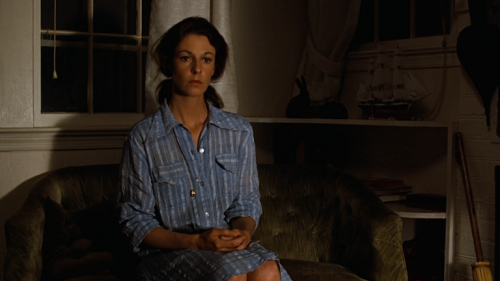
The Mike Nichols film of HEARTBURN came out in late July 1986 and it’s not exactly what we think of as a summer movie anymore but it did open the same day as Stephen King’s MAXIMUM OVERDRIVE so I hope somebody did that double feature in a multiplex somewhere. Based on Nora Ephron’s novel and directly inspired by her marriage to Carl Bernstein and how the discovery of his affair while she was pregnant led to their divorce, maybe some of the details were altered for the fictional retelling in the book but they were certainly changed for the film; part of the divorce agreement stated, for one thing, that the character based on Bernstein in the film could not be presented as anything other than a loving father when it came to his children. Mike Nichols even served as legal signatory, so this was not just any dissolution of a marriage. This was one that got a movie, directed by someone who was already closely attached to the situation with Ephron writing the script herself, following up on co-writing SILKWOOD for Nichols a few years earlier. And one where, because of his direct connection to the people involved, it was made by someone working in a world that he knew intimately. More than most films, HEARTBURN is a product of the people who lived what happened. The pain is tangible and the jokes have a sting to them, even if it still feels like some blanks haven’t entirely been filled in.


Food writer Rachel Samstat (Meryl Streep) meets well-known political columnist Mark Forman (Jack Nicholson) at a wedding where they are instantly drawn to each other. In spite of her initial reluctance they soon marry so Rachel moves with him to Washington where they purchase a Georgetown townhouse, she quickly joins his circle of friends and becomes pregnant. All is well when the baby is born and Rachel doesn’t waste any time getting pregnant with their second child but it all shatters when she discovers Mark’s infidelity with a D.C. socialite. She leaves him immediately, heading back to New York, knowing he’ll follow soon enough and she needs to figure out whether she’s going to forgive him or if such a thing is even possible.


The upper class DNA of HEARTBURN is undeniable, offering a clear view of that New York-D.C. corridor of dinner parties and lunches with fellow media types and complaining about availability of bagels in Washington. An early moment of Streep and Nicholson kissing in front of Cinema I as a showing of MEPHISTO lets out captures that exhilaration of new love found in the perfect place in the world, a world where to have lunch with someone is to know them. To be there is to exist. HEARTBURN probably wouldn’t even be ranked in the top five of Mike Nichols films but it feels like more than any of them he understands every single person in it, down to the extras, that 80s New York which seems so distant now. Along with a preponderance of long takes and even a few cast members it’s hard not to think of the Woody Allen aesthetic from this period as well. A recitation at the wedding where the two leads meet can be heard with the speaker using the phrase ‘love never fades’ as Streep’s Rachel Samstat tears up to the sentiments while Nicholson’s Mark Forman sitting elsewhere is on the verge of falling asleep. The directing credit for Nichols appears over his zoned out expression and HEARTBURN is like a feature length rebuttal to the very idea that love doesn’t fade. Of course love fades. There are times when it has to, whether you like it or not. And no matter how much you cling to what was there, if it’s gone it’s gone.


What HEARTBURN has in addition to the performances is a laid back vibe with an array of clever and insightful dialogue which for a while displays no serious concerns beyond the various friends lounging about on vacation talking about nothing much at all or just the simple glory of Jack Nicholson explaining the plot of THE BRAIN THAT WOULDN’T DIE to Meryl Streep. It’s the sort of film that maybe I’d overrate slightly in memory just because of the people involved, remembering it as an amusing comedy of manners but maybe it isn’t quite substantial enough. It’s a lark of neurosis about two people, each with a marriage already behind them, old enough to be wary of any sign that they’ll fall for someone but just as open to the possibility and even when Rachel gets such a case of nerves that she can’t come out of her bedroom for her own wedding it’s nothing to get too upset over. The sight of them eating pizza late at night and singing songs to each other while celebrating her pregnancy gives a looseness to what we know are the good times with genuine chemistry between the two, a feeling of joy that gradually turns into a bitterly enjoyable exercise of a film, at times more a series of bits where actors play off each other in small moments which is still amusing in itself.


It’s a film about nitpicking whether it has to do with the inability to get their house finished or how in the middle of her therapy session when Rachel tearfully reveals Mark’s affair a few of the other members of the group argue over who brought the chopped liver. That’s life, in the middle of the most dramatic moments there’s always going to be that bickering until that’s just about all there is with nothing left to build on. Ephron wrote WHEN HARRY MET SALLY only a few years later and in some ways HEARTBURN is a proto-version of the broader themes in that film with one famous line that originated in the book of “Heartburn” turning up there instead of this film. Harry and Sally’s jobs matter even less than they do here; Rachel and Mark are both writers which has potential on the surface but never matters very much. The bitter aftertaste that grows is what we’re meant to pay attention to.


Stylistically, it feels like a midway point for Mike Nichols, featuring many scenes shot it long takes but without the coldness of the overly composed anamorphic framings from back during the days of THE GRADUATE and CARNAL KNOWEDGE. The view of D.C. is lightly satirical but it’s still part of the real world with a naturalistic flavor of spring brought to it by Director of Photography Nestor Almendros. More than anything each scene focuses on the actors in the frame, facing them dead on with no distancing technique as if to make us part of their fights but as close as the shots get the answers don’t become any more clear. By this point Nichols’ directorial style has become totally relaxed with an economy to the storytelling as well as the jokes so he never cuts unless absolutely necessary—a dinner party is seen in one shot circling around a table ending on a sight gag that shows how out of place Rachel is, a visual joke that gets me to laugh every time. And her growing realization of what might really be going on while getting her hair done is an expertly done moment, stretching out the denial of the inevitable truth as it becomes more terrifyingly clear by the second.


Nicholson’s Mark Forman tossing off a careless “To marriage” as a toast says it all in a blink, unexplained bitterness he’s holding onto that’s growing as he turns his complaints about missing socks into the excuse for where he is all the time. And it’s as if the way he’s using the nitpicking that his wife is such an expert on to fool her is the greatest betrayal of all. But even if there is a reason it still doesn’t matter no matter how much she tries to talk herself into her own feelings while searching for one. I still wish it was more about how the creative edge can get lost if you don’t tend to it and it’s hard not to wonder if even the pettiest of arguments between the real Ephron and Bernstein might have had more teeth to them than what we get here. Maybe because of Jack Nicholson, even if his star power is muted, it makes me imagine the film as something of a Mike Nichols version of THE SHINING, only in this one instead of the writer husband going crazy he just becomes mildly perturbed and uncommunicative while the wife, also a writer in this incarnation, comes at him ready to kill with a desk drawer filled with receipts—Streep emerging from the bathroom holding that drawer might be one of the single best shots involving the combat of two people in a room from the entire second half of Mike Nichols’ filmmaking career.


One other filmic connection might be how the prominent song “Coming Around Again” that serves as the basis for much of Carly Simon’s score appears in the official playlist that recently went with 70mm screenings of Paul Thomas Anderson’s PHANTOM THREAD, another film about a somewhat toxic relationship played largely in close-ups in which food plays a key role. For some people that song with its “Itsy Bitsy Spider” refrain found in the film’s most hopeful moments between Rachel and daughter Annie might be all they remember about HEARTBURN years after seeing it and it’s hard to keep from the song getting stuck in your head, just as the drops of water in that unfinished house representing their marriage and every ounce of tension in it keep dripping down from the leaky roof overhead, as if an incessant reminder that it’s all going to crash down whether you know it or not, whether you admit it or not.


Some of the greatest pleasures in the film are the most offhand like how Milos Forman, whose character hasn’t even been introduced at this point, is placed right in the middle of the shot as the wedding takes place, prominently chewing gum for all the world to see and whenever I see the movie again it’s for these moments more than anything. When Rachel’s therapy group is robbed by a mugger played in his first film by Kevin Spacey (apologies) who followed her out of the subway all the items are placed in a Balducci’s bag, definitely part of the world of lower Manhattan circa ’86 almost as if it’s the side details that really matter, not the foreground which wouldn’t be a problem if the center of it all were stronger. The Jewishness has been bled out (the book’s “Mark Feldman” becoming “Mark Forman” for starters) which makes it feel like we’re missing some of the specifics of the life, the marriage and all the food they eat. Mark Forman is always looking for something he can get a column out of, just as the HBO documentary about Ephron by her son Jacob Bernstein called EVERYTHING IS COPY was a phrase she would use that was passed down from her own mother. Based on HEARTBURN it’s clear that while it’s what she believes it’s also a matter of who she feels is entitled to tell the story.


The book contains recipes to go along with the details that Rachel Samstat reveals about her life, keeping those thoughts in mind almost in a Zen way to concentrate on while other things are falling apart, an element not quite as prominent in the film so I guess the Streep-Ephron combo had to wait for JULIE & JULIA to really focus on the food. It’s certainly there in the film with the crucial use of a key lime pie near the end which in the book played as more of an act of slapstick (in real life Ephron apparently poured a bottle of wine over Bernstein during a dinner at Ben Bradlee’s house) but in the film the moment comes off as totally numb as if the Novocain has permanently been applied. Even the camera angle used for much of the climactic dinner scene doesn’t give us the best vantage point on the action as if to say that the main character is already barely there anyway, not even trying anymore which makes sense but still isn’t entirely satisfying. The film avoids giving any concrete reason for Mark’s cheating with even some pretty good dialogue in the book along these lines going unused but that’s not what the film is about. It still means that there’s a hole where a fully fleshed out character for Nicholson could be but the pain feels genuine so it’s clear that the film believes he hasn’t earned the chance to give his side of the story. It’s not his film. All there is, in the end, is what there was. At a key moment Rachel has Mark tell the story of when she gave birth to their first child but when he finishes, she turns away from him as if to say that from that moment on those memories are for her alone. The film rarely goes beyond the surface but in fairness it knows that the surface is where we spend most of our time anyway. The reasons don’t matter. Only the possibilities that were destroyed.


One of the rare breed of films that didn’t provide Meryl Streep with an Oscar nomination (it did happen the following year for IRONWEED which reunited her with Nicholson) but the expert comic timing she displays combined with the inherent decency that she projects makes her the perfect match for the script’s point of view. Spending much of the film silently registering what people say without much of a response it becomes fascinating watching her reactions, the awareness on her face growing to the final awakening of how there’s nothing in this marriage left to fight for. Jack Nicholson was actually a last-minute replacement for Mandy Patinkin who was let go after a day of shooting (the first attempt at shooting THE TWO JAKES had just fallen apart so he was available and unlike, say, Dustin Hoffman no one would have mistaken him for Carl Bernstein) and the comic moments here are his best, particularly the intensity of his anger at the lack of work being done on the house. His own body language adds greatly to the performance as well, particularly when he shows up for the attempted reconciliation as if he’s a little boy who’s been found out but the rest of it is a little too vague, an unspoken annoyance covering up whatever else is going on. It’s a part that’s deliberately underwritten after the charm wears off so not much else comes through, he’s not playing Carl Bernstein but a sort of generic Washington “columnist” who apparently vacillates between politics and general observations of the world. We should all be lucky to have such a column. The supporting cast that backs them up is killer particularly Jeff Daniels as Rachel’s co-worker, clearly keeping quiet about a crush he seems to have on her and his gimme-a-break look during the wedding, sitting behind Maureen Stapleton with tears in her eyes, is one of my favorite things in the film. Steven Hill is also particularly effective, playing Rachel’s father as the epitome of facing loss and darkness in the world by simply moving forward (he gets maybe the best line too: “You want monogamy? Marry a swan.”). There’s also the likes of Stockard Channing, Richard Masur, Catherine O’Hara, Joanna Gleason, Mercedes Ruehl and Karen Akers as the much talked about Thelma Rice. The credited Natalie Stern as the Forman daughter Annie is actually the first screen appearance of Mamie Gummer, bringing an undeniable looseness to her scenes with the interest in her mother obviously genuine and not caring at all about whatever movie is taking place around them, the perfect reminder of the goodness that Mark Forman has chosen to ignore.


The bitter message of HEARTBURN may simply be a reminder to never get too happy. Because the pain isn’t worth it. In one scene they play a party game over dinner, describing themselves in just a few words as if to say that you only need to know the basics, just as only the gossip matters about a person. But when they’re close enough they do matter. In Richard Cohen’s book “She Made Me Laugh: My Friend Nora Ephron” he recalls that just after she died he received a phone call from Mike Nichols who had one question as he broke down: “What are we going to do now?” Sometimes you wonder that even when people haven’t died. If they’re gone, they’re gone. Even if there are reasons, there’s no point in saying them and those moments of lying in bed in the middle of the night watching an old horror film on TV eating spaghetti carbonara are nothing more than something only one of you remembers. Rachel keeps repeating how happy she is, only maybe with him it’s not about achieving happiness but about keeping that high going. Maybe, if you’re lucky, you’ll forget the best times or at the very least accept that they were nothing more than part of a dream you were living in. In the end, that might be the only way to stay alive.

Monday, February 26, 2018

The Trick Is Not Minding


Kenneth Dahlberg’s neighbor’s wife really was kidnapped, to begin with. There is no doubt whatever about that. She was Virginia Piper, wife of Harry Piper, chained to a tree for two nights until a million dollar ransom was paid by her husband who was then informed of her whereabouts. Most of the money was never recovered. This is an extremely abridged version of what happened which in ALL THE PRESIDENT’S MEN becomes a mere passing comment that Kenneth H. Dahlberg of Minnesota, sounding somewhat distressed, makes to Bob Woodward during that epic phone conversation about the check cashed by one of the Watergate burglars. It’s one of those tiny details that the film brushes past which makes me think of the bit later where Woodward doesn’t express surprise at what’s happening behind the closed doors he and Carl Bernstein are repeatedly knocking on, a scene no one ever remembers even if it’s maybe one of the few reaches for theme the film makes outside of its journalistic goals. The point, the moment seems to say, is that the surprise doesn’t matter. You just have to accept it and keep probing because the answers are there. And they will reveal themselves. The lights come on eventually.


ALL THE PRESIDENT’S MEN is a miracle of all the right elements coming together, a miracle from that holy cinematic year of 1976 when it was one of the Best Picture nominees to lose to ROCKY. Not only is it a film without a wasted frame there isn’t a moment which is not awash in total clarity and awareness in its pursuit of the story. Whatever the process was throughout the making of the film it not only somehow kept straight how much we needed to know, it laid bare the process of how the story that was being pursued became clear, fixated on the goal and like its two lead characters always aware of what the next question needed to be. Every moment is important, even the asides, even the blind alleys since they are a reminder that there are always going to be those blind alleys. In his review at the time Vincent Canby called Alan J. Pakula’s film “the thinking man’s JAWS” and it’s just as compulsively rewatchable. There isn’t a single dull moment which was certainly a concern at the time, way back when the fear was that everyone knew everything about Watergate already so what was the point of even making it. The film answered that question, presenting what happened with such skill and focus without stopping for a moment, the drive that is evident in its two lead characters becoming more clear with each scene, each time they sit back down at the typewriter.


Over 40 years after it was made there are still few other films that balance plot and character as intricately as ALL THE PRESIDENT’S MEN (screenplay by William Goldman based on the book by Carl Bernstein and Bob Woodward) as it follows reporters Bob Woodward (Robert Redford) and Carl Bernstein (Dustin Hoffman) of the Washington Post investigating the Watergate burglary and coming to understand very quickly just how deep the scandal goes. If you’re Steven Soderbergh you’re already watching it several times a year as indicated by his annual list posted every January of what he viewed the previous twelve months. If you’re anyone else you probably should be watching it several times a year. I’ve done it myself. Just about every minute of screentime propels things forward and yet it becomes a character piece anyway as we watch Woodward the straight arrow Republican (the news of which becomes a double take glance between him and his partner) and Bernstein the wiry ladies’ man, each of them determined in their own way to find this story together. Removing all conflict over how the two reporters are going to work together in about ten seconds flat it locates the characterizations in their actions as they obsessively scribble down those notes during phone calls, in the way they keep their eyes fixated on the subject not wanting to move for fear they’ll stop talking, never bothering to explain what drives them in speeches we don’t care about. The way they keep asking those questions even as somebody says they don’t want to talk anymore is all we need to know and the debates they have with each other lays out each man’s own basic approach to logically coming up with the answers, searching for where they can be found through each new deduction. Along with their sheer sense of focus it’s a film that never gets distracted by anything in its peripheral vision.


It’s an unrelentingly addictive film to watch, the way it jumps into things and refuses to stop while still maintaining a calm and collected tone all the way through. “The trick is not minding,” Hal Holbrook’s Deep Throat says during his first meeting with Woodward while telling a story about G. Gordon Liddy holding his hand over a candle at a party which is more or less a direct lift from LAWRENCE OF ARABIA and the cribbing of that line almost serves as a reminder of how, much as this comes from what happened, it still had to be figured out exactly what story was going to be told. Reading through the book is a reminder that the facts are the same, which they have to be, but it still needed a structure to provide clarity and the film finds it, keeping close to the journalistic roots and never taking its eyes off the big story. That particular Deep Throat line isn’t from the book or real life, “Follow the money” isn’t either, and actually much of his dialogue seems to have been invented for the film where what he has to say is considerably more clever. It’s not the only alteration without tampering with the reality of what happened so putting aside the history and politics it’s equally clear how much ALL THE PRESIDENT’S MEN is a near-perfect model of how to adapt a book, any book, even with the audacity of concluding the narrative at roughly the halfway point of the source material (not counting a few scenes from the second half which get moved up in the chronology) before the scandal really takes hold with the public but also in terms of how well the film parses out the sheer mountain of information that needs to be told.


There’s no love interest who comes in for a few scenes to argue about why the two men are so devoted to their work and any hints dropped that Bernstein is a ladies’ man aside those McDonald’s wrappers scattered around the table during their bickering lunches are more important than any outside life, only guys like Jack Warden and Martin Balsam playing Post editors Harry Rosenfeld and Howard Simons to bounce off of to remind them not to fuck things up. Each scene tells us something new whether it’s about the scandal or the sheer determination of these guys to figure out the right questions to ask and how to get in through the door, whether Woodward’s gamble of how to get the right name out of the bookkeeper or the way Bernstein gets part a secretary to get into a delayed appointment down in Florida (in a sequence apparently written by Carl Bernstein and Nora Ephron). The forward momentum helps the film move flawlessly from scene to scene even with what seems like some occasional dialogue that’s been dubbed in added after the fact to help scotch tape over a few transitions and clarify who certain people are but so what. As much as the film brushes past certain pieces of detail that it doesn’t have time for, considering how much information needs to be laid out so we even partly follow what’s going on it always comes up with the right answers.


But as much as every single one of the story decisions were correct it says something that in William Goldman's acceptance speech at the Oscars the first person he thanked was cinematographer Gordon Willis whose brilliant work transformed the film into something beyond a simple newspaper story with its shadows providing that low hanging cloud which always seems to hang over D.C. through the film. Willis wasn’t even nominated, passed over for the likes of the KING KONG remake and LOGAN’S RUN (I like both of those but come on…) but it’s impossible to imagine the film without those layers that Willis brought to it, providing that extra level of clarity to Woodward and Bernstein in the harsh light of the Washington Post trying to enter the darkness where all the answers are, Deep Throat waiting in that garage in the middle of the night with the answers he won’t fully reveal. With the camera pulling up from them going through those cards in the Library of Congress, tiny figures lost in the weeds, Willis and the darkness he brings to each moment provides the cagey emotion of the film to go with Pakula’s levelheaded cool providing a sense of unrelenting intellect with that 70s paranoia backed up by the low hum of the score by David Shire which seems directly attached to Woodward and Bernstein’s brainwaves to remind them that something’s going on, only they don’t know what, only that they have to keep following the leads.


Everybody here is working at their absolute best and the hushed tones that linger keep things unsettled just enough Pakula knows how much emotion to let seep in with the quiet anguish felt in Jane Alexander’s “If you guys could get John Mitchell, that would be beautiful.” His view of each scene serves as counterpoint to the determination of these guys and there’s a calm in the air in the way through each scene with the single take Dahlberg phone call one of the most deservedly famous of them, Redford prominent in the frame as the camera slowly moves in on him away from the background where the newsroom is converged around a TV with the breaking news, McGovern dropping Eagleton from the ticket which the movie doesn’t make clear until a later headline is spotted but it doesn’t matter as far as Woodward is concerned and we zoom in, everything else becomes irrelevant as the real story becomes clear. It’s one of the most subtly bravura scenes in a film that doesn’t waste a single moment, every shot matters, as it presents Woodward and Bernstein as two small figures in these massive Washington establishments, the reality of the world combined with a stylization in the way it’s presented, familiar DC landmarks always nearby as they would be in real life, forcing them to do this work literally in the shadows of the men they’re investigating. The style transforms this from simple docudrama almost into a form of deceptive realism, the camera racing alongside them in the newsroom and the legendary dolly shot as Woodward exits the parking garage in the middle of the night, unaware of where Deep Throat has gone to, leading into him in an early morning parking lot which is some ways doesn’t make logical sense—after all, has Woodward just been wandering the streets all night—but places him existentially alone with what he knows in the middle of this city, almost too afraid to face the truth but remaining absolutely determined. For all the 70s realism it still feels like a jolt to remember that the Washington Post newsroom was recreated on the studio lot in Burbank (art direction that won an Oscar, over the likes of LOGAN’S RUN) and there’s nothing in the film that shouts backlot with the exception of the rearscreen projection in the driving scenes, not that I care, and that particular aesthetic of the decade is fairly soothing to look at now anyway.


The president’s men of the title are mostly unseen, phantoms always lingering nearby, occasionally spotted on television like Ron Ziegler slamming the post could be said by someone today, pretty much word for word, except maybe he displays better vocabulary skills. All powerful at the time but, as Deep Throat reminds Woodward, not very bright guys. And mostly terrified, even down to Ken Clauson worried about whatever happened in Sally’s apartment getting out and jeopardizing his wife and family and dog and cat. Woodward and Bernstein know that something is there, it just takes time to figure out what and ALL THE PRESIDENT’S MEN takes its time with those debates in Bradlee’s office about if they’ve gotten the story, not to mention what exactly the story really is or if it’s too thin. As well as trying to decide if they’ve knocked on enough of those doors. All these years later, the world may be considerably different and the crimes taking place at the moment may go far beyond anything that happens here. Separate from the Watergate crimes, there may also be a problem with any movie that happens to star Dustin Hoffman. The main story of the film ends on a fuck up, with the real ending coming via the teletype epilogue, but it feels right since in the 70s fucking up was the way things often went anyway. Considering everything that had already happened by the early 70s the eventual victory was almost irrelevant as the mention of settlement negotiations to end the Vietnam War in an editorial meeting reminds us. Seeing those two guys back at work to get the story is what matters. Because you’re going to fuck up. The trick, however, is not minding. You have to become what those guys on the other side already are. Only maybe, hopefully, the good version. And if it means acquiring a taste for the jugular, so be it.


Robert Redford and Dustin Hoffman become as one in playing Woodstein, as they’re dubbed, and it’s a couple of the best sheer movie star performances off all time as far as I’m concerned. It’s the best of each of their strengths, Redford’s innate laid back quality combined with the intensity the grows in Woodward making him click for me here more than any other film, zeroing in on the precise moments when Woodward finds the next piece of the puzzle while Hoffman’s jittery quality matches that perfectly, always looking for the next cigarette while walking ahead of his partner, calming down at just the right moments to get the answers that are needed and ready to fight but still willing to listen. They’re matched up against the all-powerful focus of Jason Robards in his Oscar winning performance as Ben Bradlee, always looking for the right answer to what he demands of people, never wanting anything but the right answer to what he asks, only wanting to be absolutely sure. Jack Warden, Martin Balsam and especially Hal Holbrook as Deep Throat are all phenomenal but there’s also the calm defiance of Jane Alexander (the film’s other acting nomination) as the bookkeeper, the smiling Robert Walden as Segretti, Lindsay Crouse, Stephen Collins, Ned Beatty, Polly Holliday, Valerie Curtin, Penny Fuller, John McMartin as the Post foreign editor calmly laying out the other way to look at things and the voice of John Randolph as John Mitchell.


The opening shot just after the 70s Warner logo fades away makes it clear—the typewriter is the weapon. The word is the bullet. And at the end, when Nixon is being sworn in, the typing continues, the only weapon they know. I miss working on a typewriter, without a doubt the most beautiful weapon that will ever be known to mankind, but that’s the way it goes. There’s anger out there right now. I feel it. It’s impossible to keep from thinking about it sometimes along with the simmering awareness over how certain people have tried to get away with such things. My sister, who once worked in the journalism world in D.C, lives in Bethesda and every time I visit I bring the disc of ALL THE PRESIDENT’S MEN to have with me, close enough to where it all takes place that I imagine it every time we pass a parking garage. I’m not sure how many times I’ve seen the film by now. And as I watch it now yet again I think about all the crimes that are happening right now that barely even need to take place behind closed doors anymore, practically out in the open and waiting for someone to do something about it. Anyway, a lot of the time lately I think we’re fucked. But I still hope not. Those newspapers matter even now and journalism matters, even if the journalists don’t always seem to realize that. The pulse of ALL THE PRESIDENT’S MEN is one that remains steady and calm as I watch it once again, trying to breathe through these awful days and remember that there’s always a hope, like an injection to somehow keep me going.